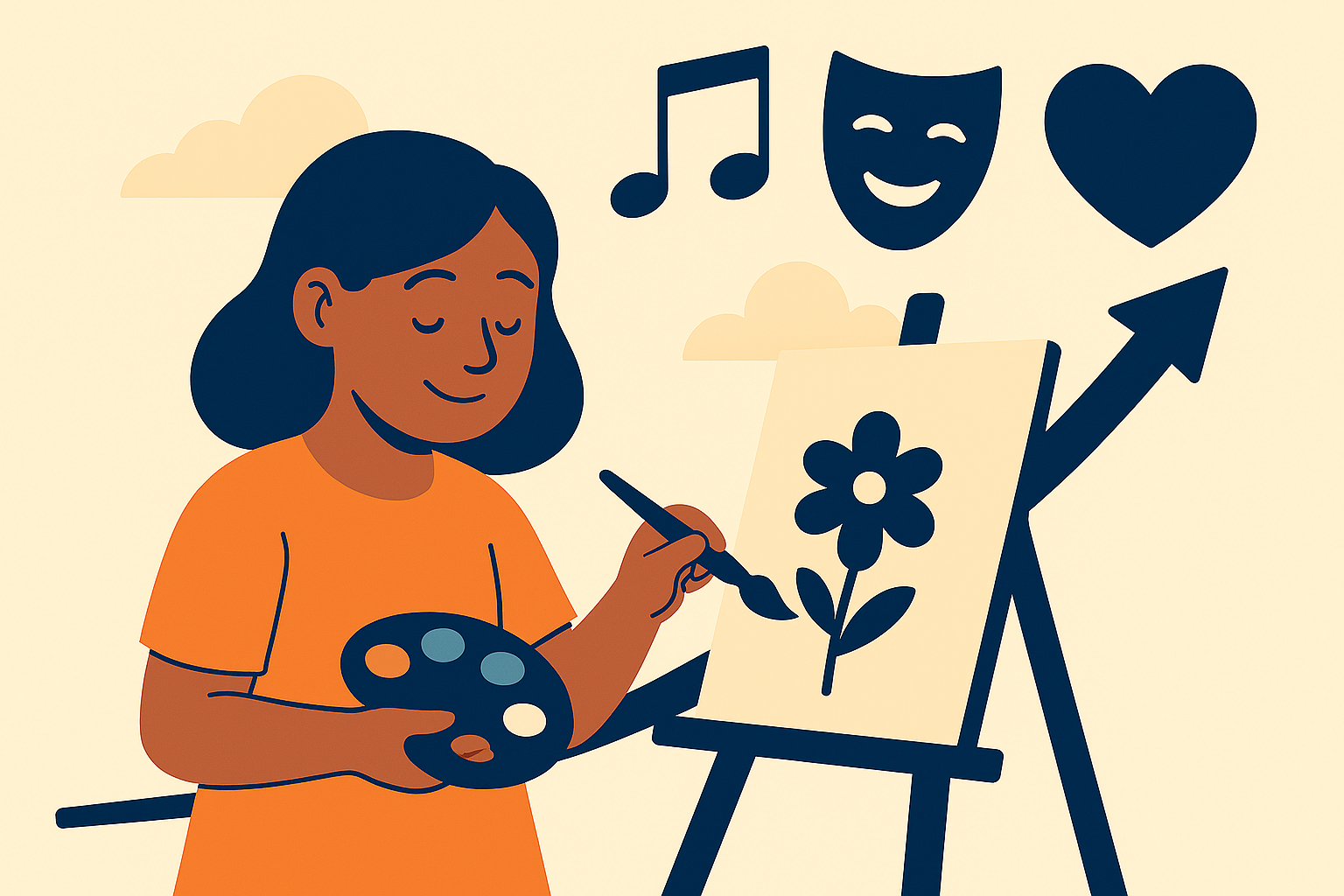
The arts — music, visual arts, drama, dance — are central to expressive, cognitive, and social development. They foster creativity, emotional literacy, and divergent thinking.
Why it matters:
Arts practice supports fine-motor skills, pattern recognition, aesthetic judgment, and the ability to communicate complex emotions. Arts-rich learners often show improved focus and innovative problem-solving.
How to integrate arts:
- Embed artistic elements across subjects: dramatize historical events, use visual design to present science data, or compose songs to remember math facts.
- Maintain dedicated arts time so students can experiment and develop craft.
Classroom activities:
Collaborative murals, improvisational theater for language practice, music composition projects tied to cultural studies, and portfolio-based assessment.
Challenges & solutions:
- Marginalization of the arts in tightly scheduled curricula → advocate for arts as essential for creativity and cognitive growth; use cross-curricular projects to demonstrate impact.
- Limited specialist teachers → upskill classroom teachers with artist-in-residence models and community partnerships.