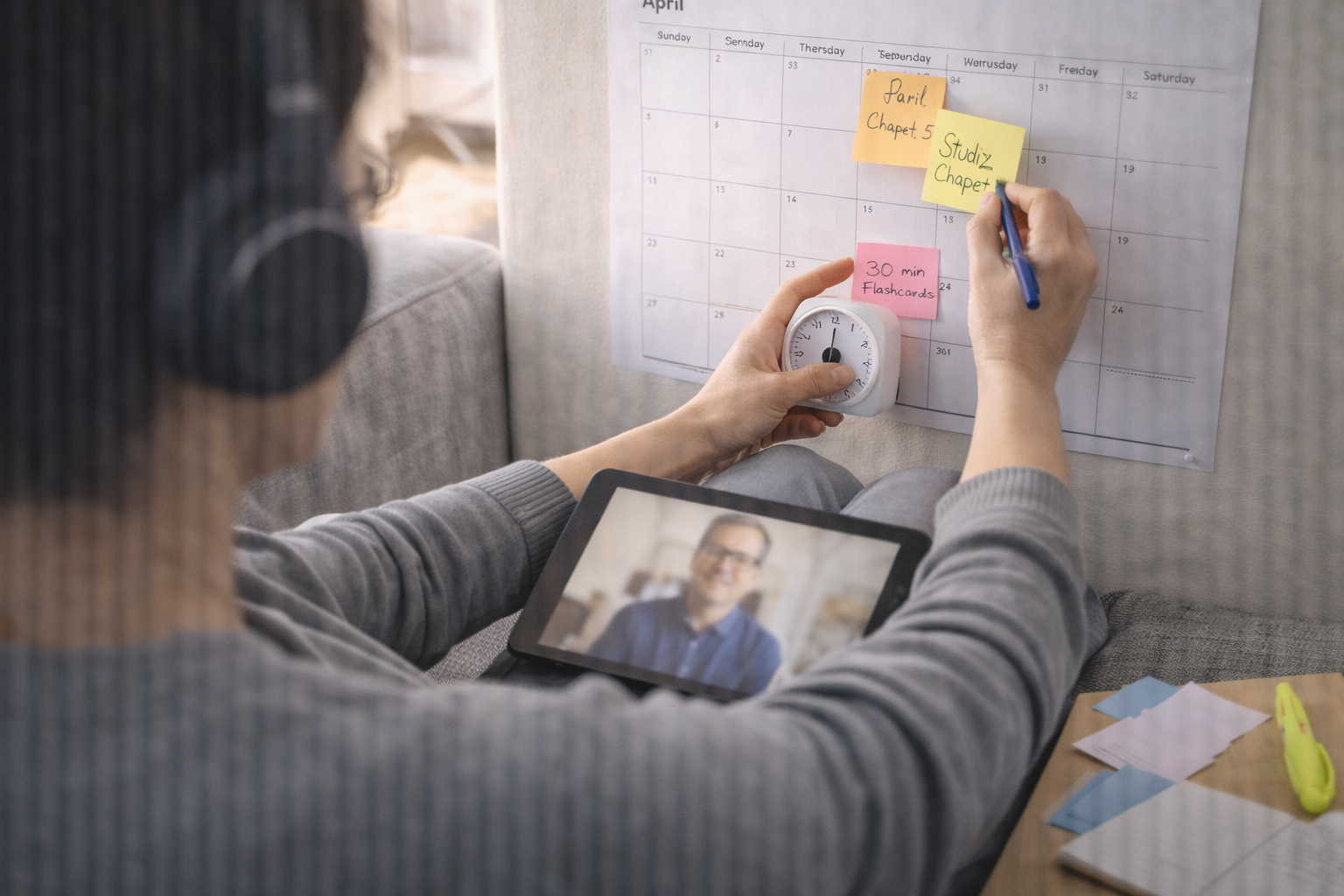
Remote learners benefit from study sessions that balance focus with flexibility.
Designing intentional blocks helps reduce decision fatigue and increases retention.
Short, varied activities keep engagement high without overwhelming cognitive load.
This article outlines practical steps to plan, deliver, and refine productive study time.
Plan Focused Sessions
Start by defining a clear, measurable objective for each session to create direction and purpose. Break larger projects into 25–50 minute blocks with short breaks to support sustained attention and recovery. Schedule sessions at times when your energy is highest, and be realistic about how many blocks you can complete in a day. A consistent template or checklist speeds setup and reduces friction between tasks.
Clear goals and a predictable structure make it easier to begin and finish work. Over time, this consistency turns into a reliable habit that supports deeper learning.
Incorporate Active Learning
Passive reading rarely produces durable learning, so prioritize active techniques that require retrieval and manipulation of information. Mix practice problems, quick summaries, and application tasks to solidify understanding and reveal gaps. Teaching concepts aloud or explaining them in writing engages different cognitive pathways and strengthens memory. Varying activities within a session prevents fatigue and promotes adaptable knowledge.
- Retrieval practice: quiz yourself without notes.
- Spaced repetition: revisit material at increasing intervals.
- Teach-back: explain concepts to a peer or record a summary.
Active techniques take more effort up front but dramatically improve long-term retention. Integrate at least one active element into every study block.
Optimize Technology and Environment
Create a dedicated workspace that signals study time to your brain and limits distractions. Use minimal, reliable tools: a single browser window, a focused note app, and a timer to enforce session boundaries. Mute nonessential notifications and use website blockers if social media is a frequent interruption. Good lighting, ergonomic seating, and a tidy surface all contribute to sustained concentration.
Technology should enable focus, not fragment attention. Regularly audit your tools and remove anything that undermines productivity.
Track Progress and Adjust
Measure outcomes with simple metrics like completed tasks, problems solved, or minutes of focused work to assess effectiveness. Reflect briefly after sessions to note what worked, what stalled momentum, and which techniques boosted retention. Use that feedback to adjust block length, activity mix, or scheduling strategies. Small, iterative changes compound into a resilient study system.
Tracking progress turns vague intentions into actionable insights. Make review a regular habit to keep your approach aligned with evolving goals.
Conclusion
Designing study sessions with clear goals, active methods, and a distraction-minimizing environment boosts learning efficiency.
Regular reflection and small adjustments keep the approach sustainable and personalized.
Adopting these practices helps remote learners make steady, measurable progress.
Related Articles



Recent Posts

Designing Compact Choice Menus to Foster Student Decision-Making
Teaching Students to Sequence Tasks for Deeper Engagement
Practical Classroom Methods for Teaching Strategic Study Prioritization
Translate Everyday Work into Clear Professional Evidence
A Practical Process for Building Portable Career Proofs


