Clear group roles help students focus on contribution and process rather than who does what. When roles are explicit, collaboration becomes a teachable routine that supports both content mastery and social skills. Thoughtful role design reduces friction in group work and increases accountability across varied tasks. This article outlines practical ways to define, assign, and rotate roles so teams learn more effectively.
Why Defined Roles Matter
Defined roles create predictable interaction patterns that lower cognitive load during group tasks. Students spend less time negotiating logistics and more time engaging with the task because responsibilities are distributed. Roles also provide scaffolding for students who need clearer expectations about participation and leadership. Finally, explicit roles make assessment of contribution fairer and more transparent to both teachers and students.
By clarifying who tracks time, who records decisions, and who synthesizes ideas, teams operate with greater efficiency. This predictability helps teachers intervene strategically rather than managing every minor dispute. It also supports students in developing workplace-ready collaboration habits.
Designing Roles That Fit the Task
Start by identifying the cognitive demands of the activity: Are students analyzing, creating, debating, or solving? Choose roles that align with those demands so responsibilities map to learning goals. Keep roles simple and meaningful, and avoid overly prescriptive titles that limit student initiative.
- Facilitator: Keeps discussion on track and ensures equitable participation.
- Recorder: Captures key ideas and decisions for group reference.
- Checker: Verifies accuracy and aligns work to criteria.
- Reporter: Presents outcomes to the class or submits final work.
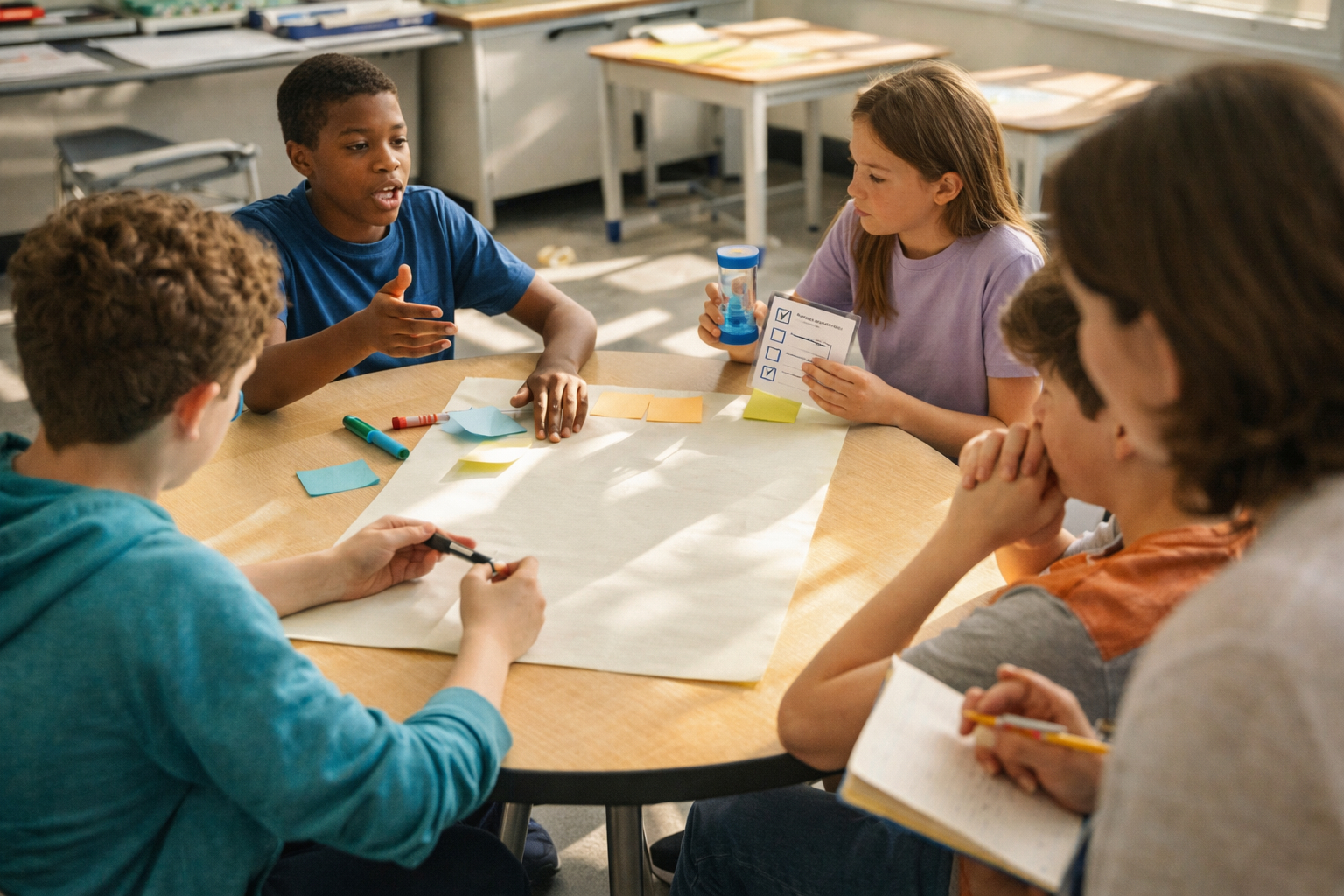
Provide brief role descriptions and a checklist so students understand success criteria. Adjust or combine roles for shorter tasks or larger projects as needed.
Implementing Roles and Rotations
Introduce roles with a model demonstration and a short practice activity so students experience each position. Use rotation schedules to ensure every student develops multiple collaboration skills across the term. Rotations can be random, choice-based, or teacher-assigned depending on development goals and group dynamics.
Documenting rotations and reflecting after sessions helps students notice growth areas. Consider pairing rotations with peer feedback to reinforce accountability and constructive critique.
Monitoring, Feedback, and Assessment
Regular formative checks let teachers identify groups that need support and recognize successful collaboration. Use quick observation rubrics, short self-assessment prompts, and peer ratings that focus on role-specific performance. Feedback should be timely and tied to observable behaviors rather than vague judgments.
Embed small reflection tasks after group work so students connect role performance to learning outcomes. Over time, these reflections build metacognitive awareness about what effective collaboration looks like.
Conclusion
Deliberate role design turns group work into structured learning with clear expectations and growth paths. Rotations and targeted feedback ensure equitable skill development across students. With consistent implementation, roles become routines that boost both collaboration and content learning.