Small, predictable routines help students focus cognitive energy on thinking rather than logistics.
When teachers use concise structures, classroom time shifts from managing tasks to exploring ideas.
This article highlights a few practical structures teachers can adopt with minimal preparation.
Each approach aims to deepen student thinking while keeping day-to-day workflow manageable.
Why simple structures foster deeper thinking
Complex lessons can overwhelm working memory and reduce the cognitive space available for higher-order thinking. By introducing short, consistent prompts or rituals, teachers create mental scaffolds that free students to engage with core concepts. These structures also reduce decision fatigue for learners, which increases the likelihood that they will attempt challenging tasks. Over time, routines signal expectations and allow students to internalize productive thinking habits.
When routines become familiar, teachers can raise the intellectual demand of tasks without increasing chaos. The goal is to make process predictable while keeping content open for exploration and discussion.
Three practical routines to try
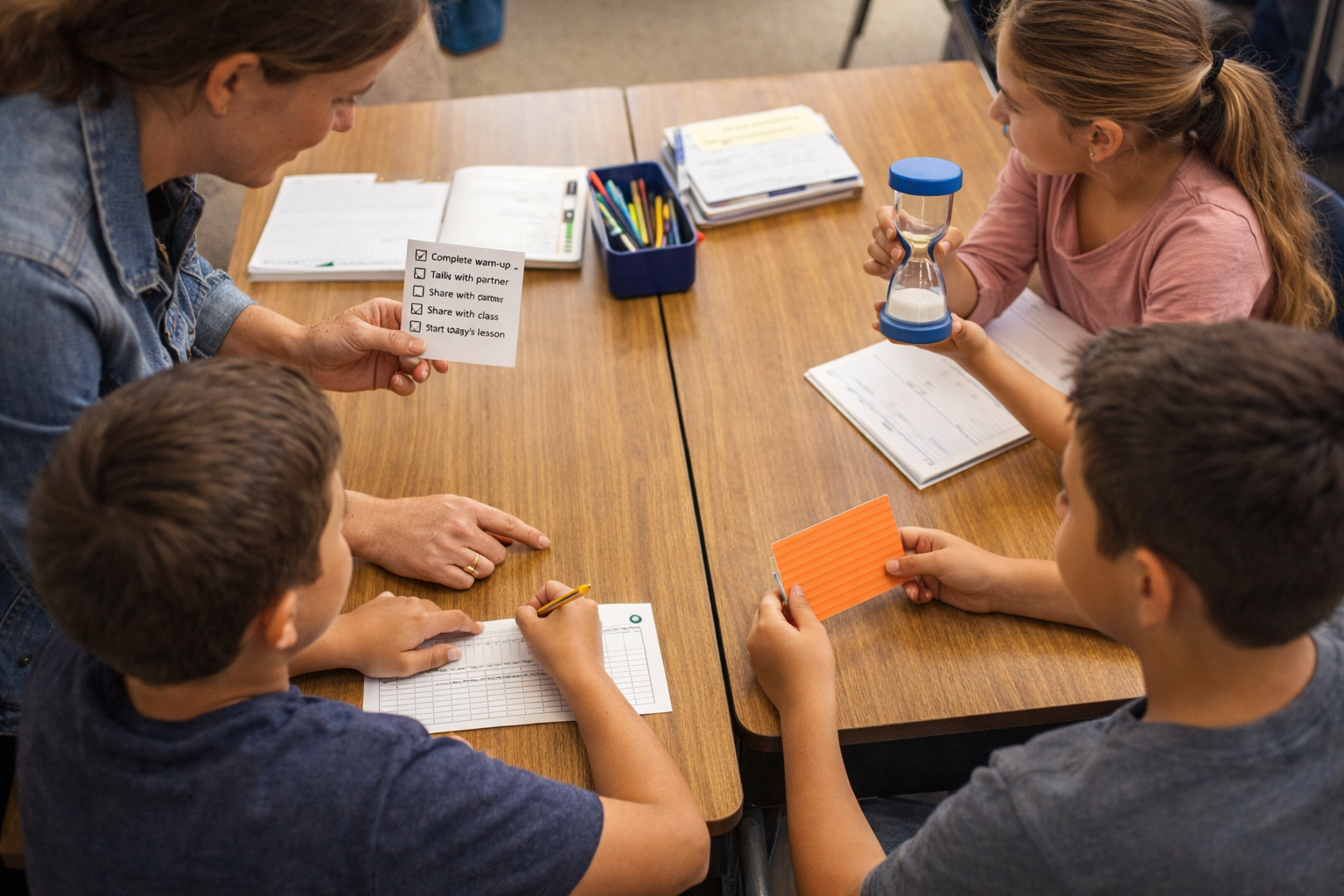
First, begin class with a focused entry task that requires a sentence or two of thinking, such as a quick justification or a connection to prior knowledge. Second, use structured partner talk: set a clear prompt, a strict time limit, and one speaker role to ensure accountability. Third, end with a brief metacognitive exit slip where students note a strategy they used or a remaining question. Each routine takes only a few minutes but consistently prompts deeper engagement.
- Entry task: 3-minute written prompt to orient thinking.
- Partner talk: 2 rounds of 90 seconds per speaker with a clear prompt.
- Exit slip: single-question reflection collected or shared aloud.
These routines are flexible and can be adapted to different subjects and grade levels. When used regularly they create an environment where deep thinking becomes the expected default.
Monitoring progress without heavy grading
Quick checks embedded in routines provide formative data without formal assessments. Teachers can scan exit slips, listen to partner discussions, or collect a rotating sample of student responses to identify patterns. Feedback can be brief and targeted—one specific suggestion or one question that pushes thinking deeper. This keeps feedback actionable and reduces teacher workload while supporting student growth.
Use simple tracking methods like a checklist or a short spreadsheet to note recurring needs and adjust instruction. Small, consistent data points give a clear picture of whether routines are helping students think more deeply.
Conclusion
Introduce short, repeatable structures that lower cognitive load and increase thinking time.
Keep routines clear, symmetric, and easy to enact each day to maintain momentum.
Small changes in classroom design can produce meaningful gains in student depth and independence.