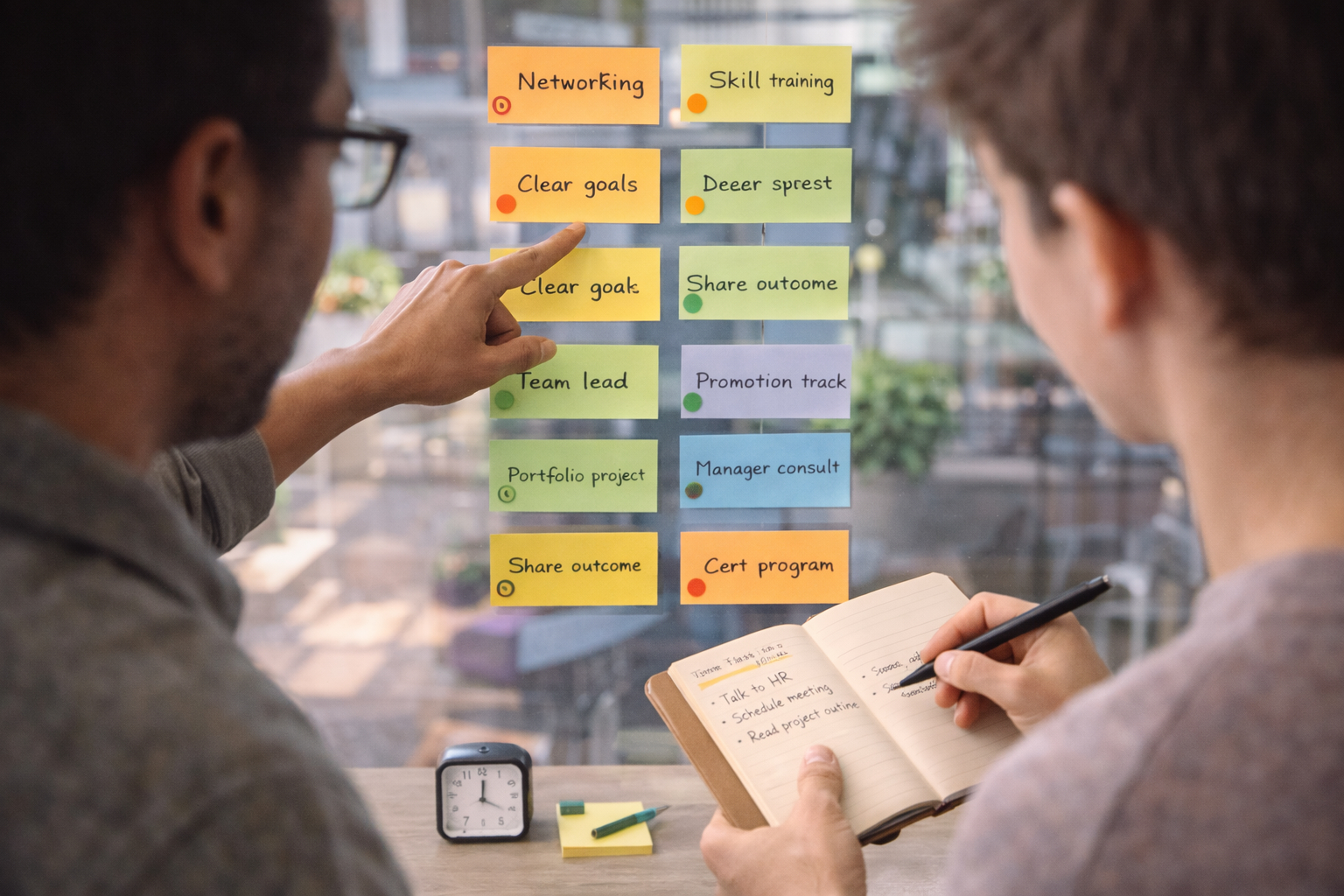
Every career advance starts with a clear, realistic objective.
A focused playbook reduces noise and helps you invest time where it matters.
This article outlines a practical approach to pick priorities, practice deliberately, and measure progress.
Use these steps to create an adaptable plan that supports decisions and showcases growth.
Clarify Your Career Objective
Begin by defining a specific target role or capability and the timeline you have to reach it. Translate that target into 2–3 measurable outcomes you can demonstrate within months. Identify the gaps between your current experience and those outcomes, and break them into discrete skills or projects. This clarity keeps choices aligned and reduces the temptation to pursue irrelevant trends. Include evidence criteria for each outcome so you can objectively assess progress.
A sharp objective makes prioritization straightforward. Refer back to it when new opportunities arise.
Prioritize High-Impact Skills
Not all skills deliver equal return; focus on those that unlock multiple responsibilities or measurable results. Evaluate each skill by potential impact, time to competence, and visibility to decision-makers. Choose a small set to develop in a single cycle rather than trying to learn everything at once. Also consider which skills are transferable across roles to increase flexibility.
Concentrating effort accelerates momentum. Communicate what you are learning to stakeholders through tangible outputs.
Design Practice and Feedback Loops
Translate skills into projects or micro-tasks that produce evidence of capability. Use deliberate practice: focused repetitions, increasing difficulty, and reflection after each attempt. Seek regular feedback from peers or mentors and incorporate it into the next iteration. Document lessons learned to shorten the learning curve on future experiments.
- Build a small portfolio project that highlights the target skill.
- Run a short internal workshop or presentation to demonstrate competence.
- Volunteer for a stretch assignment with clear success criteria.
Feedback turns practice into meaningful improvement. Schedule checkpoints to ensure progress stays on track.
Make Learning Routine and Measurable
Sustainable growth depends on consistent habits that fit your calendar. Block short weekly sessions for skill work and longer sprint blocks for projects. Track outcomes such as completed projects, feedback ratings, or measurable performance gains.
Data creates accountability and highlights what actually works. Adjust your playbook quarterly based on results and changing goals.
Conclusion
A focused playbook simplifies decisions and speeds progress. Prioritize impact, practice deliberately, and measure outcomes. Then iterate until your plan reliably produces demonstrable career growth.