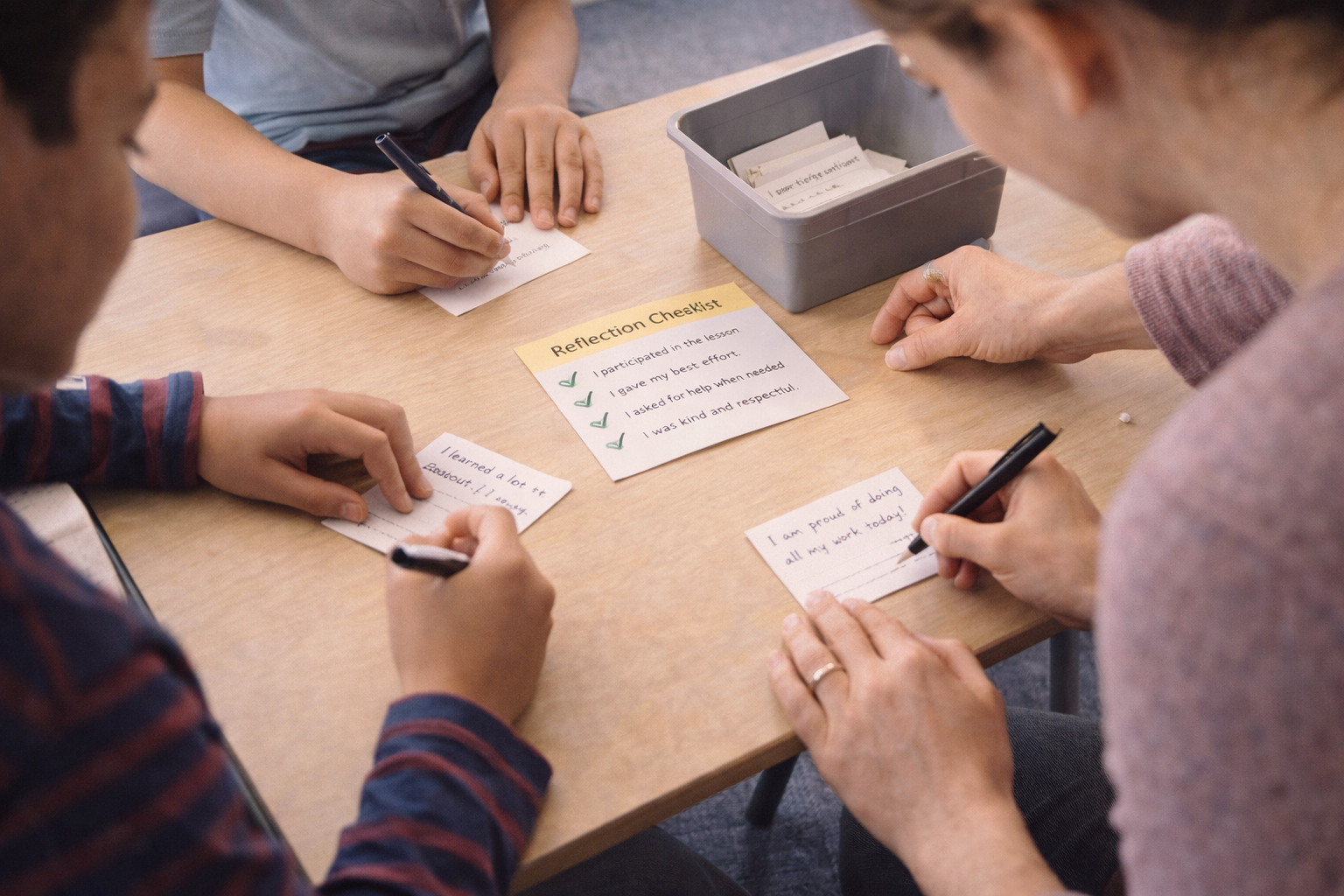
Teachers can build independence through simple, repeatable classroom rituals that take minutes each day.
Small routines create predictable structure and opportunities for students to practice decision-making and self-monitoring.
Over time these brief habits reduce dependence on teacher prompts and strengthen student metacognition.
Used consistently, they support deeper learning without adding planning burden.
Why daily rituals matter
Daily rituals act as low-cost scaffolds that make complex skills habitual and manageable for students.
When learners engage in concise, repeated practices they begin to internalize expectations and strategies that support learning.
Rituals free cognitive load so students can focus more on content and higher-order thinking rather than procedural choices.
They also generate regular evidence about how students are using strategies, which helps teachers make timely adjustments.
Because routines are predictable, they reduce anxiety and enable students to experiment with autonomy in a safe setting.
Introduce rituals with explicit modeling and clear success criteria so students understand purpose and process.
Keep the language simple and the steps observable so expectations are transparent to all learners.
Core routines teachers can adopt
Choose a few routines that align with daily lesson rhythms: a one-sentence goal, a short self-check, a structured peer check, and an exit step that points to what comes next.
Each routine should be brief—one to five minutes—and linked to a clear, observable outcome so students know when they have completed it effectively.
Predictability and clarity let students take ownership, practice decision-making, and develop habits that transfer across tasks.
Routines should be adaptable so teachers can vary cognitive load while preserving the underlying skill focus.
- Daily goal statement: a concise learning intention students write or state.
- Two-minute reflection: what worked, what to try next.
- Exit ticket: one actionable next step tied to feedback.
- Peer coaching checklist: two focused questions for quick feedback.
Rotate routines to maintain relevance and prevent monotony, and keep expectations consistent so students can internalize the practice.
Collect small samples of student work from these routines to monitor growth over weeks rather than days.
Implementing routines without overload
Introduce one routine at a time and teach it explicitly using modeling, scripts, and guided practice for several days.
Provide scaffolded supports at first—visual cues, sentence starters, or checklists—and fade them as students gain proficiency.
Use concise feedback and brief celebrations of progress to motivate persistence and normalize incremental improvement.
Be patient: habit formation takes consistent repetition and small adjustments based on what students produce.
Set realistic expectations for fidelity and allow flexibility in how students demonstrate the routine.
Adjust prompts and timing rather than discarding a routine when initial uptake is slow.
Measuring progress and scaling
Track simple indicators such as completion rates, quality markers on exit tickets, and representative samples of reflections to judge routine effectiveness.
Use quick rubrics or checklists that make assessment efficient and relevant to the routine’s purpose, and share criteria with students so they can self-assess.
Analyze results in short cycles—weekly or biweekly—and use that information to refine prompts, timing, or instruction supports.
When a routine reliably produces desired student behaviors, add another complementary ritual rather than replacing effective practice.
Engage students in reviewing progress so they understand growth and next steps, and celebrate collective improvements to sustain momentum.
Scale gradually to preserve teacher bandwidth and maintain the routines’ instructional value.
Conclusion
Brief daily rituals are a practical, scalable way to grow student independence. They reduce decision fatigue and create regular practice opportunities for metacognitive skills. Start small, be consistent, and iterate based on classroom feedback.
Related Articles


Recent Posts

Designing Compact Choice Menus to Foster Student Decision-Making
Teaching Students to Sequence Tasks for Deeper Engagement
Practical Classroom Methods for Teaching Strategic Study Prioritization
Translate Everyday Work into Clear Professional Evidence
A Practical Process for Building Portable Career Proofs


