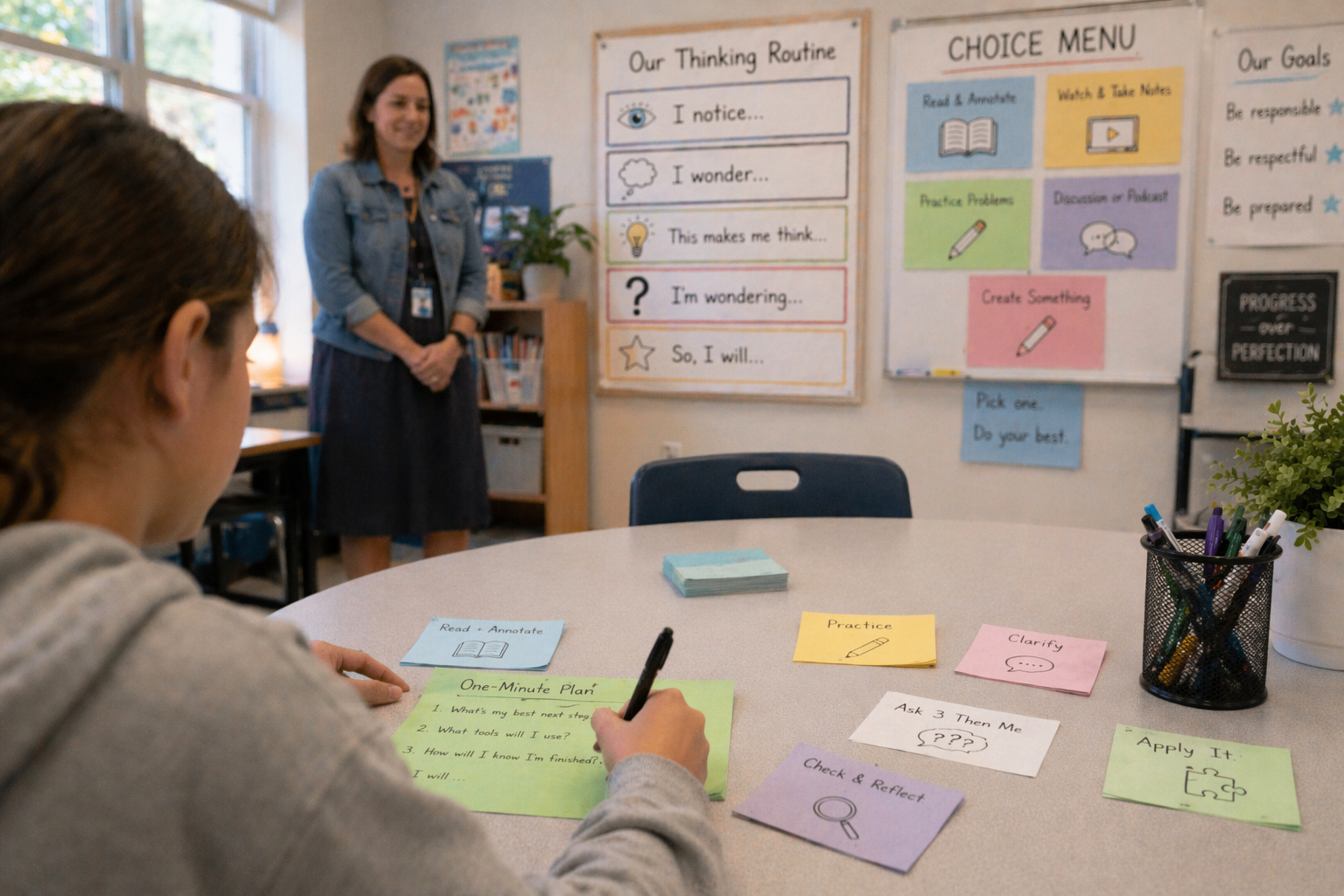
Teachers who want students to become self-directed learners can begin by shaping predictable daily structures that make independence manageable. Small, consistent routines lower cognitive load and allow learners to focus energy on planning, strategy, and reflection rather than logistics. When classroom expectations and checkpoints are reliable, students practice decision-making and self-assessment within a safe and scaffolded environment. Below are practical structures that require little preparation but support measurable growth in student autonomy.
Designing Small Daily Structures
Start with compact routines that fit naturally inside existing lessons: a one-minute planning prompt at the start, a brief midpoint checkpoint, and a short exit reflection that captures progress and next steps. Each routine should be deliberately short and consistently phrased so students quickly internalize how to use it and why it matters for their learning. The objective is cumulative — short, repeated practices strengthen metacognitive habits and increase students’ capacity to self-regulate their study choices. Emphasize clarity and repetition in the early stages so the routines become part of classroom culture rather than an extra task.
Introduce only one routine at a time and model it explicitly for several sessions to set expectations and reduce ambiguity. As students demonstrate readiness, transfer responsibility gradually and celebrate examples of independent decision-making.
Simple Classroom Systems to Practice
Organize visible, low-friction systems that support independent work without constant teacher intervention, such as clear task cards, choice menus that guide appropriate challenge levels, and succinct peer-feedback protocols. Provide predictable timelines and quick self-check rubrics so learners can monitor progress, identify when they need help, and practice adjusting strategies. Make norms for asking for assistance explicit so students learn when to seek feedback and when to persist autonomously. Over time these micro-systems reduce interruptions and reinforce the three core habits of planning, monitoring, and adapting.
- Start-of-class planning prompt: one focused goal and two quick action steps (1–2 minutes).
- Mid-lesson checkpoint: a two-minute signal for self-rating, question posting, or partner check.
- Exit task: a single reflective sentence about evidence of learning and one next-step action.
Rotate or adapt tools by subject and student needs rather than adopting everything at once; this keeps implementation realistic and targeted. Track which systems increase independent attempts and scale the most effective practices over time.
Conclusion
Small, predictable structures are the most reliable path toward sustained independent learning because they shift effort from constant instruction to repeated practice and reflection. With consistent routines, students build confidence in making choices and monitoring their progress without undue teacher prompts. Over weeks and months these daily moves compound into lasting learner autonomy and stronger classroom agency.