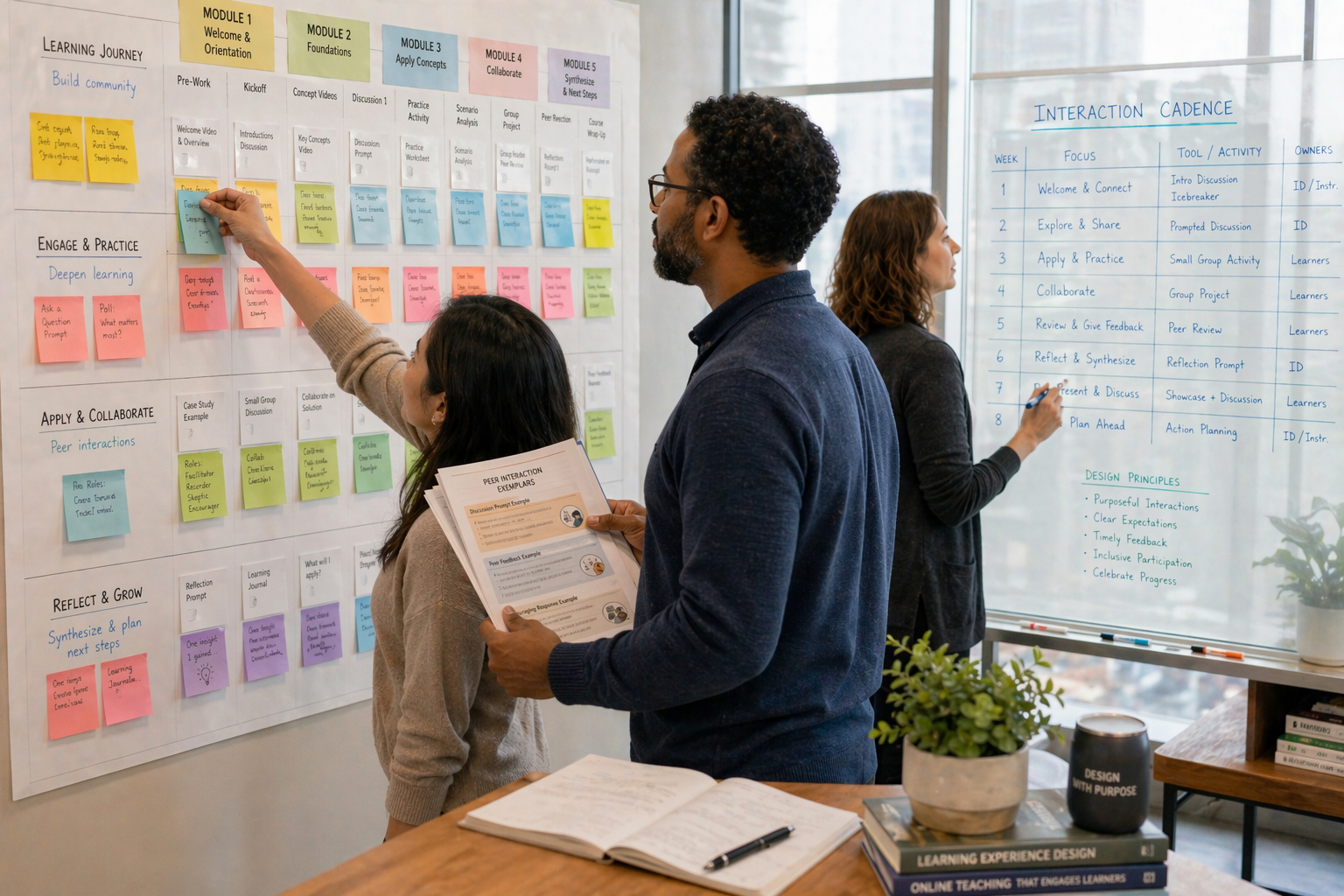
Peer interaction is a powerful lever for maintaining motivation and improving retention in online courses. When learners connect around tasks and shared goals, engagement shifts from passive consumption to active collaboration. Thoughtful design encourages regular exchange, accountability, and the sense of community that sustains persistence. This article outlines practical approaches to embed meaningful peer interactions without overwhelming instructors or learners.
Why peer interaction matters for retention
Social learning supports persistence by creating reasons to return: relationships, deadlines, and mutual feedback. Peers provide diverse perspectives and timely practical help that complement instructor input. Interaction also builds social accountability, which increases the likelihood learners will complete milestones and stay on schedule. These dynamics are especially important in self-paced or asynchronous formats where motivation can wane.
Designing with retention in mind means prioritizing interactions that are purposeful and manageable. Keep activities aligned to clear outcomes so conversations stay focused and useful.
Designing structured peer activities
Structured tasks reduce friction and help learners see the value of participation quickly. Brief, targeted activities such as critique circles, problem-solving pairs, or micro-presentations give participants a clear role and deliverable. Scaffolding instructions and exemplars clarifies expectations and reduces uneven workload. Balance frequency with cognitive load so collaboration complements, rather than replaces, individual study.
- Start with low-stakes prompts to normalize contribution.
- Use rotating partners or small groups to diversify exposure.
- Provide rubrics for peer review to keep feedback constructive.
These design patterns make collaboration predictable and fair, which encourages sustained engagement over the course lifecycle.
Facilitation and moderation strategies
Effective facilitation nudges conversations toward learning goals without dominating them. Set clear norms for respectful feedback, and model concise, task-focused posts early on. Automated reminders and milestone checkpoints can prompt dormant groups to re-engage. Where resources permit, light-touch moderation helps maintain momentum and addresses persistent misalignment.
Empower learners to take ownership by assigning rotating facilitation roles or peer-leader responsibilities. This builds leadership skills and reduces instructor workload over time.
Measuring impact and iterating
Track both participation metrics and qualitative signals to assess the value of peer activities. Combine discussion counts, response times, and completion rates with sample-based reviews of feedback quality. Use short surveys or reflection prompts to capture learner perceptions about usefulness and fairness. Iterative adjustments based on evidence will fine-tune activity cadence and formats.
Small, data-informed changes often yield meaningful improvements in retention. Treat peer interaction design as an evolving component of course optimization.
Conclusion
Purposeful peer interaction converts solitary study into a social learning journey that sustains motivation. By designing structured activities, supporting facilitation, and measuring outcomes, course teams can strengthen retention. Iteration and learner ownership make peer-driven approaches scalable and enduring.