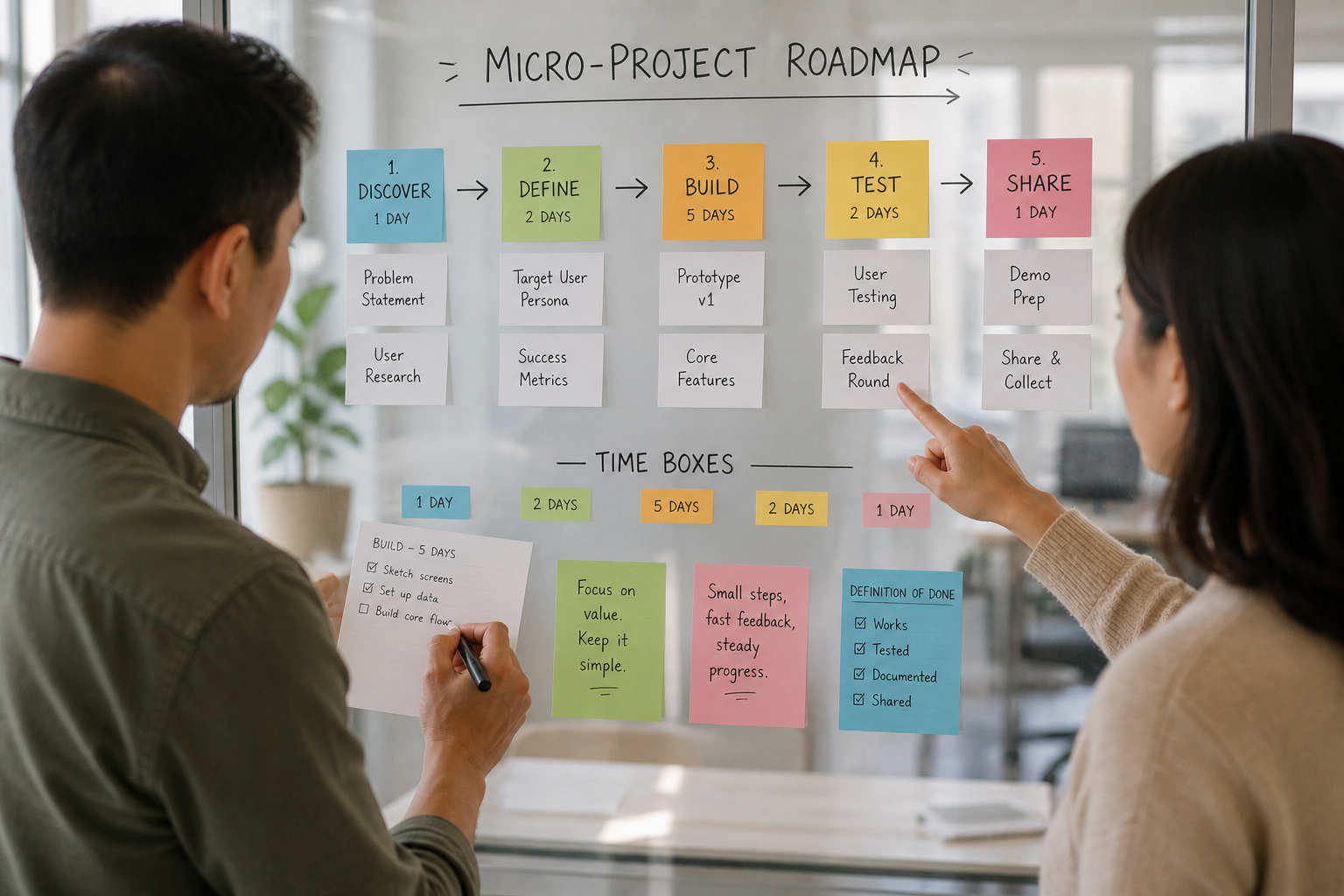
Micro-projects break complex learning goals into manageable, goal-oriented tasks that learners can complete in short timeframes. They create repeated opportunities for application, reflection, and feedback which encourage retention and skill transfer. When intentionally sequenced, micro-projects help learners see progress and build confidence through concrete outputs. This article explains why they work and how to design them for online adult learners.
Why micro-projects improve learning
Micro-projects focus on active application rather than passive consumption, which strengthens retrieval and deeper processing of concepts. Their small scope lowers the barrier to start and allows learners to iterate without a heavy time commitment. Frequent completion cycles provide natural checkpoints for formative feedback and rapid course correction. These elements combine to increase motivation and make skill transfer more likely over time.
Adopting micro-projects shifts course design from one-off assessments to continuous practice opportunities. This change supports mastery learning by allowing learners to revisit and refine work based on feedback.
Design principles for effective micro-projects
Effective micro-projects align tightly with a single learning objective and include clear success criteria and deliverables.
They should be scaffolded so complexity increases gradually across the sequence, enabling learners to apply prior work in new contexts. Time expectations must be explicit, and resources or templates should reduce cognitive overhead so learners focus on the target skill. Finally, include built-in reflection prompts to help learners connect the activity to broader goals.
- Keep scope to 30–90 minutes of focused work.
- Provide examples, rubrics, and optional starter templates.
- Include a short peer or instructor feedback step.
Following these principles makes micro-projects practical and repeatable for a broad range of learners. They also make assessment simpler and more actionable for instructors and platforms.
Examples and practical implementation
Examples include creating a one-page plan, recording a two-minute demonstration, or drafting a short case analysis tied to a competency. Sequence three to six micro-projects so each builds on the previous one and culminates in a small capstone deliverable. Use automated checks where possible (rubrics, self-check quizzes) and pair them with at least one human feedback touchpoint. Track progress visibly so learners can celebrate early wins and see how each task contributes to a larger skill set.
Integrate micro-projects into weekly rhythms and orient onboarding around how to approach them efficiently. Clear timing and expectations will help busy adult learners adopt them as sustainable habits.
Conclusion
Micro-projects make learning actionable by converting abstract objectives into short, meaningful tasks. When sequenced, scaffolded, and paired with feedback they accelerate skill acquisition and improve retention. Design them with clarity and visible progress to support consistent engagement and measurable gains.