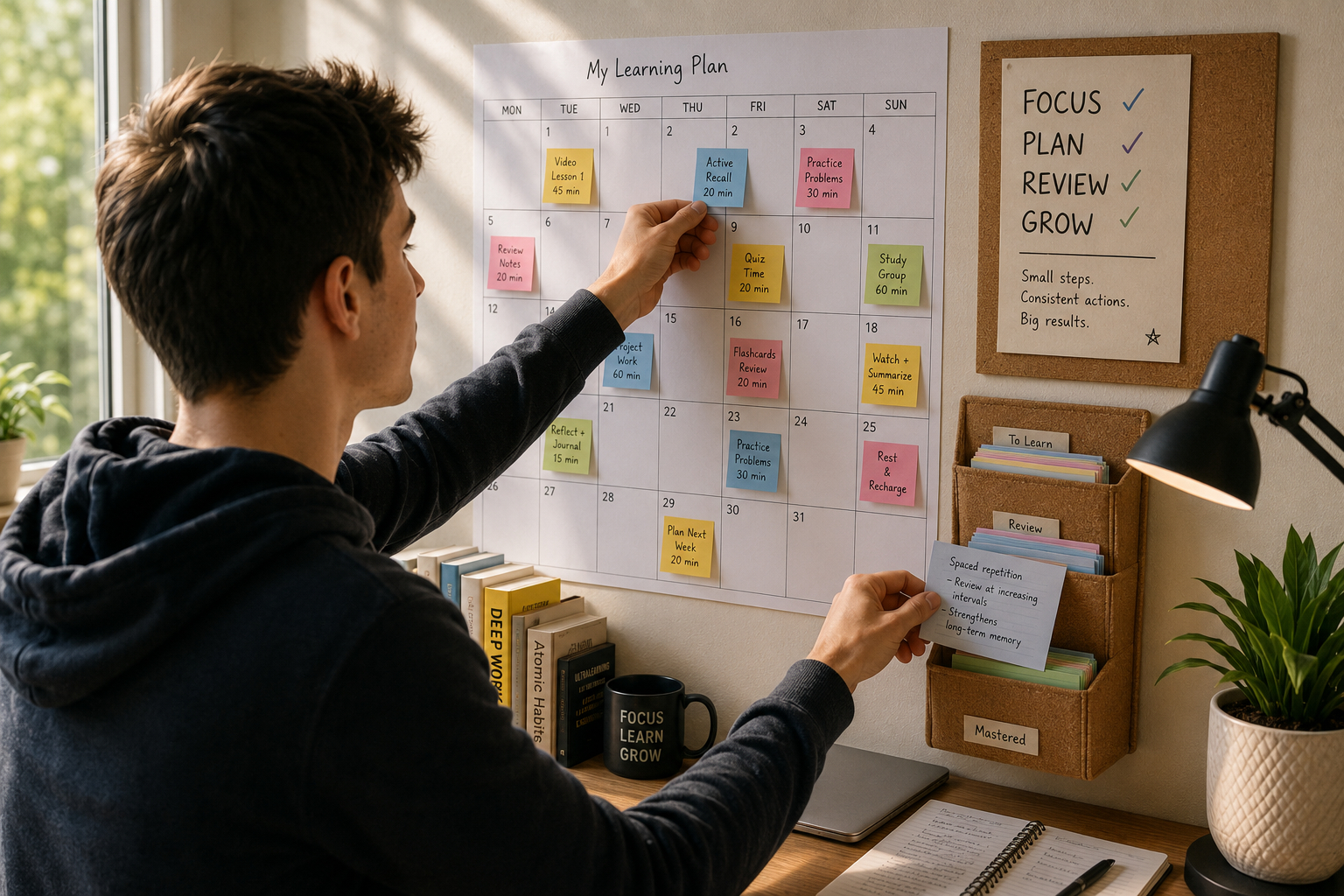
Online learning offers flexibility and access, but success depends on purposeful planning and consistent habits. Many learners struggle to stay motivated without structured support, so practical strategies can bridge that gap. This article outlines actionable steps to improve focus, retention, and progress when studying independently. Use these approaches to build a sustainable routine that aligns with your goals and workload.
Plan and Prioritize
Start by defining clear, measurable learning objectives for each course or module you undertake. Break larger goals into weekly and daily tasks to prevent overwhelm and to create a predictable rhythm. Prioritize topics based on deadlines, difficulty, and relevance to your long-term aims to make study sessions more efficient. Planning reduces decision fatigue and increases the likelihood of steady progress.
Implement short planning sessions at the start or end of each week to adjust priorities and timelines. Use a simple task list or digital planner to keep commitments visible and actionable.
Create a Focused Learning Environment
Designate a consistent study area that minimizes distractions and signals focus to your brain and household. Keep necessary materials within reach and remove digital interruptions by using do-not-disturb modes or website blockers. Small environmental cues—good lighting, comfortable seating, and a tidy workspace—help sustain longer, higher-quality study periods. Treat this space as a professional environment where learning is the primary activity.
Consistency in place and timing trains your mind to enter study mode more quickly. Even short, regular sessions in the same location can improve concentration.
Use Active Learning Techniques
Move beyond passive reading by engaging with materials through summarization, self-testing, and application exercises. Teach concepts aloud, create practice problems, or use flashcards and spaced repetition tools to strengthen recall. Active techniques increase retention and expose gaps in understanding that passive review often conceals. Integrating multimodal resources—videos, quizzes, and projects—keeps learning dynamic and adaptable to your style.
- Self-quizzing identifies weak areas.
- Teaching peers or explaining concepts aloud reinforces mastery.
Rotate techniques to maintain momentum and to approach material from different angles. Regular review sessions consolidate learning into long-term memory.
Track Progress and Adjust
Monitor achievements with concise metrics like completed modules, quiz scores, or project milestones. Reflect on which study methods yield the best results and adjust your plan accordingly. Solicit feedback when possible and remain flexible—effective self-directed learning is iterative, not fixed. Periodic review helps you stay aligned with outcomes and prevents drifting off course.
Use simple dashboards or habit trackers to visualize momentum and celebrate small wins. Adjust time allocation if certain topics require deeper focus.
Conclusion
Mastering self-directed online learning depends on clear goals, a supportive environment, and active study methods. Regular planning, measurement, and small adjustments keep momentum and improve results over time. Apply these strategies consistently to turn flexible learning into reliable progress.