Small, predictable routines between lessons or activities help students shift focus and take responsibility for their learning. Well-designed transition rituals reduce downtime, clarify expectations, and create space for brief reflection or planning. When students learn the cues and steps, those rituals become scaffolds for independent behavior and time management. Over time they support metacognition and smoother classroom flow without constant adult prompting.
Why Transition Rituals Matter
Transition rituals create consistent signals that shape student behavior and attention. Predictability lowers cognitive load: when students know what comes next, they can conserve mental energy for learning tasks. These routines also send an implicit message about expectations, helping quieter or less confident students participate without needing one-on-one prompts. In short, rituals turn ambiguous moments into opportunities for skill-building and reflection.
Applied thoughtfully, transitions become teaching moments rather than lost time. They can anchor classroom culture and foster a shared sense of responsibility among learners.
Designing Simple Transition Routines
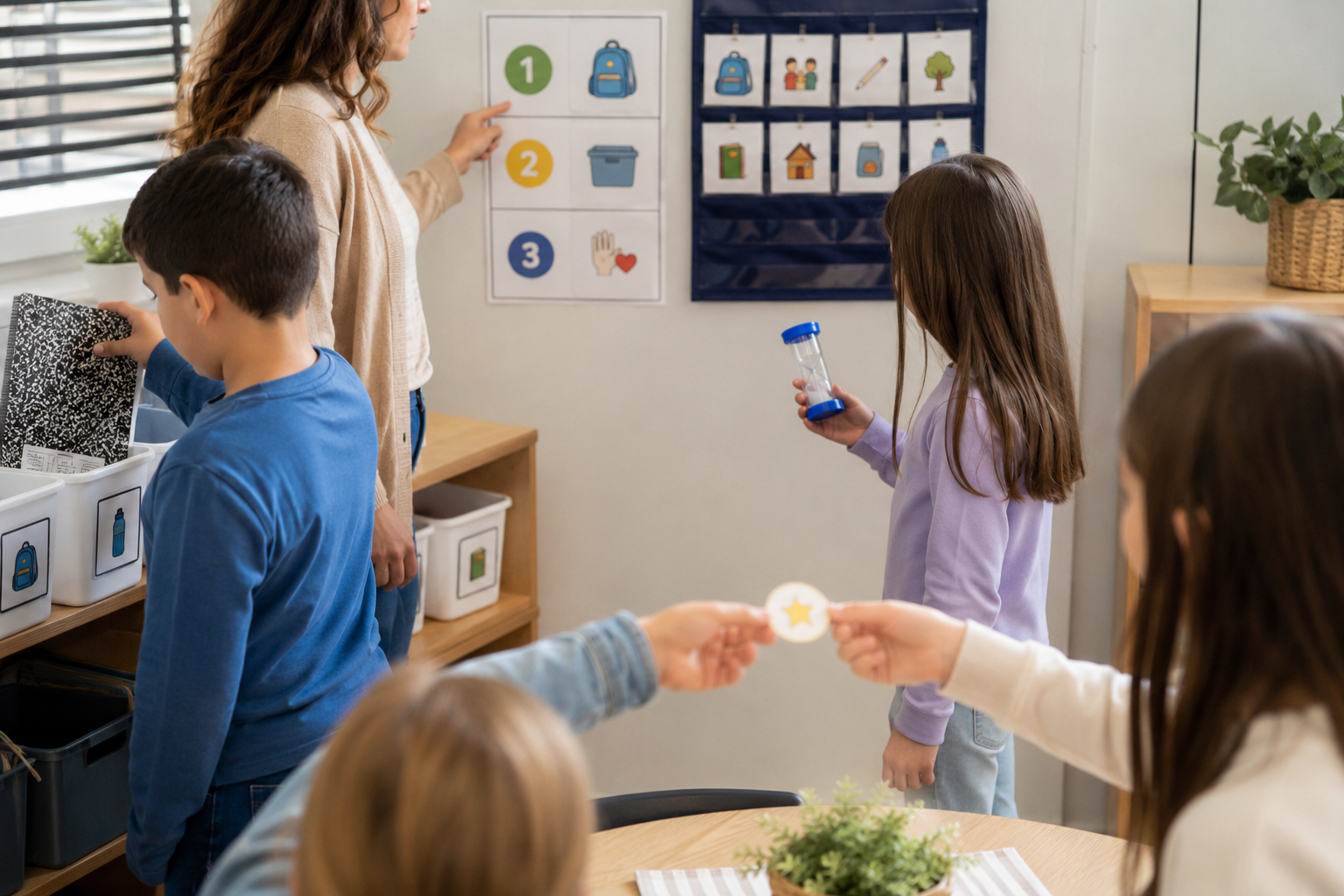
Design rituals that are brief, explicit, and repeatable so students can perform them independently. Choose a clear cue (a sound, a visual signal, or a countdown) and limit steps to two or three actions that align with the learning goal. Make sure routines are accessible to all learners by modeling them, practicing with students, and simplifying language or gestures as needed. Keep timing realistic so transitions do not eat into instruction.
- Examples: a two-minute desk clear and reflection prompt, a 60-second checklist for materials, or a quick peer-share using a fixed sentence starter.
- Visual schedules or charted steps can help students memorize and self-monitor the ritual.
- Rotate small responsibilities so students take ownership of facilitating transitions.
By designing with clarity and fairness, rituals become tools students use to manage themselves. Minimal materials and consistent practice are often all that is needed.
Monitoring and Adjusting Rituals
Track how well a transition routine functions by observing timing, student independence, and engagement. Use quick data points—time taken, prompts required, or student reflections—to decide whether to simplify or extend a ritual. Solicit student feedback to identify barriers and to co-design tweaks that increase buy-in and accessibility. Small adjustments over a few weeks typically produce measurable gains in flow and autonomy.
Document what changes you try and the effects you see to refine routines efficiently. Iteration keeps rituals responsive to the class and supports continuous improvement.
Conclusion
Intentional transition rituals turn routine moments into opportunities for student growth. With clear cues, brief steps, and regular adjustments, these practices boost independence and classroom efficiency. Start small, monitor impact, and scale what works for your learners.