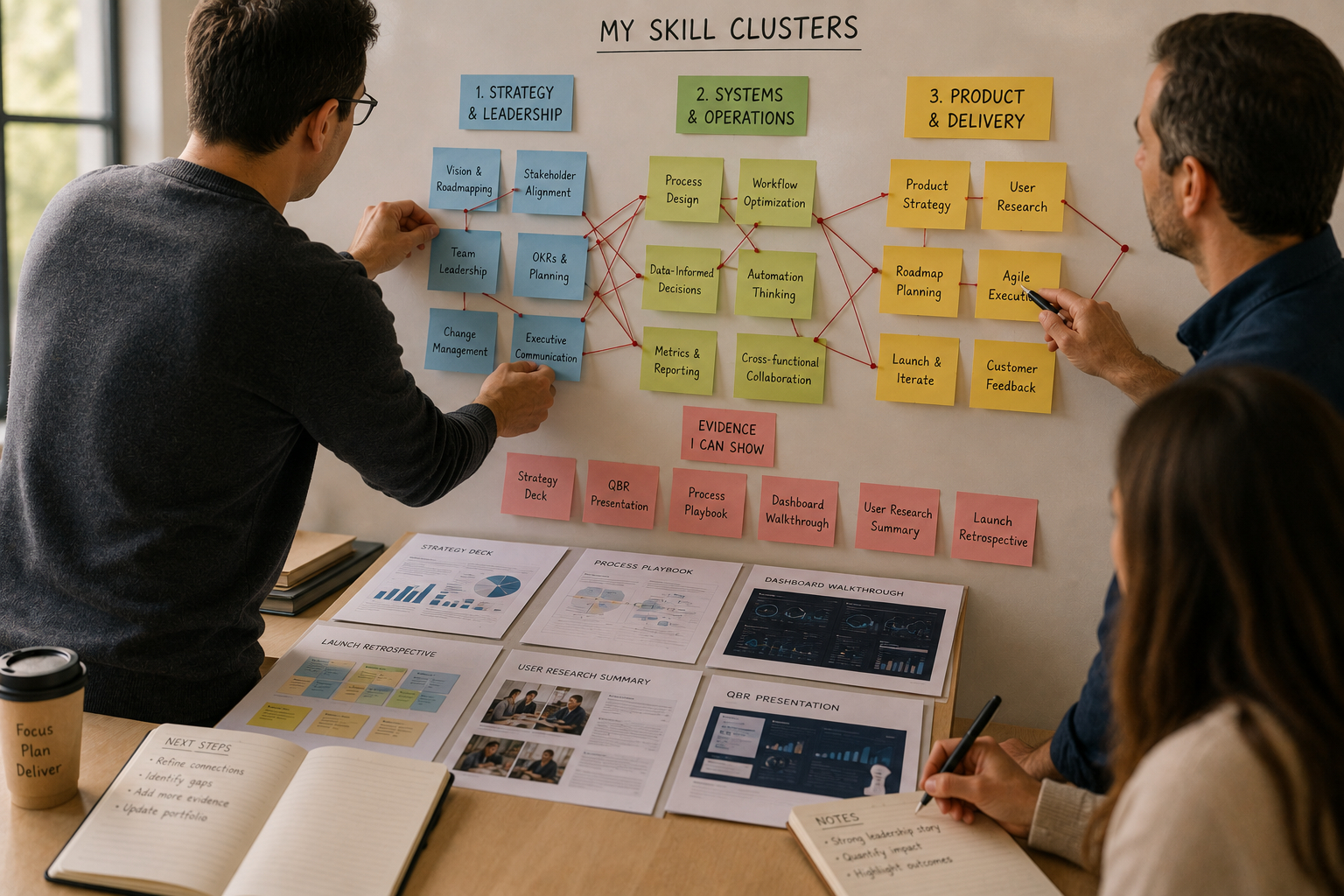
In a shifting job landscape, grouping related abilities into compact skill clusters helps professionals show coherent capability and accelerate moves. A cluster bundles complementary skills, tools, and examples so hiring managers or collaborators see applied outcomes rather than isolated tasks. This approach reduces decision friction when targeting roles and clarifies where to invest time in learning. It also makes your development more flexible, because clusters can be recombined for different positions.
Why skill clusters matter
Employers and internal stakeholders evaluate potential based on observable impact, not on a long list of disconnected competencies. When you assemble skills into clusters—such as data analysis plus storytelling plus domain knowledge—you create a narrative about what you can accomplish. Clusters help you prioritize work that produces repeatable outcomes and guide which portfolio items to build. They also reveal gaps quickly, so you can design short experiments to validate fit.
Adopting clusters encourages strategic learning and saves time. Instead of learning a tool in isolation, you practice it within a use case that demonstrates value.
How to build your first cluster
Start by mapping three to five capabilities that combine to solve a real problem in your target role. Identify a short project where those skills produce measurable results and set a clear success metric for the experiment. Document the process, choices, and outcomes in a short write-up or artifact that highlights your contribution. Aim for projects that can be completed in weeks, not months, to keep momentum and learning cycles frequent.
- Choose complementary skills that show both execution and judgment.
- Pick a problem with visible impact and measurable output.
These small, deliberate projects become repeatable evidence pieces that populate your portfolio. Over time, multiple clusters demonstrate consistent patterns of contribution.
Communicating clusters to advance your career
Translate a cluster into language that hiring managers and colleagues recognize: name the cluster, state the outcomes you delivered, and link to artifacts or metrics. Use concise examples in interviews and on your profile to show how the cluster maps to the responsibilities you seek. When you network, describe the cluster and the problem it solves to make conversations concrete and memorable. Clusters also make it easier to ask for stretch assignments that extend your proven capabilities.
Consistent language and evidence help others understand the value you bring. Over time, clusters become the building blocks of a portable professional narrative.
Conclusion
Assembling skill clusters refocuses learning into clear, outcome-oriented packages that hiring managers and leaders can evaluate quickly. By practicing short projects, documenting results, and naming clusters, you turn capabilities into compelling evidence for career moves. Start small and iterate: clusters compound into visible leverage over time.
Related Articles



Recent Posts

Designing Compact Choice Menus to Foster Student Decision-Making
Teaching Students to Sequence Tasks for Deeper Engagement
Practical Classroom Methods for Teaching Strategic Study Prioritization
Translate Everyday Work into Clear Professional Evidence
A Practical Process for Building Portable Career Proofs


