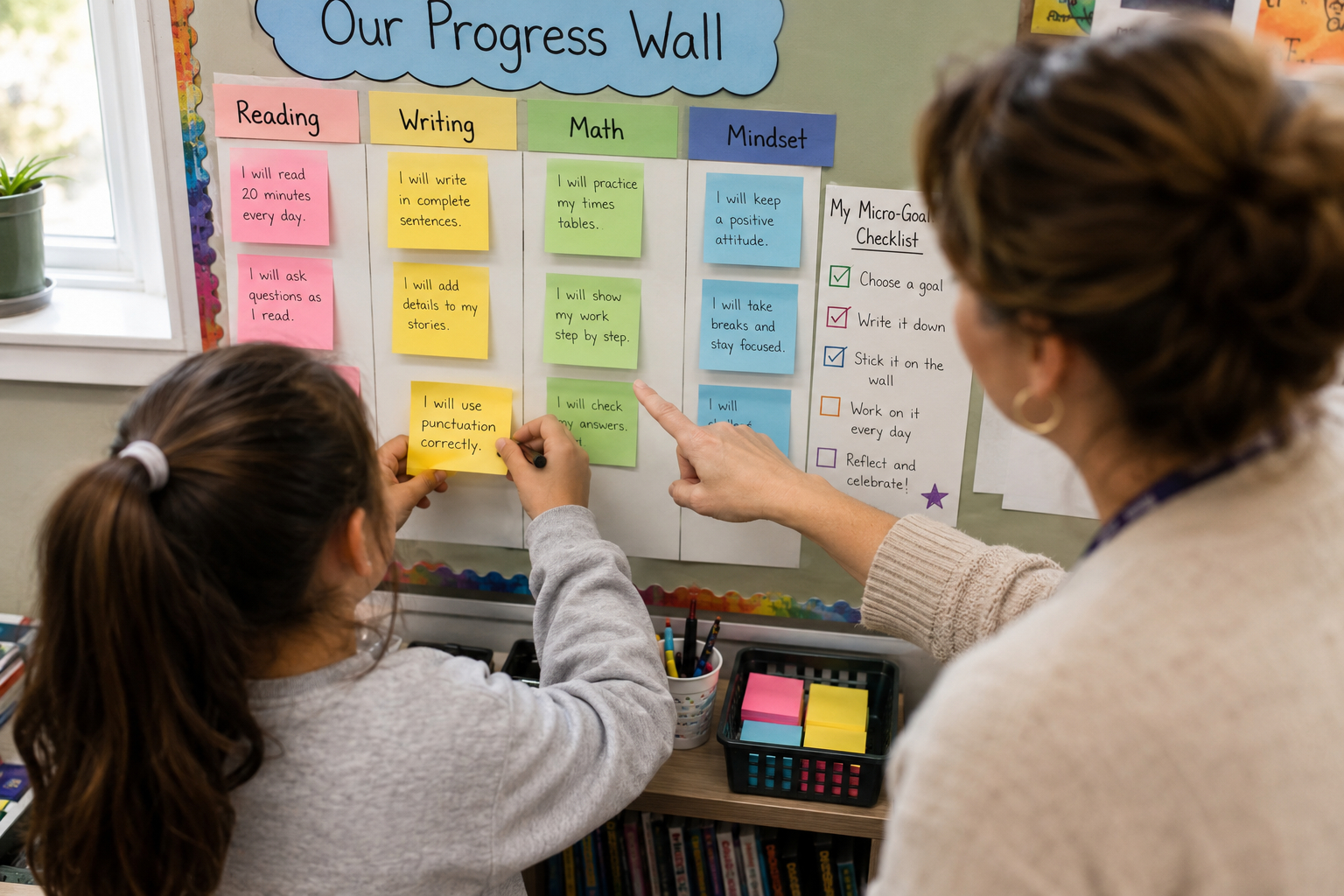
Helping students break larger tasks into short, measurable steps is one of the most practical ways to build momentum and confidence. Micro-goals offer clear evidence of progress, reduce overwhelm, and make metacognitive habits teachable. When learners set and track small, meaningful targets they gain better control over pacing and can iterate strategies quickly. This article outlines why micro-goals matter and how teachers and students can implement simple tracking routines.
Why Micro-Goals Matter
Micro-goals translate vague expectations into concrete behaviors that students can test and refine. They make hidden skills visible by focusing attention on specific actions, such as “write 100 words” rather than “work on essay.” Short targets shorten feedback loops and create opportunities for regular reflection and adjustment. Over time, consistent micro-goal practice builds students’ capacity to estimate effort and choose effective strategies.
For teachers, micro-goals provide clear checkpoints for formative feedback. For learners, they offer quick wins that sustain motivation.
How to Create Effective Micro-Goals
Begin by tying each micro-goal to a single observable outcome and a time frame. Use verbs that describe actions rather than judgments, like “solve five practice problems” instead of “understand algebra.” Encourage students to set goals that are challenging but achievable in one work session, and to write them down in a central place. Share exemplars and model the language of goals so expectations are transparent.
Small changes to wording often make a goal more actionable. Keep goal cycles short so students can evaluate and refine quickly.
Tracking and Reflection Practices
Simple tracking tools can be low-tech: sticky notes, a shared spreadsheet, or a one-line daily log. Teach students a quick reflection script: what I did, what worked, next step. Regularly scheduled check-ins — brief exits or mini-conferences — convert tracked data into actionable guidance. Visualizing patterns across days helps learners recognize when to increase challenge or repeat strategies.
Make tracking visible to both teacher and student to support collaborative troubleshooting. Celebrate consistent effort as well as successful outcomes.
Common Pitfalls and Solutions
A common pitfall is setting goals that are too vague or too large, which leads to frustration. Another is tying success solely to grades instead of to the process, which undermines risk-taking and experimentation. To address these, coach students to split overly ambitious tasks and to rate progress using simple rubrics. Allocate class time for practice so students learn goal-setting as a habit rather than a one-off task.
Reframing setbacks as data points helps learners adjust without judgment. Over time, refine prompts and supports based on observed student needs.
Conclusion
Micro-goals are a practical lever for building student autonomy and better learning habits. When created, tracked, and reflected upon intentionally they reduce overwhelm and accelerate skill development. Start small, iterate, and make the process visible.