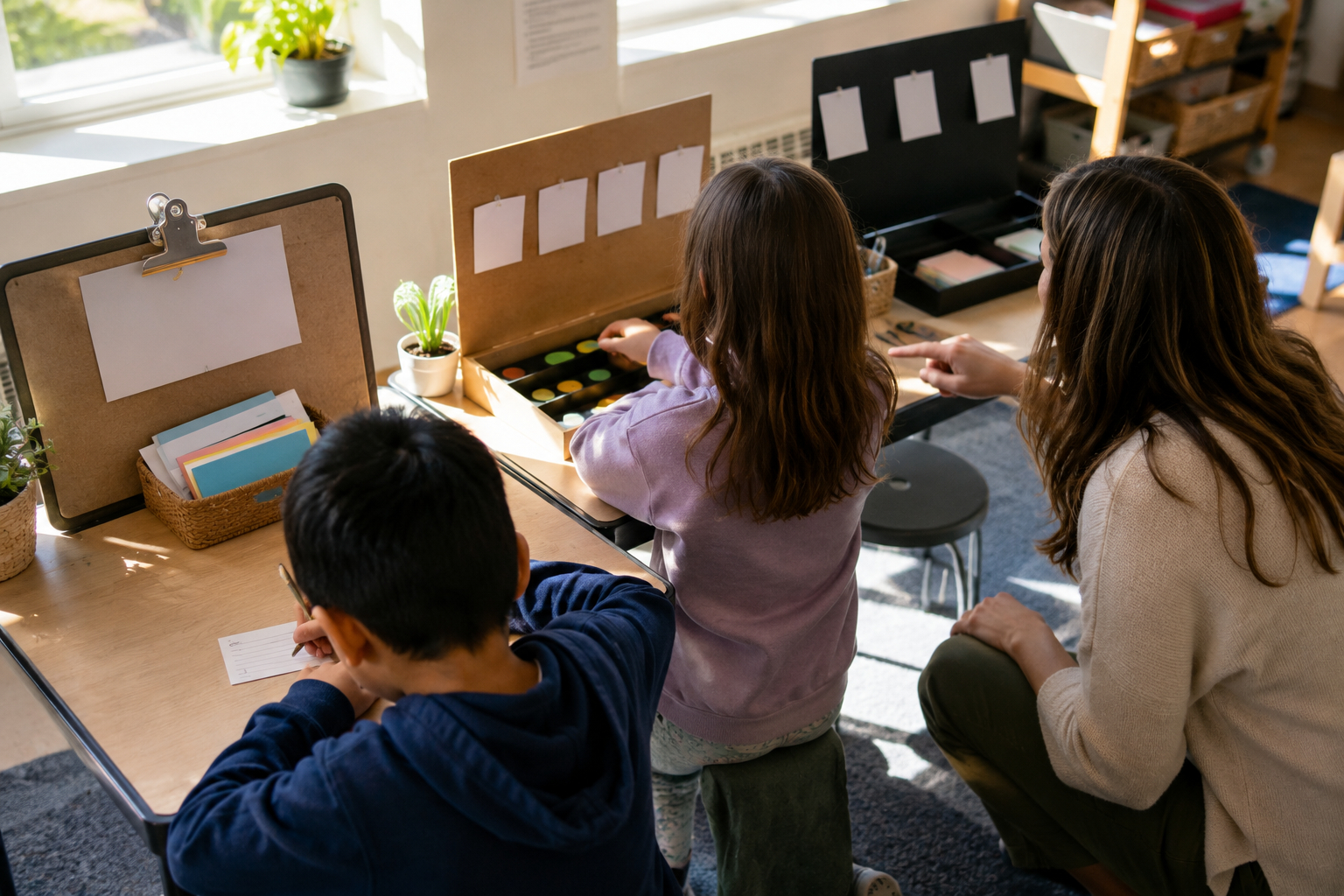
Reflection cycles give students predictable moments to pause, evaluate, and plan their next steps. When these cycles are compact and routine, learners build habits of self-monitoring without adding heavy workload. A short, repeated structure helps students connect daily practice to longer-term goals. This article outlines practical steps to design short reflection stations that fit busy classrooms.
What a Reflection Cycle Looks Like
A typical cycle includes a prompt, a quick response, and a short plan for improvement. For example, a student reads a prompt, writes a one-sentence insight, and chooses one specific next action. Keeping each step timed (two to five minutes total) ensures reflections are sustainable. This structure reinforces metacognitive thinking while keeping class momentum.
These cycles scale across subjects and ages because they focus on process rather than content. When students repeat the same micro-routine, they learn to notice patterns in their work and to set small, achievable adjustments.
Implementing Short Reflection Stations
Start by carving five minutes into an activity where students can rotate through reflection stations. One station might prompt evidence of learning; another asks for a one-line summary; a third asks students to pick a micro-goal for the next lesson. Provide simple templates so responses are uniform and quick to complete.
- Station 1: One-sentence summary of learning.
- Station 2: Evidence or example of understanding.
- Station 3: One specific next step to try.
Rotate stations weekly or keep them fixed depending on classroom flow. The goal is consistency so students internalize the cycle and can perform it independently.
Teacher Moves and Assessment
Teachers model the cycle first, share their own short reflections, and then scaffold student practice. Use spot-checks and quick conferences to surface common themes rather than grade each response. Over time, collect representative reflections to track growth and to inform small-group instruction.
Feedback should be targeted and actionable: highlight one strength and one next step. This keeps the process forward-focused and prevents students from becoming overwhelmed by critique.
Conclusion
Compact reflection cycles turn brief pauses into powerful learning habits. When routines are consistent and low-friction, students gain independence and metacognitive awareness. Start small, iterate, and watch student ownership grow.