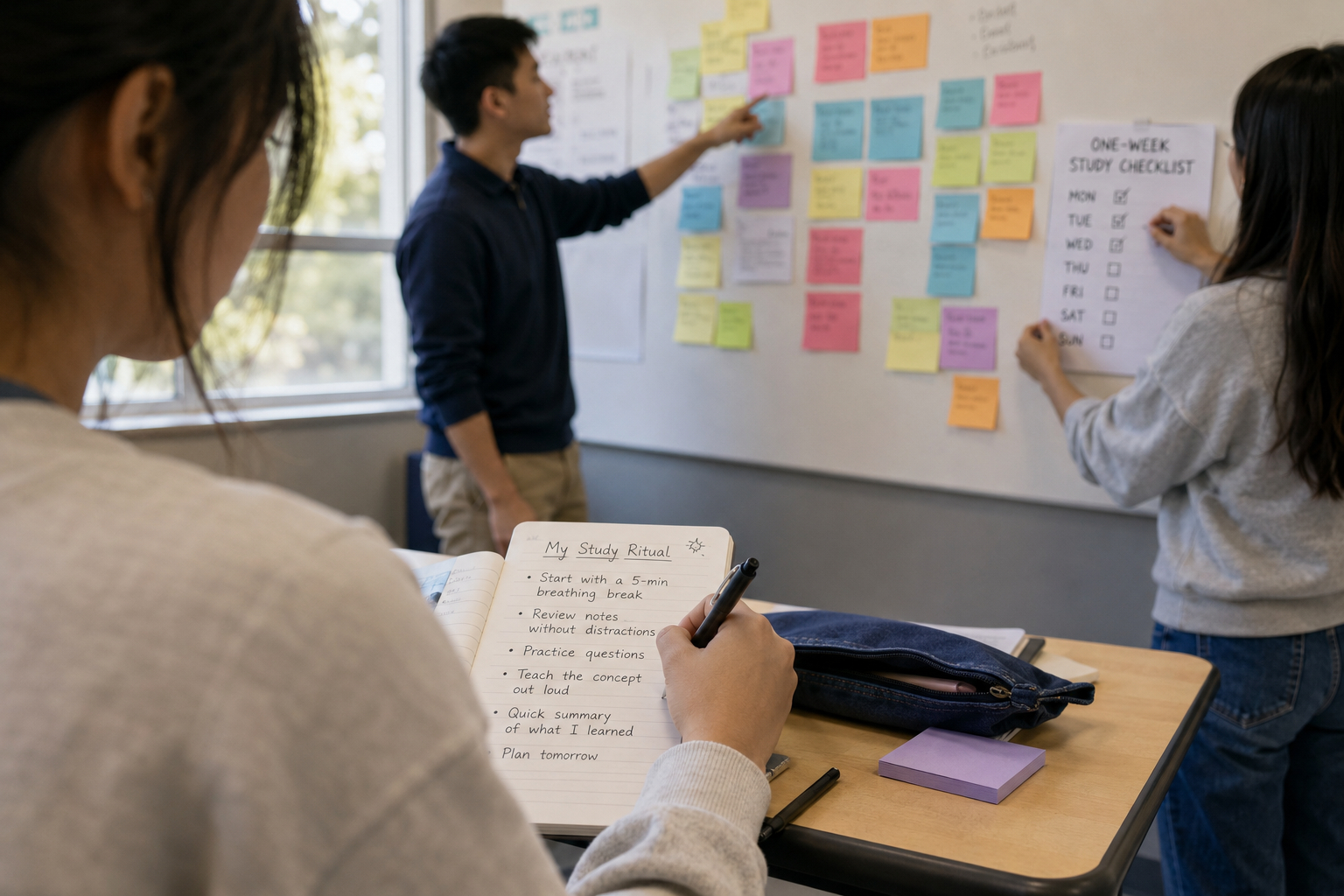
Helping students design their own study rituals builds agency and makes learning more sustainable. When learners choose techniques that reflect their preferences and constraints, routines are more likely to stick. Teachers can scaffold this process through brief prompts, templates, and regular check-ins that respect student ownership. The goal is to move from teacher-led schedules to student-curated habits that support long-term growth. This approach reduces friction and improves students’ ability to transfer skills across subjects.
Start Small and Make It Student-Owned
Begin with a narrow, repeatable action students can try for a week. Examples include a two-minute planning ritual, a one-page study checklist, or a quick self-evaluation at the end of class. Keep choices limited so students can test what fits their rhythm without feeling overwhelmed. Emphasize that ownership means students adapt tools to their needs rather than copying a prescribed routine. Documenting small wins helps students track what matters.
Encourage iteration: if a routine feels off, prompt students to tweak one variable. Small adjustments lead to practical learning about what supports focus and retention. Celebrate iterations to reinforce experimentation.
Use Regular Reflection Prompts
Reflection helps students translate short experiments into reliable practices. Pose consistent prompts that probe strategy, effort, and outcomes so learners can compare attempts across days. Keep reflections brief and actionable to avoid fatigue and make data useful for decision-making. Reflections also provide a natural record students can consult when refining their routines. Short, weekly reviews help consolidate decisions into habit.
- What worked today and why?
- Which step felt unnecessary or too hard?
- One specific adjustment to try tomorrow.
Collect reflections in a simple log or digital note so patterns emerge. Use those patterns to guide next-week goals and celebrate progress. Teachers can model reflective entries to accelerate student learning.
Embed Routines into Assessment and Feedback
When assessments reward process as well as product, students take routines seriously. Include brief checkpoints that reward consistent practices, such as process rubrics or credit for documented reflections. Feedback should highlight strategy adjustments and concrete next steps so routines are meaningfully evaluated. Over time, assessments can shift from policing adherence to supporting effective habit formation. Over time, the emphasis on process makes self-regulation visible and teachable.
Share examples of successful student routines and invite peer coaching. Visible models make the pathway from experiment to routine more transparent and achievable. Pairing peer examples with feedback shortens the learning curve.
Conclusion
Teaching students to curate their own routines develops autonomy and resilience. Focus on small experiments, regular reflection, and assessment that values process. These elements together make student-designed study habits practical and enduring.