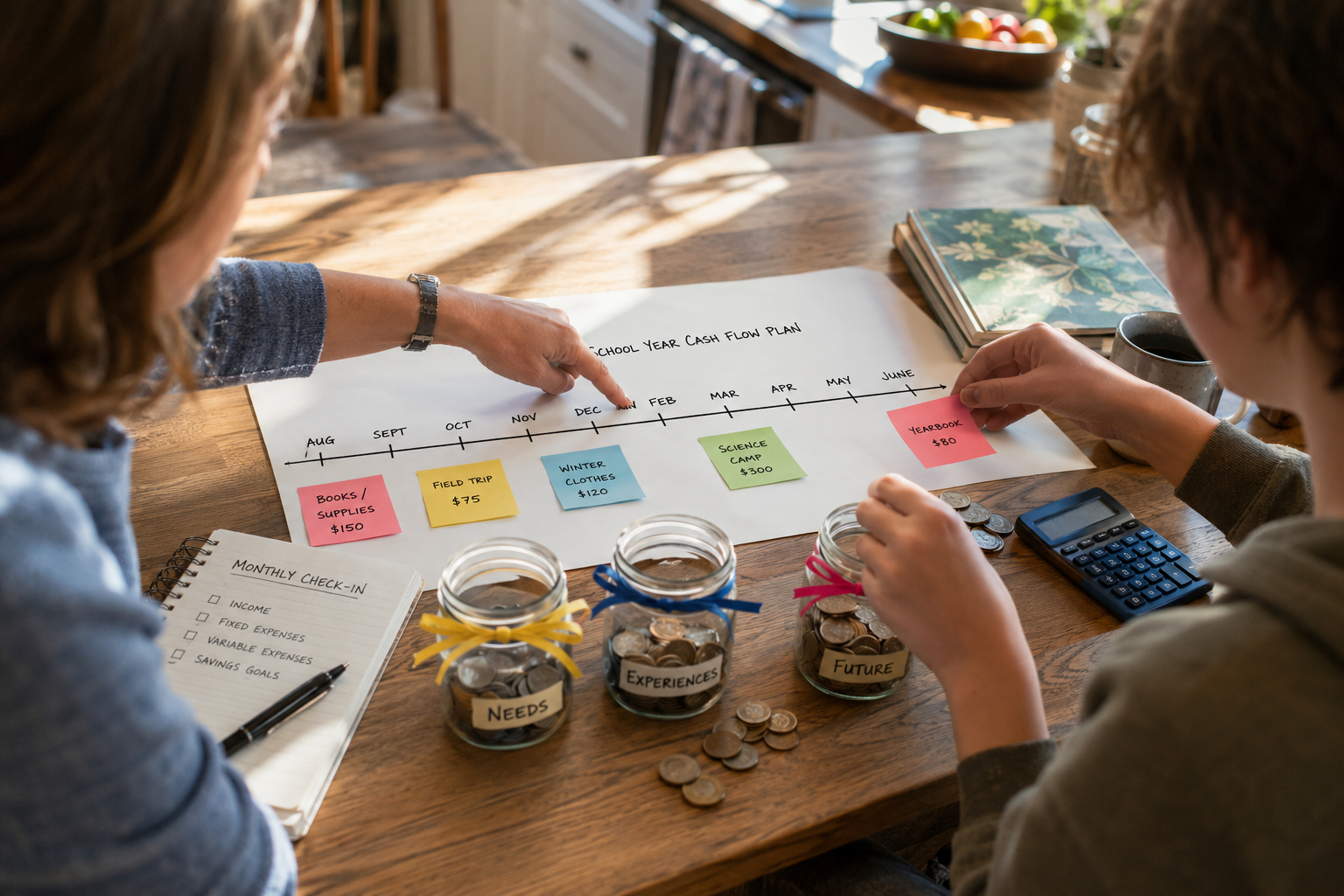
Balancing ongoing learning expenses against household cash flow makes education spending more predictable and less stressful. By mapping costs to timing, prioritizing needs, and building simple funding buckets, families can avoid last-minute trade-offs. This approach emphasizes matching payment schedules to income rhythms and keeping a modest contingency for unexpected opportunities or delays. The goal is a repeatable system that supports continuous learning without disrupting regular household obligations.
Map Costs to Timing
Begin by listing all upcoming learning expenses and placing them on a timeline linked to when payments will be due. Short-term items like course fees or monthly subscriptions should align with your regular pay periods, while larger commitments such as certificate programs or equipment can be scheduled across several paychecks. Consider the cadence of income, seasonal expense spikes, and any refunds or employer support that might offset costs. Clear timing reduces the need to borrow or cut into essential spending when bills arrive.
When you treat timing as part of the planning process, small adjustments become possible and meaningful. The next step is to translate those timings into workable buckets.
Create Priority Buckets
Organize funds into purpose-built buckets that reflect priority and flexibility: essentials, opportunity investments, optional learning, and a small buffer for surprises. Essentials cover required fees or materials that directly support work or schooling and should come first. Opportunity investments fund strategic courses or certifications with clear returns, while optional learning supports hobbies or exploratory classes. A modest buffer helps smooth timing mismatches without derailing the primary budget.
- Essentials: Required tuition, course materials, certification renewals.
- Opportunity: Career-enhancing courses with measurable outcomes.
- Optional: Enrichment classes and exploratory learning.
- Buffer: Short-term cushion for timing gaps and small emergencies.
These buckets make choices transparent and allow you to fund different objectives without mixing priorities. Automating transfers to each bucket improves follow-through and reduces decision fatigue.
Review and Adjust Regularly
Schedule a monthly or quarterly review to compare actual spending against your timeline and bucket balances. Use that checkpoint to re-prioritize if new opportunities arise or if household cash flow changes due to seasonal income or unexpected expenses. Small reallocations keep the system responsive: pause optional subscriptions, shift funds between buckets, or accelerate savings for an upcoming course. Documenting decisions creates a useful record for future planning.
Regular reviews also help identify patterns, such as consistent timing shortfalls or recurring optional costs that could be trimmed. Over time those insights make the funding approach leaner and more reliable.
Conclusion
Aligning learning investments with household cash flow turns unpredictable education costs into manageable commitments. With mapped timing, priority buckets, and regular reviews you maintain flexibility and control. The result is sustained learning that fits your household finances rather than competing with them.