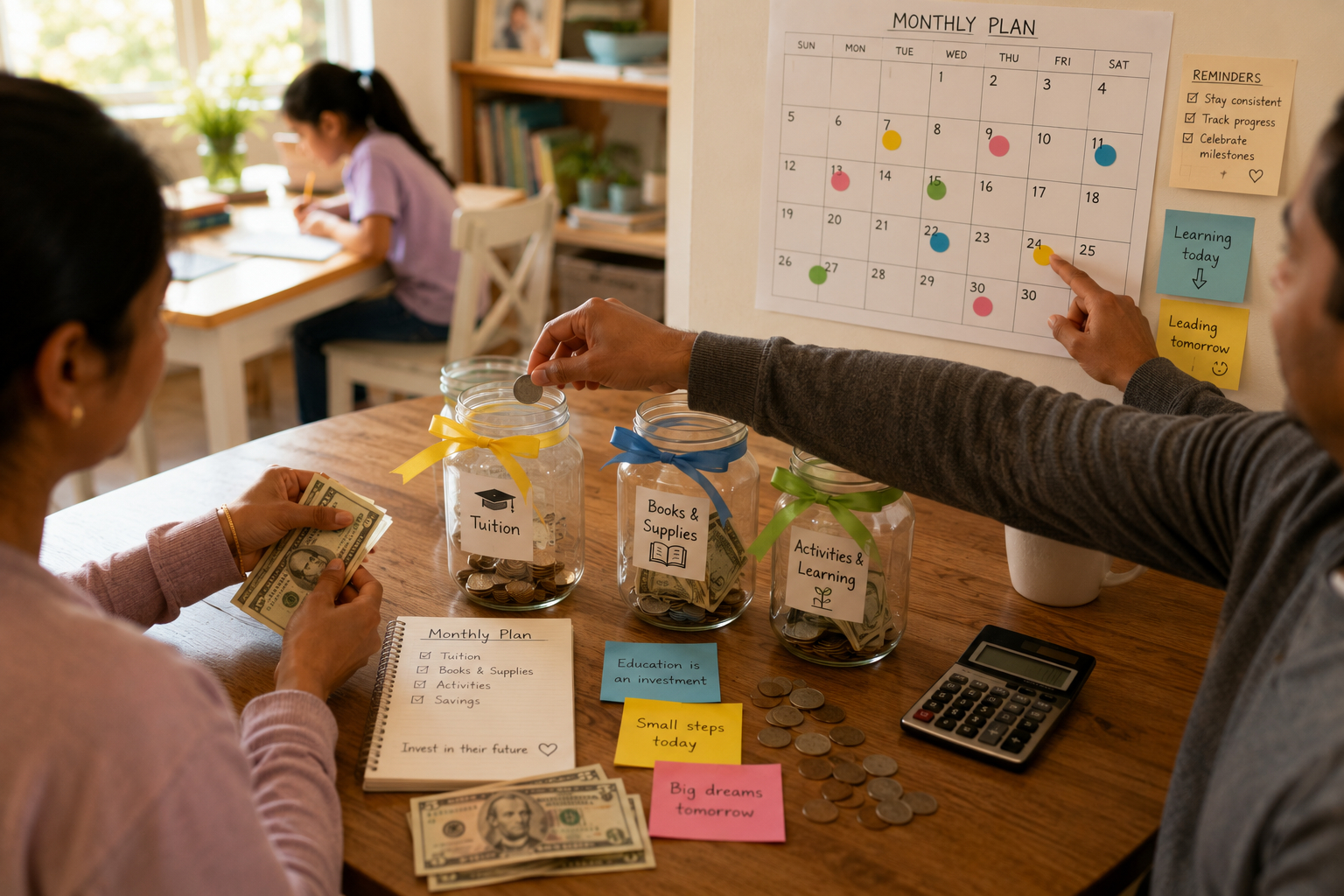
Managing the cost of ongoing learning can feel like a moving target, especially when courses, materials, and memberships arrive on different schedules. Establishing a clear process helps households pay for development without sacrificing other goals. This article explains practical steps to assess needs, build flexible funding buckets, and sync spending with timing and priorities. The aim is a repeatable approach that reduces stress and keeps learning on track.
Start by taking a calm inventory of recent and upcoming spending related to skills and education. Use a simple spreadsheet or budgeting app to list recurring subscriptions, one-off course fees, and likely new costs for the coming year. Note which items are mandatory, which are optional, and which can be delayed without major consequence. That clarity makes subsequent funding choices more intentional.
Assess current learning costs
Reviewing actual past spending exposes patterns and avoids guessing about needs. Look back six to twelve months and categorize charges: subscriptions, course registrations, books, equipment, and exam fees. Compare those totals to what you expect to pay next year, adjusting for planned changes like certification cycles or new classes. A realistic baseline makes it easier to set savings targets and avoid surprise shortfalls.
Include frequency and timing as well as amounts when you assess costs. Some expenses recur monthly while others come in lumps tied to term dates or enrollment windows. Understanding timing helps you smooth cash flow and prevent short-term borrowing. It also highlights opportunities to shift optional spending to slower months.
Create flexible funding buckets
Separate funds by purpose rather than by rigid rules so money can move when priorities change. Common buckets include: a short-term operational bucket for upcoming payments, a medium-term savings bucket for planned courses, and a contingency buffer for unexpected opportunities or renewals. Keep the buckets visible and update balances monthly to prevent drift.
- Operational: monthly subscriptions and immediate fees.
- Planned savings: courses scheduled within 6–12 months.
- Opportunity buffer: skill investments that arise unexpectedly.
Automate transfers where possible, even if amounts are small, to build balances without relying on memory. Small, repeatable contributions reduce the impact of large lump-sum payments.
Match timing, priorities, and review
Align your spending plan with when expenses occur and with household goals for learning. Prioritize essential credentials and workplace-required training, and place optional classes lower on the list until a buffer is sufficient. Schedule quarterly reviews to reallocate funds based on new needs and to stop subscriptions that no longer provide value. This cadence keeps the plan current and resilient.
When deciding to pause or proceed with a course, consider both immediate cash flow and long-term return on investment. Use the review process to celebrate funded wins and to reset targets for future learning. That habit helps make education funding a manageable part of household finances.
Conclusion
Build a realistic baseline, create flexible buckets, and review quarterly to keep learning expenses under control. Automate small contributions and prioritize essential training so funds grow steadily without stress. With clear processes, ongoing learning becomes a planned and sustainable part of your household budget.