Creating classroom systems that help students manage their own learning starts with small, intentional choices by teachers. When routines are clear and expectations are consistent, learners gain confidence and can practice planning, monitoring, and adjusting their work. This introduction outlines practical strategies teachers can implement without overhauling curricula or adding heavy administrative tasks. The focus is on simple structures that scale across lessons and support gradual independence.
Set Clear, Minimal Routines
Begin by establishing minimal routines that students encounter every day, such as a predictable start-up activity, a checkpoint mid-task, and a quick exit reflection. These moments do not need elaborate materials; they require clear instructions and consistent timing so students can internalize the pattern. Consistency reduces cognitive load, allowing learners to focus energy on the task rather than on figuring out what to do next. Over time, students learn to initiate the routine themselves.
Short routines also make classroom management smoother and free up moments for formative feedback. When routines are simple, teachers can observe how students use them and make small adjustments.
Teach Transferable Self-Monitoring Scripts
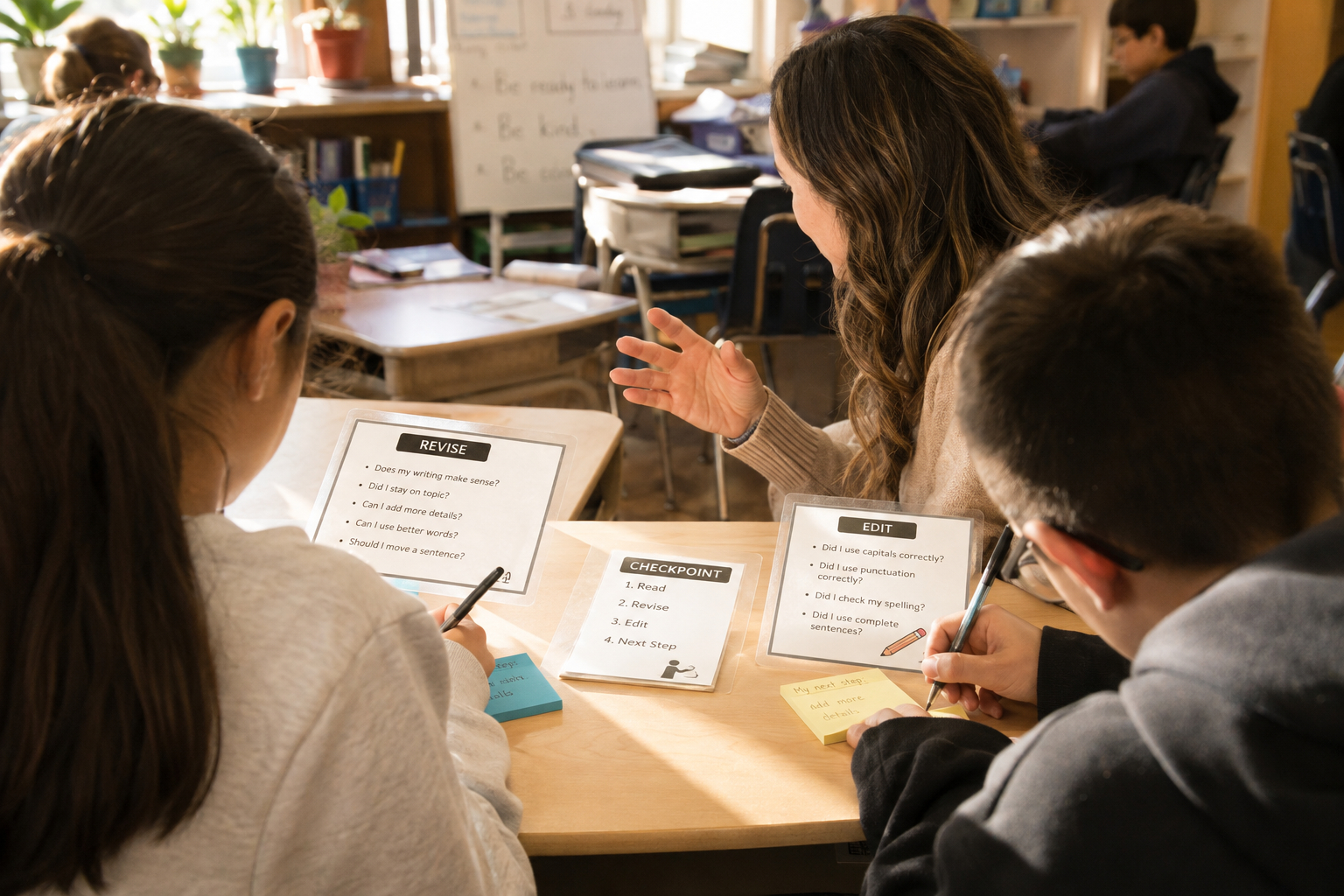
Introduce short, repeatable scripts students can use to monitor their progress, such as asking three quick questions: What am I trying to do? How will I check my work? What will I do next if I’m stuck? Practicing these prompts explicitly during several lessons helps students adopt them independently. Model the script aloud and have pairs practice before applying it individually.
- Keep scripts short and action-oriented.
- Use visual cue cards for quick reference.
- Rotate contexts to encourage transfer.
With regular practice, students begin to internalize the prompts and apply them across different tasks and subjects. The goal is to make the script feel like a natural step in their work process.
Design Lightweight Checkpoints
Place brief, low-stakes checkpoints into lessons where students pause to self-assess or peer-check work. Checkpoints can be a two-minute stop to annotate progress or a quick rubric with three criteria. They provide both students and teachers with actionable data without derailing lesson flow. Checkpoints should be frequent enough to guide learning but brief enough to keep momentum.
Teachers can use checkpoint results to adjust instruction that day or to plan targeted mini-lessons. Students benefit from immediate, manageable opportunities to reflect and correct course.
Foster Reflective Closure
End lessons with a short reflection that asks students to name one success and one next step for their learning. This helps them link effort to outcomes and plan concrete actions for improvement. Reflections can be verbal, written, or recorded, and should take no more than a few minutes. The key is making reflection routine, specific, and forward-looking.
When students routinely close with reflection, they build habits of evaluative thinking and personal goal-setting. These habits support long-term self-management beyond any single lesson.
Conclusion
Small, consistent classroom moves create a framework where students practice managing their learning with increasing independence. Teachers who prioritize simple routines, transferable scripts, brief checkpoints, and reflective closures can cultivate durable self-management skills. Over time, these modest investments yield greater student agency and more efficient instruction.