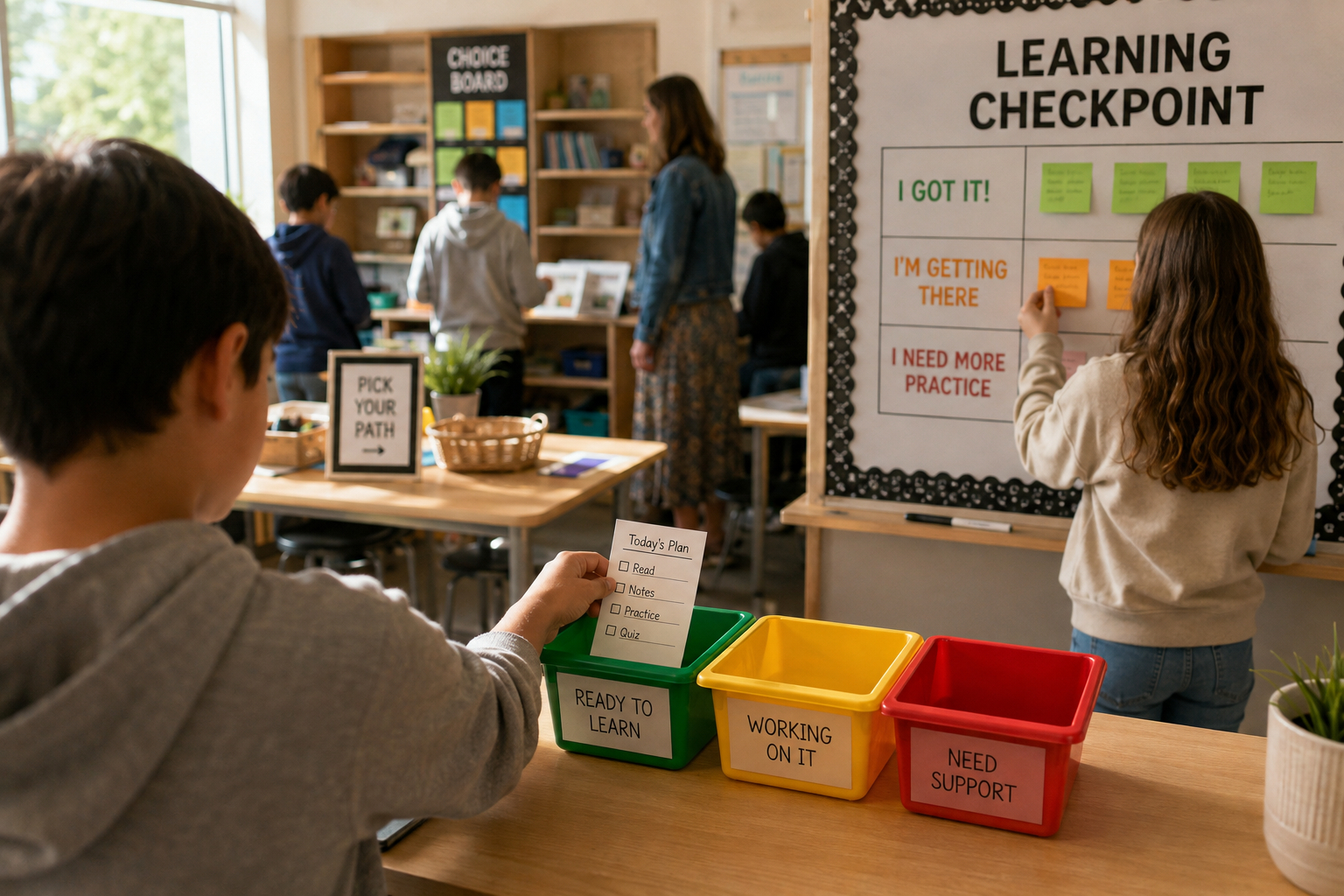
In classrooms where students practice independence, small predictable patterns create resilience and momentum. Short, explicit routines help learners make decisions quickly and reflect on progress without heavy teacher prompts. The goal is to design few, repeatable moves that students can apply across tasks and subjects. This article outlines practical patterns teachers can introduce with minimal preparation.
Designing Bite-Sized Routines
Begin by establishing bite-sized routines that fit into existing transitions. For example, a two-step warm-up — check last work, set a one-minute goal — primes attention and clarifies next action. These micro-routines reduce friction and make starting easier for students who struggle with initiation. Repetition across days turns the sequence into a habit students can perform without adult direction. When routines are brief and consistent, they free teacher bandwidth for targeted coaching.
- Morning starter that reviews yesterday’s progress.
- Two-minute planning slips used before independent work.
- Exit tickets that capture one next step.
Introduce each routine explicitly, model it, and practice until it feels natural. Keep the number of routines small to avoid overload.
Using Lightweight Checkpoints
Lightweight checkpoints give students a quick gauge of where they are and what to do next. A simple self-check rubric or a 30-second peer check provides formative feedback without formal grading. These checkpoints can be timed, tied to project milestones, or embedded in independent work periods. The aim is to create frequent low-stakes data that informs small adjustments. Checkpoint data also helps teachers adjust instruction and groupings fluidly.
- Quick self-rating rubric with three prompts.
- Timed checkpoints at natural stopping points.
- Peer checks that focus on one specific criterion.
Teach students how to interpret checkpoint results and set a corrective step. Over time they’ll calibrate their own work more accurately.
Encouraging Student Ownership
Ownership grows when students have genuine choices within clear structures. Provide menu options for tasks, a short planning template, or roles in group work so students decide how to proceed. Pair choices with accountability measures like a brief progress note or peer report. Supportive teacher questions — ‘What will you try next?’ — scaffold planning without taking control. Transparent expectations let students experiment safely and learn from modest setbacks.
- Offer choice menus with equivalent cognitive demand.
- Use short templates that guide planning without prescribing steps.
Celebrate small wins and show students evidence of progress to reinforce agency. Gradually expand choices as competence grows.
Conclusion
Small, consistent patterns compound into lasting learner habits. Start with one routine and a simple checkpoint this term. Monitor, adjust, and expand as students demonstrate readiness.