Teaching students adaptive planning skills helps them navigate complex tasks and shifting priorities. These skills combine short-term organization with quick strategy adjustments, which supports sustained progress. Instructors can foster adaptability by breaking planning into teachable micro-skills and modeling adjustments in real time. The goal is practical routines students can apply across subjects and projects.
Design short, focused planning workshops
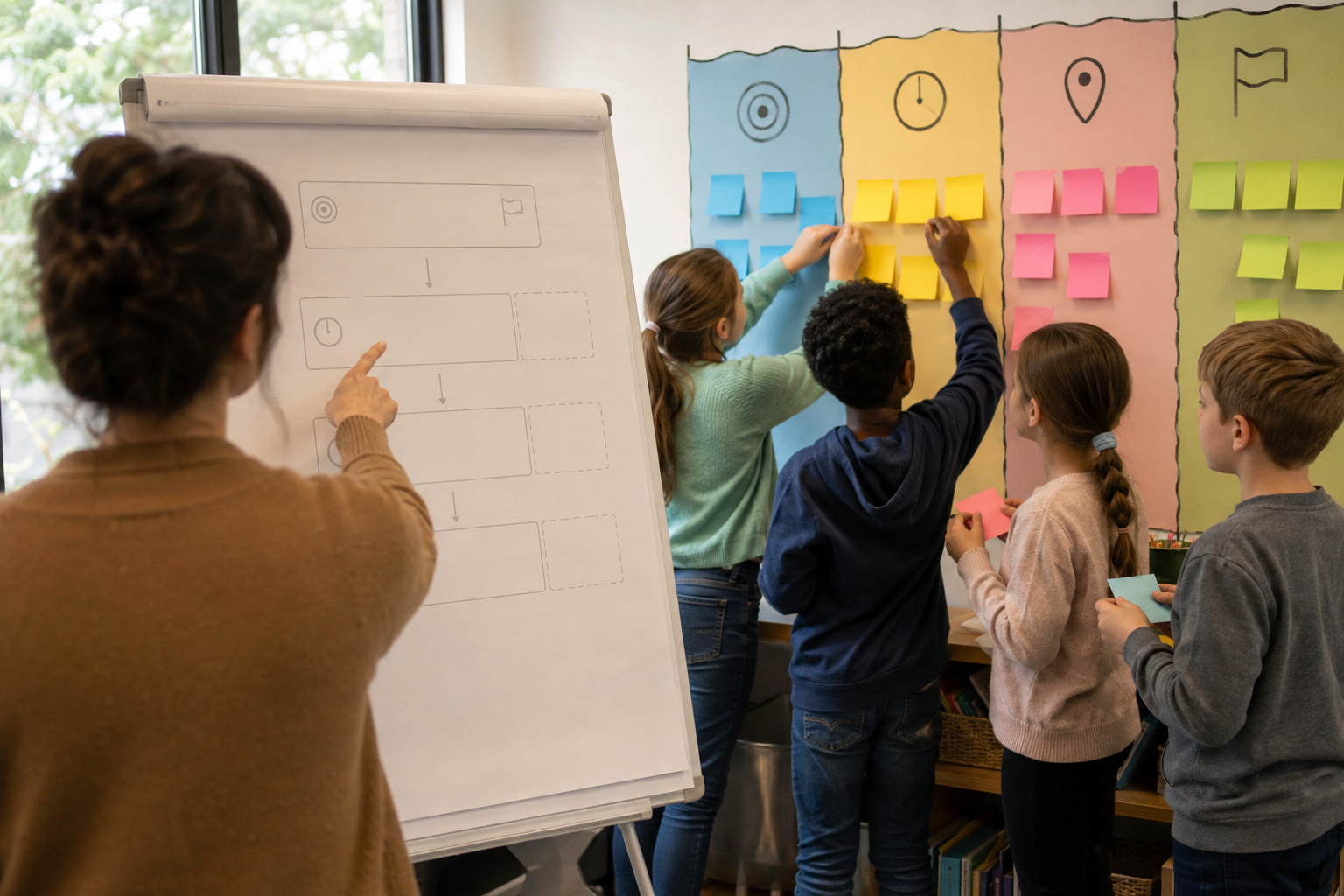
Begin with brief workshops that teach a simple planning template: goal, time estimate, checkpoints, and an exit criterion. Present examples from class activities so students see how the template fits familiar work. Use timed practice so learners make and revise a plan within a constrained window and receive immediate feedback. Short, repeated practice builds confidence and reduces the friction of starting complex tasks.
- Introduce a one-page planning template and model its use.
- Run two short practice rounds with reflection between attempts.
- Encourage students to note one adaptive change each round.
Closing each workshop with a quick reflection helps students internalize the process. Over time, these micro-practices become automatic scaffolds for independent planning.
Embed micro-decisions into daily tasks
Daily assignments are ideal places to practice adaptive planning because they recur and scale naturally. Ask students to state a target outcome and one conditional decision they might make if progress stalls. That single conditional prepares them to pivot without losing momentum when challenges appear. Routine prompts make adaptive thinking habitual rather than theoretical.
- Use a two-sentence planning prompt at the start of tasks.
- Require one mid-task check where students note adjustments.
- Make brief peer-to-peer comparisons of adaptive choices.
These micro-decision moments build students’ ability to anticipate obstacles and respond deliberately. As teachers, you can gradually reduce prompts to foster independent planning.
Assess and reinforce adaptive habits
Assessment should value the planning process as well as outcomes by capturing decisions students make while working. Use short self-assessments where learners identify what worked and what they would change next time. Pair these reflections with occasional teacher comments that recognize effective adaptation. Feedback focused on process encourages transfer to new contexts.
- Collect brief post-task reflections tied to planning choices.
- Highlight examples of smart pivots during class discussions.
Consistent reinforcement helps students see adaptation as a skill to refine rather than a sign of failure. Over weeks, these practices create a reliable toolkit for varied learning challenges.
Conclusion
Adaptive planning is teachable through short workshops, embedded micro-decisions, and process-focused assessment. By making planning visible and repeatable, teachers help students develop flexible habits that work across tasks. Over time, those habits support greater independence and resilience in learning.