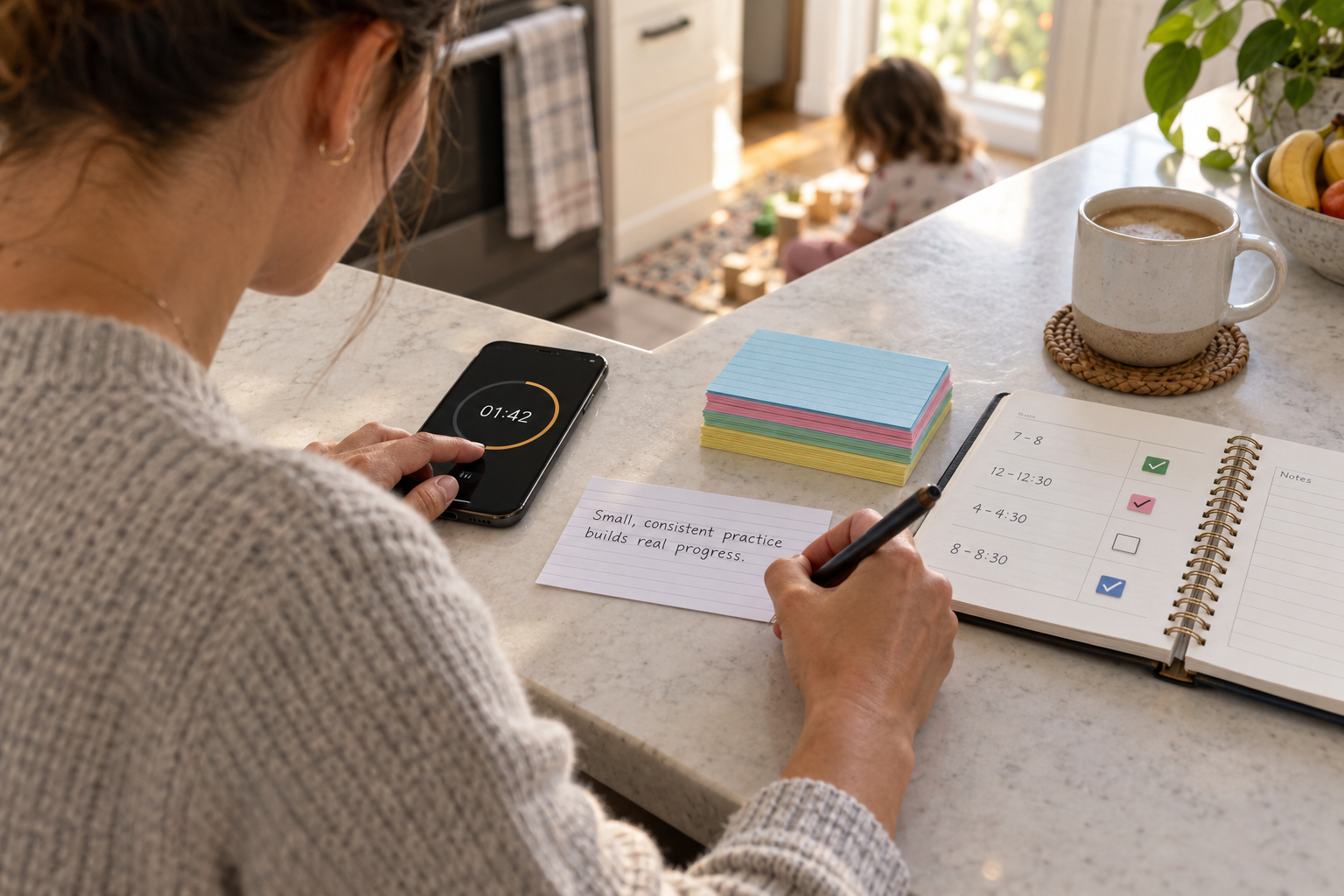
In self-paced online courses, learners often struggle to translate good intentions into consistent practice. Small, repeatable study habits reduce friction and keep momentum in hectic schedules. This article outlines practical approaches to shape short learning episodes that fit into a busy day. These strategies help course designers and instructors make progress feel achievable without heavy commitments.
Why small learning habits outperform large goals
Large, vaguely defined goals can be demotivating when time is limited, because they require extended focus and planning. Micro-habits — small, specific tasks tied to context and time — lower activation energy and create reliable starting points. When learners complete short tasks regularly, cognitive benefits accumulate and confidence grows over time. For designers, this means framing lessons as brief actions rather than distant milestones. Examples include transforming “complete chapter” into “read one 10-minute section and summarize one point.”
Prioritize clarity: tell learners exactly what to do and how long it will take. This reduces decision fatigue and encourages repeat behavior. Iterate on these prompts based on learner feedback and completion data.
Designing short, repeatable study episodes
Create episodes that fit common time pockets, like 10, 20, or 30 minutes, and label them clearly in the syllabus. Each episode should have one clear objective, a focused activity, and an immediate small artifact or reflection. Use modular media — short videos, quick quizzes, or micro projects — so learners can complete tasks in one sitting. Design the first episode as an irresistible, low-friction win to increase initial engagement. Clear timing cues and suggested workflows make it easier for learners to predict success in short windows.
- 10 minutes: a targeted reading and one-sentence summary.
- 20 minutes: a short video and a two-question quiz.
- 30 minutes: a mini exercise with a quick self-assessment.
Consistent episode design reduces cognitive load and makes habit formation feasible. Encourage learners to mark completion and schedule the next short episode. Offer optional calendar integration or reminders to turn one-off sessions into routine practice.
Measuring progress and nudging persistence
Tracking should be lightweight: a visible progress bar, a completion checkbox, or a one-line daily log can be enough to sustain momentum. Frequent, specific feedback reinforces behavior; highlight small wins and link them to longer-term learning outcomes. Automated nudges — reminders timed after typical procrastination moments — can re-activate stalled learners without manual intervention. Balance encouragement with autonomy by offering optional extensions for those who want deeper practice. Pair progress markers with brief, formative feedback to turn small achievements into meaningful learning signals.
Aim for low-friction measurement and positive reinforcement. Use brief analytics to identify where learners stall and adjust episode design accordingly. Keep interventions simple and focused on re-establishing small wins.
Conclusion
Designing manageable learning habits centers on small, clear tasks that fit everyday time pockets. Lightweight tracking and timely feedback convert short efforts into steady progress. With intentional micro-structures, busy adults can build reliable study routines that scale into lasting learning.