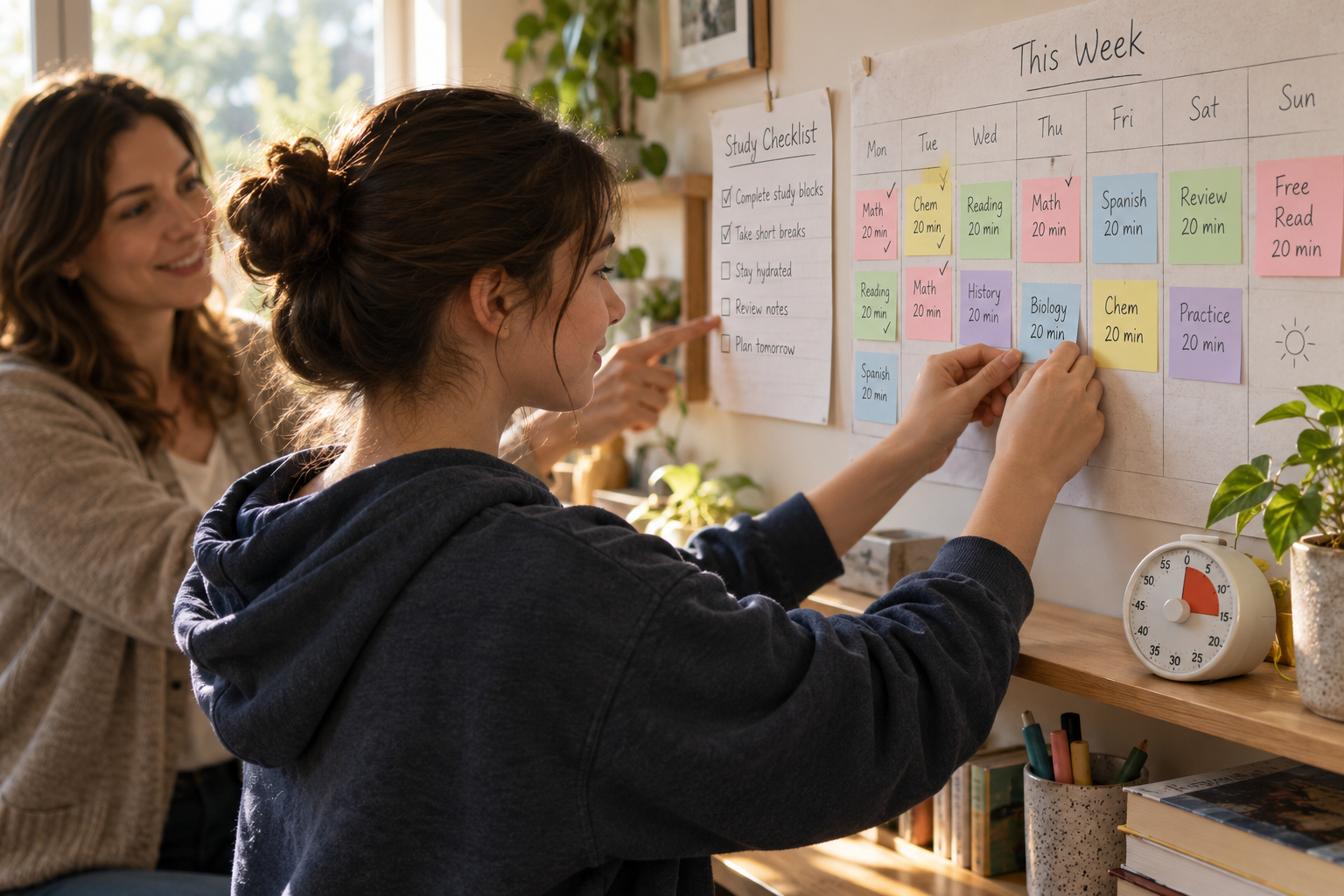
Online learning can be effective when paired with repeatable daily practices. Small, intentional habits reduce friction, sustain motivation, and turn coursework into usable skills. This article outlines practical steps to plan sessions, stay accountable, and track progress. Use these ideas to convert sporadic study into a dependable learning routine.
Set clear, measurable learning objectives
Start by defining one or two concrete outcomes for each week such as a completed module or a practiced technique. Break outcomes into observable tasks and assign them short timeboxes to avoid vague goals. When targets are measurable you can prioritize study and choose resources more confidently. Clear objectives also make it easier to celebrate progress and to adjust plans if a strategy isn’t working.
Review these objectives at the start and end of each study block to keep momentum. Small wins compound into meaningful skill gains over weeks.
Structure short, focused study sessions
Design sessions that last 20–45 minutes and concentrate on a single task such as watching one lecture, coding a feature, or summarizing a reading. Short blocks reduce procrastination and improve retention compared with marathon study stints. Use a simple timer and a brief checklist to keep each block on track. Interleave active tasks and passive review to strengthen understanding and memory.
Consistency matters more than length: quality 30-minute sessions daily outperform irregular long sessions. Adjust durations to match task complexity and energy levels.
Build accountability and regular review
Accountability increases follow-through, whether through a study partner, a public progress log, or scheduled sessions with peers. Pair commitments with short reviews: summarize what you learned at the end of each week and note any gaps. Use simple metrics like modules completed, problems solved, or minutes spent on active practice. Regular reviews reveal where to focus next and support iterative improvement.
Share progress externally to reinforce commitment and attract feedback.
Small adjustments after review keep the routine responsive and sustainable.
Choose resources and measure real skill gains
Prioritize resources that align with your objectives and require active application rather than passive consumption. Add short projects or practice tests to convert knowledge into demonstrable skills. Track outcomes that matter for your goals—completed projects, code reviews, or portfolios—rather than raw hours. Periodic snapshots of performance help you see real improvement and refine learning choices.
Combine curated content with hands-on tasks to maximize transfer to real work. Measuring outcomes keeps motivation tied to visible progress.
Conclusion
A steady routine built from clear goals, focused sessions, and regular review converts courses into skills. Start small, track what matters, and iterate weekly based on evidence. Over time those daily practices produce reliable and measurable learning outcomes.