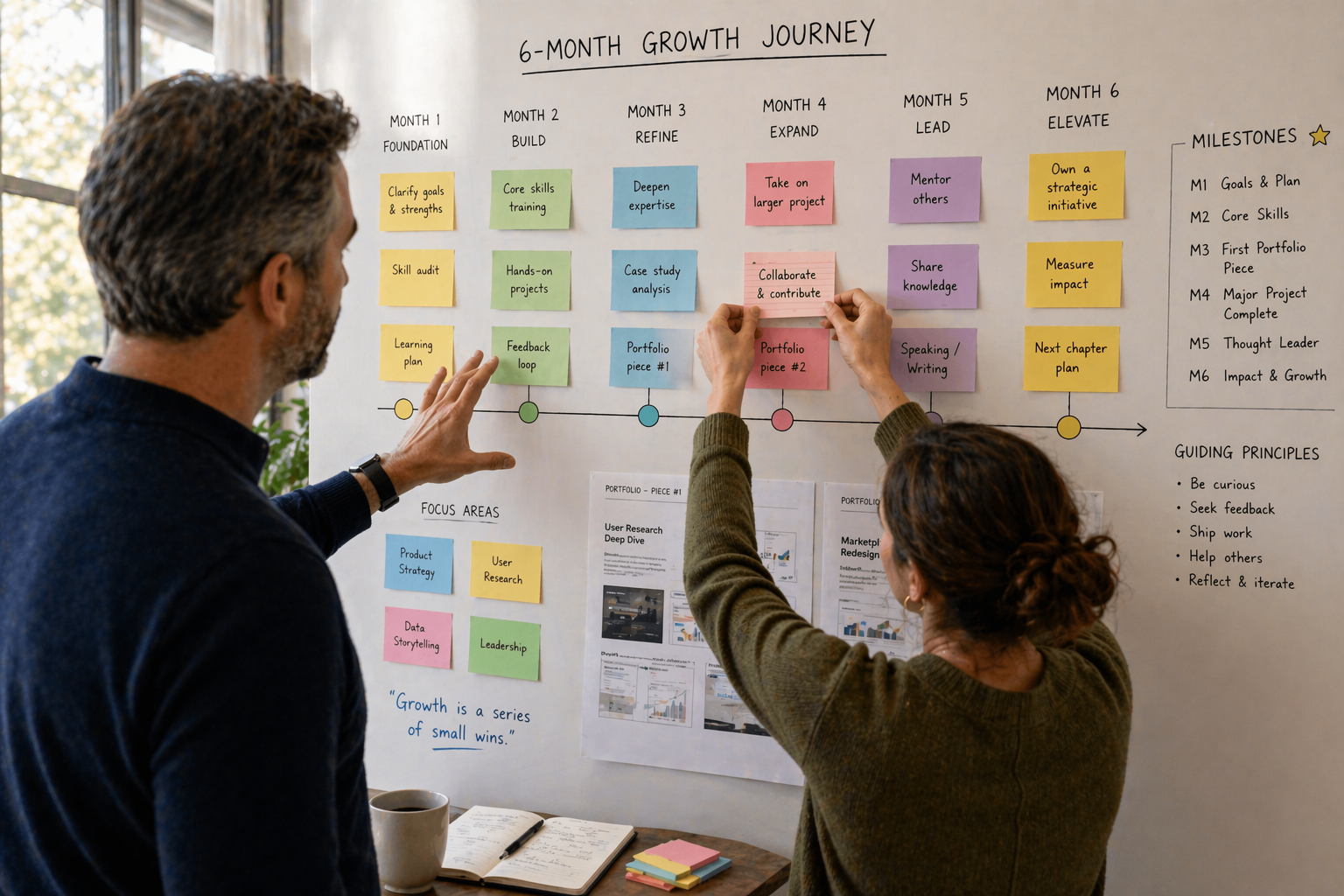
Setting a focused six-month plan turns vague intentions into measurable progress and keeps professional growth manageable. A compact horizon encourages regular feedback, small experiments, and clearer prioritization of the skills that matter most. This approach balances depth and momentum so you avoid spreading effort too thin across competing goals. Over the next sections you will find a practical sequence to audit, plan, learn, and adjust for consistent advancement.
Clarify Purpose and Target Outcomes
Begin by identifying two to three outcomes you want to achieve in six months, such as mastering a core tool, completing a portfolio project, or increasing visibility with stakeholders. Make each outcome specific, time-bound, and tied to measurable indicators so you can evaluate progress objectively. Align these targets with longer-term goals to ensure the sprint feeds a broader career trajectory rather than being an isolated effort. By anchoring actions to clear outcomes you reduce decision fatigue and increase the chance of tangible gains.
Once outcomes are defined, convert them into priority tasks and milestones that fit weekly cadences. This keeps the plan realistic and helps maintain momentum through visible short-term wins.
Audit Current Skills and Gaps
Perform a concise skills audit: list your strengths, note gaps relative to the outcomes, and map which gaps are high-impact versus nice-to-have. Use concrete evidence—recent projects, feedback, or performance metrics—to avoid optimistic bias. This audit should highlight the critical 20 percent of capabilities that will drive 80 percent of your progress. Prioritizing high-impact gaps ensures your six-month effort yields disproportionate returns.
A documented gap analysis becomes a reference for choosing learning resources and for explaining your development plan to mentors or managers.
Create Learning Sprints and Practical Projects
Structure the six months into multiple sprints of four to six weeks, each focused on a single skill or project deliverable. Combine focused study with practical application: pair microcourses, reading, or tutorials with a small portfolio piece, a presentation, or a process change at work. Regular, short checkpoints ensure you can course-correct early if a tactic isn’t working. This mix of learning and doing cements competence faster than long passive study alone.
Plan one visible outcome per sprint that you can showcase, solicit feedback on, and iterate in the next cycle.
Measure Progress and Adjust Regularly
Define simple metrics for each outcome—completion of a project, a performance improvement, or external recognition—and review them every two weeks. Solicit feedback from peers, mentors, or users to validate assumptions and identify blind spots. If a sprint fails to move the needle, diagnose whether the goal, method, or time allocation needs changing rather than doubling down blindly. A systematic review loop keeps the plan adaptive and focused on real-world effect.
By the end of six months, you should have measurable artifacts, clearer decisions about next steps, and a repeatable process for continued growth.
Conclusion
A six-month plan compresses learning into achievable sprints with measurable outcomes and clear priorities. Regular audits, practical projects, and short feedback loops keep progress aligned with career goals. Treat the plan as a living document and iterate it every cycle to maintain momentum and relevance.