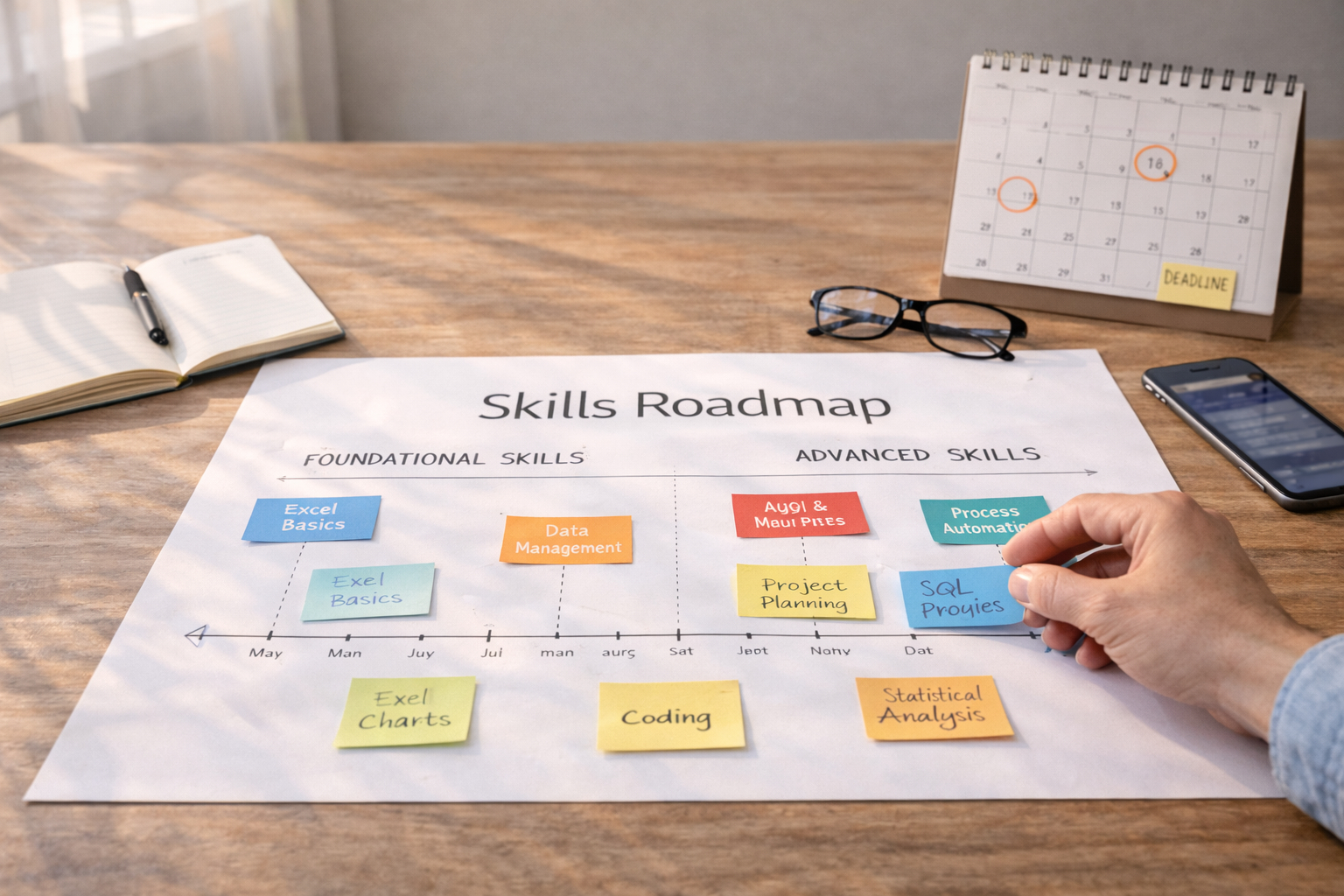
Creating a clear skills roadmap helps professionals move from broad ambition to concrete progress. It reduces overwhelm by breaking development into manageable milestones and aligning learning with real work needs. A well-constructed plan highlights gaps, priorities, and opportunities to practice new abilities on the job. This article outlines practical steps to design and maintain a skills roadmap that supports steady career advancement.
Assess Your Current Skills
Begin by taking stock of your existing competencies and recent accomplishments. Use a mix of self-reflection, feedback from peers or managers, and any formal assessments to identify strengths and gaps. Map those skills to the roles you aspire to and note which skills are foundational versus advanced. This assessment creates an evidence-based baseline for planning targeted development.
- List technical abilities, soft skills, and domain knowledge separately.
- Collect recent performance feedback and examples of work.
- Rank skills by impact on your desired role.
With a clear inventory, you can prioritize which areas to tackle first and which to maintain. Prioritization helps allocate time and resources efficiently.
Map Learning to Career Goals
Translate your assessment into a timeline that connects skill-building activities to short- and mid-term goals. Identify specific learning resources: courses, books, projects, mentors, or stretch assignments. Assign realistic timeframes and checkpoints to each target so progress is measurable. Focus on a mix of deliberate practice and experiential learning to solidify new capabilities.
Ensure each chosen activity directly advances a goal or fills a critical gap. That alignment keeps effort purposeful and increases the likelihood of career-relevant outcomes.
Embed Habits and Measure Progress
Consistency matters more than intensity when acquiring new skills, so design routines that support steady effort. Schedule weekly learning blocks, set habit triggers, and use micro-goals to maintain momentum. Track progress with tangible indicators such as completed projects, feedback improvements, or credential milestones. Regular reviews help adjust the roadmap as circumstances and objectives evolve.
- Use a simple tracker or journal to record weekly wins and lessons.
- Seek accountability from peers or a mentor every month.
By measuring small wins, you reinforce motivation and gain evidence to advocate for new responsibilities or promotions. Adapt the plan when opportunities or priorities shift.
Conclusion
Designing a skills roadmap transforms vague ambitions into actionable steps. Keep the plan flexible, measurable, and tied to real work. Regular practice and review will turn skills into career momentum.