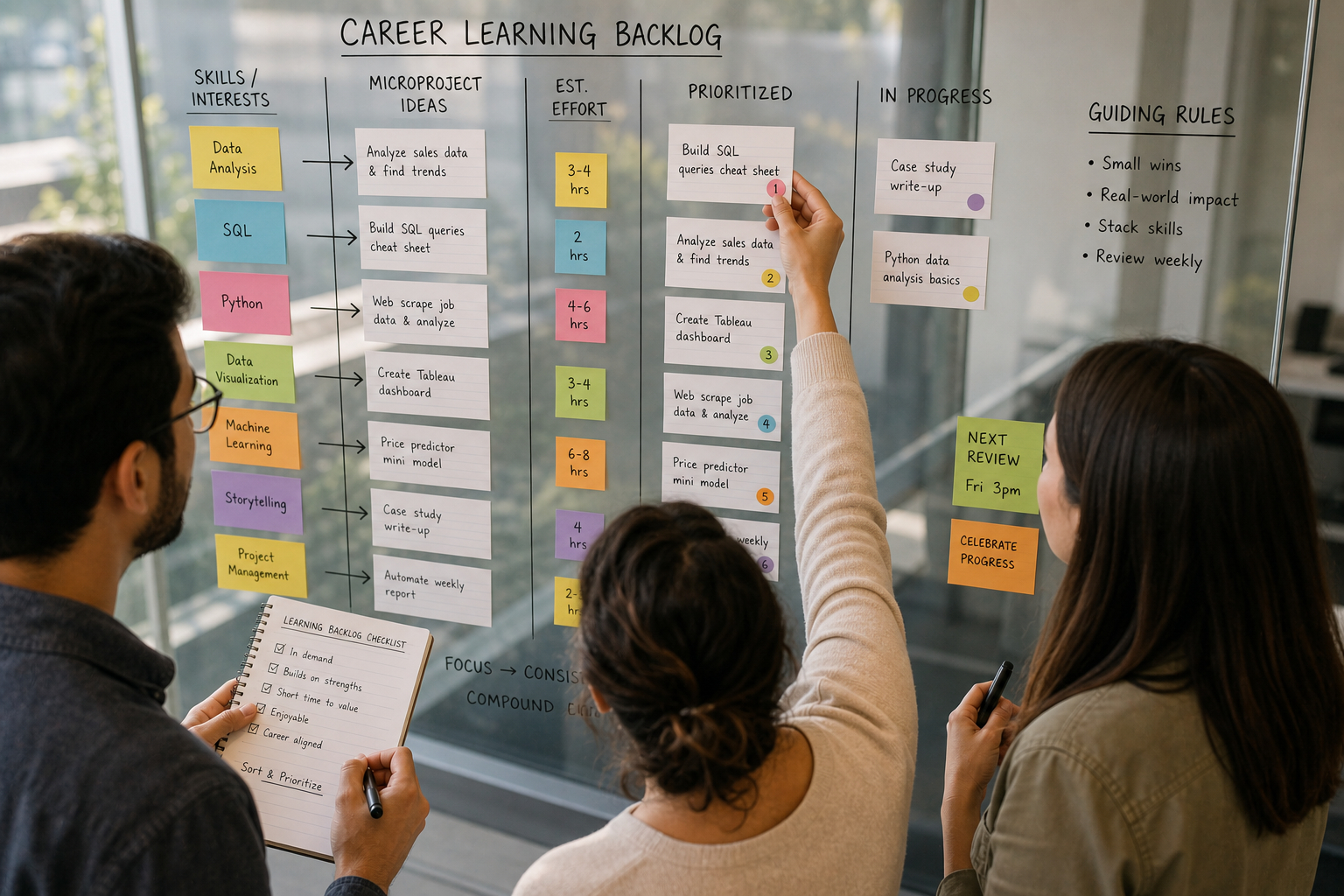
Creating a curated backlog of learning priorities helps you make consistent career progress. It turns ad-hoc courses and random ideas into a clear, actionable list.
A learning backlog makes it easier to prioritize, measure, and demonstrate growth. This article explains a practical approach to assembling, ordering, and using a backlog that advances your career.
Define Your Inventory
Start by listing existing skills, recurring gaps, and opportunities you encounter in projects or job descriptions. Capture formats you can use: short courses, books, microprojects, mentoring requests, and experiments. Focus on observable outcomes so each item links to evidence you could produce later. This phase is about breadth and clarity rather than immediate execution.
- List skills with a one-line outcome for each.
- Note estimated effort and relevance to current goals.
Once collected, tidy the inventory into coherent groups and remove obvious duplicates. This reduces noise and helps you see patterns across roles and interests.
Prioritize with Impact and Cost
Use simple filters to rank backlog items: potential impact on your career, time or cost to learn, and how transferable the skill is. Assign high priority to items that open multiple doors or enable concrete deliverables. Medium priority can include skills that shore up weaknesses or support a current project. Avoid allowing low-impact curiosities to crowd out progress on higher-value items.
- High impact + low cost = first picks.
- Medium impact = schedule into sprints.
Keep prioritization dynamic: revisit it quarterly and adjust as goals or opportunities change. This practice prevents stale items from lingering indefinitely.
Turn Backlog Items into Small Experiments
Convert each prioritized entry into a microproject with a clear deliverable and short timeline. A microproject might be a one-week prototype, a documented case study, or a short presentation to peers. That approach creates evidence you can showcase and reduces the friction of starting. It also reveals whether the learning was worth further investment.
- Define a measurable outcome for each experiment.
- Set a deadline and required resources.
Scheduling experiments into regular learning sprints sustains momentum and makes progress visible. Over time, accumulated microprojects form a persuasive portfolio of capability.
Conclusion
Maintain a living backlog that you review regularly and prune as priorities shift. Use prioritized microprojects to generate evidence and accelerate growth. Treat the backlog as both a decision tool and a habit, not a static checklist.