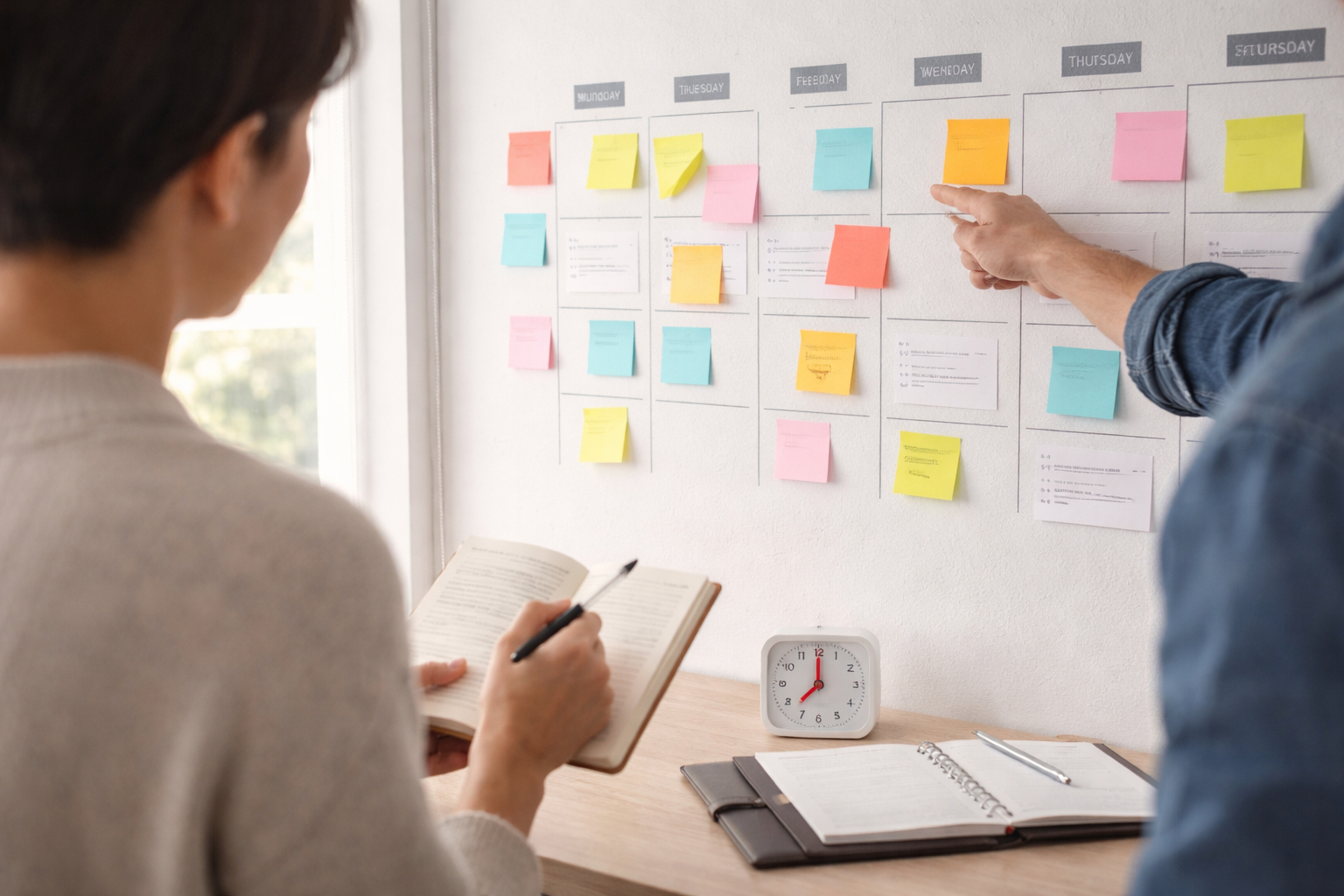
Creating a consistent routine for skill development helps you make meaningful progress without burning out.
A weekly framework balances focus and flexibility so learning stays practical and sustainable.
It turns vague goals into small, measurable actions you can repeat each week.
This approach fits busy schedules and lets you adapt when priorities shift.
In the following sections, you will find a clear structure to plan, act, and reflect.
Why a Weekly Framework Works
A weekly framework breaks large ambitions into manageable chunks and reduces decision fatigue.
Short, repeated actions compound: small improvements each week lead to visible growth over months.
Consistency also creates accountability, making it easier to prioritize learning amid competing tasks.
Finally, weekly cycles let you test new habits and refine what actually moves the needle.
Establishing the routine is the hard part, but momentum follows once patterns are in place.
You can scale the framework up or down depending on workload and career stage.
Designing Your Weekly Skill Cycle
Start by choosing one or two high-impact skills to focus on for a defined period, such as 8–12 weeks.
Allocate specific time blocks each week for concentrated practice, reflection, and application.
Set a simple outcome for each week that ties back to your longer-term goal and keeps effort measurable.
A clear cycle reduces ambiguity and helps you prioritize when opportunities or obstacles arise.
- Plan: pick the skill, the outcome, and two weekly time blocks.
- Practice: focus sessions of 30–90 minutes, depending on task intensity.
- Apply: use the skill in a real task, project, or simulation each week.
These elements combine to create repeatable momentum and make progress visible at regular intervals.
Adjust the cycle if you find sessions are too long or outcomes unclear.
Practical Routines and Tools
Use templates and timers to minimize planning overhead and protect practice blocks from interruptions.
A short weekly review (15–30 minutes) uncovers what worked and what needs tweaking for the next cycle.
Leverage simple tools like calendars, task lists, and progress trackers rather than complex systems.
Collaboration or accountability partners can boost commitment and provide useful feedback.
- Time blocking: reserve consistent slots on your calendar.
- Micro-tasks: break sessions into 25–45 minute focused sprints.
- Review notes: maintain a concise log of wins and lessons.
These routines reduce friction and keep your focus on steady improvement rather than perfection.
They also help you maintain momentum across busy or unpredictable weeks.
Measuring Progress and Adapting
Define simple metrics tied to outcomes, such as task completion, speed, or demonstrable quality improvements.
Review these metrics weekly and map trends over time to evaluate the effectiveness of your cycle.
If progress stalls, experiment with session length, frequency, or the type of practice used.
Iterative adjustments keep the framework aligned with changing goals and emerging opportunities.
Regular measurement turns subjective impressions into actionable data that informs your next steps.
Adaptation is part of the process; small course corrections compound into lasting growth.
Conclusion
A well-structured weekly framework makes skill development sustainable and focused.
Consistent practice, simple metrics, and brief reviews create predictable progress over time.
Start small, iterate often, and let momentum build toward your larger career goals.
Related Articles



Recent Posts

Structured Student Planning for Consistent Independent Learning
Chunked Task Planning to Strengthen Student Focus and Progress
Scaffolding Choice: Building Student Skill Through Small Decisions
Turning Work Routines into Strategic Career Momentum
Design Intentional Work That Demonstrates Career Potential


