

From Tasks to Testimony: Turning Outputs into Career Evidence
In busy roles it’s easy to treat tasks as consumables rather than evidence of capability. To move careers forward you need to convert routine outputs into clear, credible artifacts that signal readiness for new responsibilities. This article outlines a practical

Turning Routine Responsibilities Into Visible Career Milestones
Daily tasks often feel disconnected from long-term goals, yet they carry the raw material for career advancement. By casting routine responsibilities as measurable milestones, you create a clearer path to promotions and new opportunities. This article outlines a practical approach

Design Micro-Projects That Open Better Career Opportunities
Micro-projects are compact, outcome-focused experiments you can complete in weeks rather than months, designed to demonstrate specific skills relevant to the roles you want. They help bridge the gap between current work and future opportunities by creating tangible artifacts you

Make Your Work History Show Strategic Career Growth
Every role you hold contains pieces of evidence that can advance your next move. Learning to identify and present those pieces intentionally makes day-to-day work a career asset. This article outlines practical steps to convert routine outputs into persuasive career

Quantify and Frame Work Outcomes to Communicate Value Clearly
Most professionals produce useful outcomes every week, but those results often remain implicit and hard to explain. Making impact visible requires consistent metrics and a simple way to describe what changed and why it mattered. This piece outlines practical steps
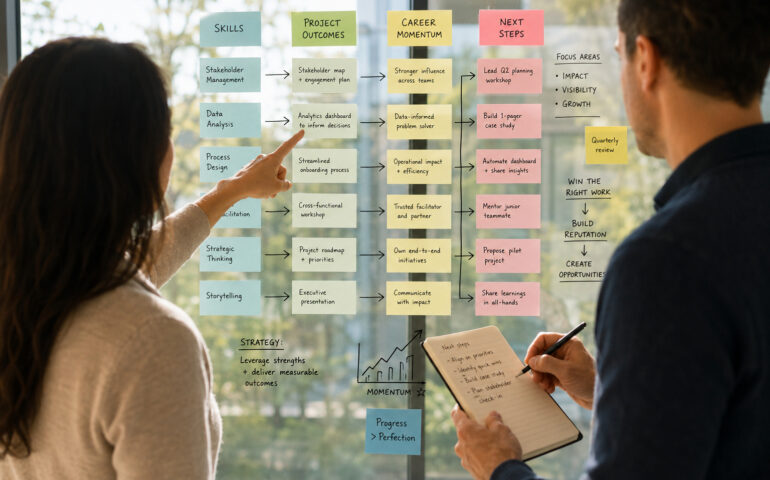
Build Transferable Skill Sets for Career Momentum
Transferable skills are the foundation that lets professionals adapt to new roles and responsibilities. Identifying and packaging them clearly helps hiring managers and internal stakeholders see your potential. This article outlines practical steps to identify, validate, and present those skills
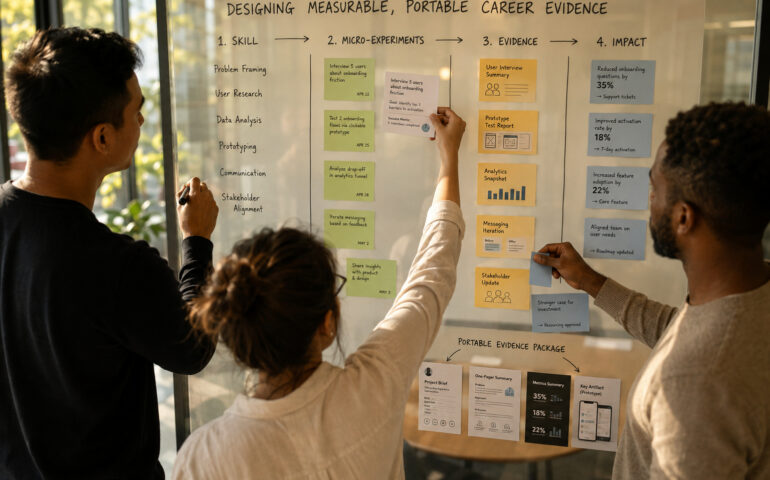
Designing Actionable Career Evidence for Strategic Moves
Career moves feel clearer when you can point to specific outcomes. Building a habit of producing and framing evidence helps recruiters and managers see readiness. This article outlines a practical process to design, run, and record small work experiments that
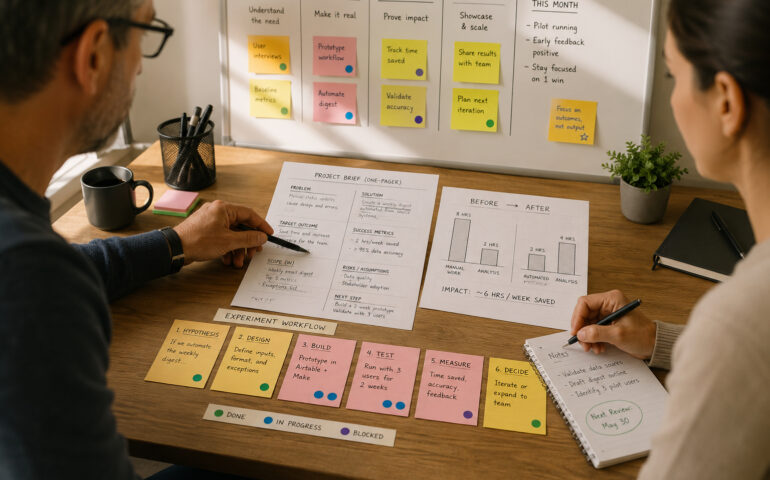
Demonstrate Role Readiness Using Focused Work Narratives
Employers judge readiness by concrete outcomes more than intentions. Everyday tasks can become persuasive evidence when you link them to specific role expectations. This article outlines a concise approach to shape routine work into demonstrable career signals. Follow a simple

Use Feedback Loops to Accelerate Career Skill Development
Feedback-oriented work habits turn vague effort into visible progress. They help you test assumptions, adjust quickly, and signal readiness for new roles. When you treat learning as iterative, small wins compound into clear momentum. This article outlines a practical way

Create Actionable Skill Maps for Career Movement
Career moves are easier when you can point to specific skills tied to real job outcomes. A skill map organizes those skills around the responsibilities and measures that matter in target roles. That connection makes it easier to choose learning


