
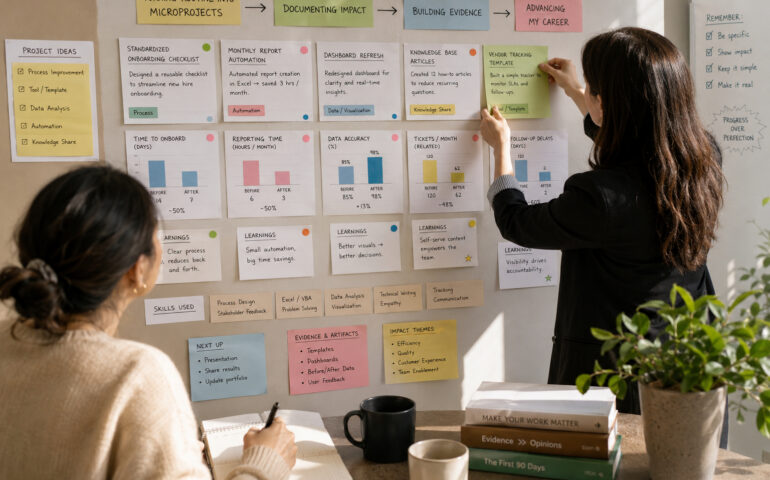
Turn Routine Work Into Clear Career Evidence
Many professionals treat routine tasks as low-value work, leaving their contributions invisible when opportunities arise. By deliberately converting everyday efforts into concise evidence, you create material that hiring managers and leaders can evaluate. This article outlines practical steps to identify,

Turn Small Work Artifacts Into a Portable Career Kit
In busy careers, small work artifacts often carry disproportionate value when assembled thoughtfully. A portable career kit transforms short reports, annotated code snippets, slide excerpts, and concise case notes into clear evidence of ability. Curating and labeling a handful of

Plan Small Role Simulations to Prove Your Readiness
Role simulations are short, focused exercises that let you trial a higher-responsibility job or a new function without committing to a full transition. They replicate the critical decisions, tasks, and stakeholder interactions of a target role on a compact timeline.

Curate Small Work Artifacts to Accelerate Career Mobility
In competitive job markets, tangible evidence often beats vague claims and generic role descriptions. Curating small work artifacts lets you show consistent impact without overhauling your resume or portfolio. This approach helps hiring managers and internal reviewers quickly assess what

Focus Skill Clusters to Build Clear Career Traction
Career progress depends less on scattered learning and more on focused, demonstrable skills that align with the roles you want. Choosing compact clusters of related abilities helps you create visible momentum and makes your work easier to translate into opportunity.

Plan Focused Skill Experiments to Propel Career Progress
Choosing where to invest time in skill development is one of the most consequential career decisions you make. Small, deliberate experiments let you test assumptions and gather evidence without derailing current responsibilities. They reduce risk by turning ambiguous choices into

Run Quarterly Career Audits to Fuel Skill Momentum
Running a focused career audit every quarter lets you convert work experience into intentional progress. By assessing recent wins, gaps, and available opportunities, you can prioritize a small set of skill experiments. A quarterly cadence balances reflection with action so

Constructing Short Case Studies From Everyday Projects
Short case studies turn routine work into concrete examples of impact. They force you to extract decisions, metrics, and lessons from everyday projects. Creating concise narratives makes it easier to share achievements with hiring managers and collaborators. This article explains

Convert Daily Tasks into Demonstrable Career Assets
Many professionals overlook everyday tasks as ready-made evidence of capability. Small deliverables, recurring improvements, and routine problem-solving can be reframed as proof of skill. This article outlines a practical method to assess current work, design short evidence projects, and record
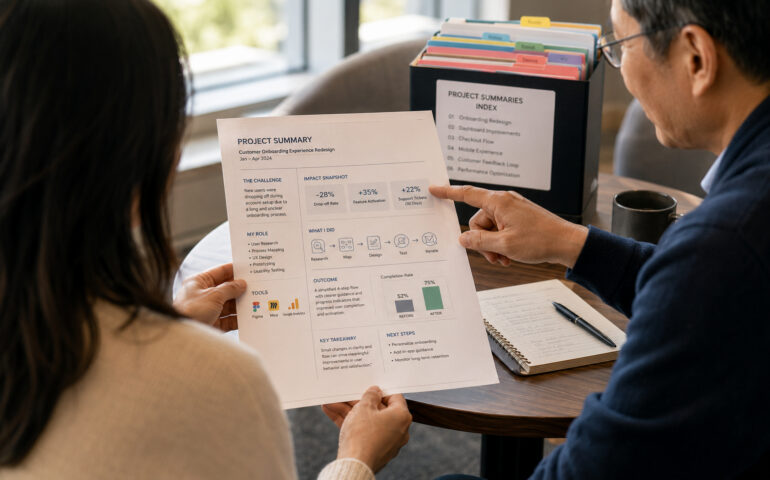
How to Package Work Outcomes for Easy Career Review
Many professionals overlook how their daily outputs translate into career evidence. Packaging outcomes into concise, review-ready artifacts makes achievements visible and actionable. Small, structured summaries help reviewers quickly assess impact and relevance to new roles. This article outlines a practical


