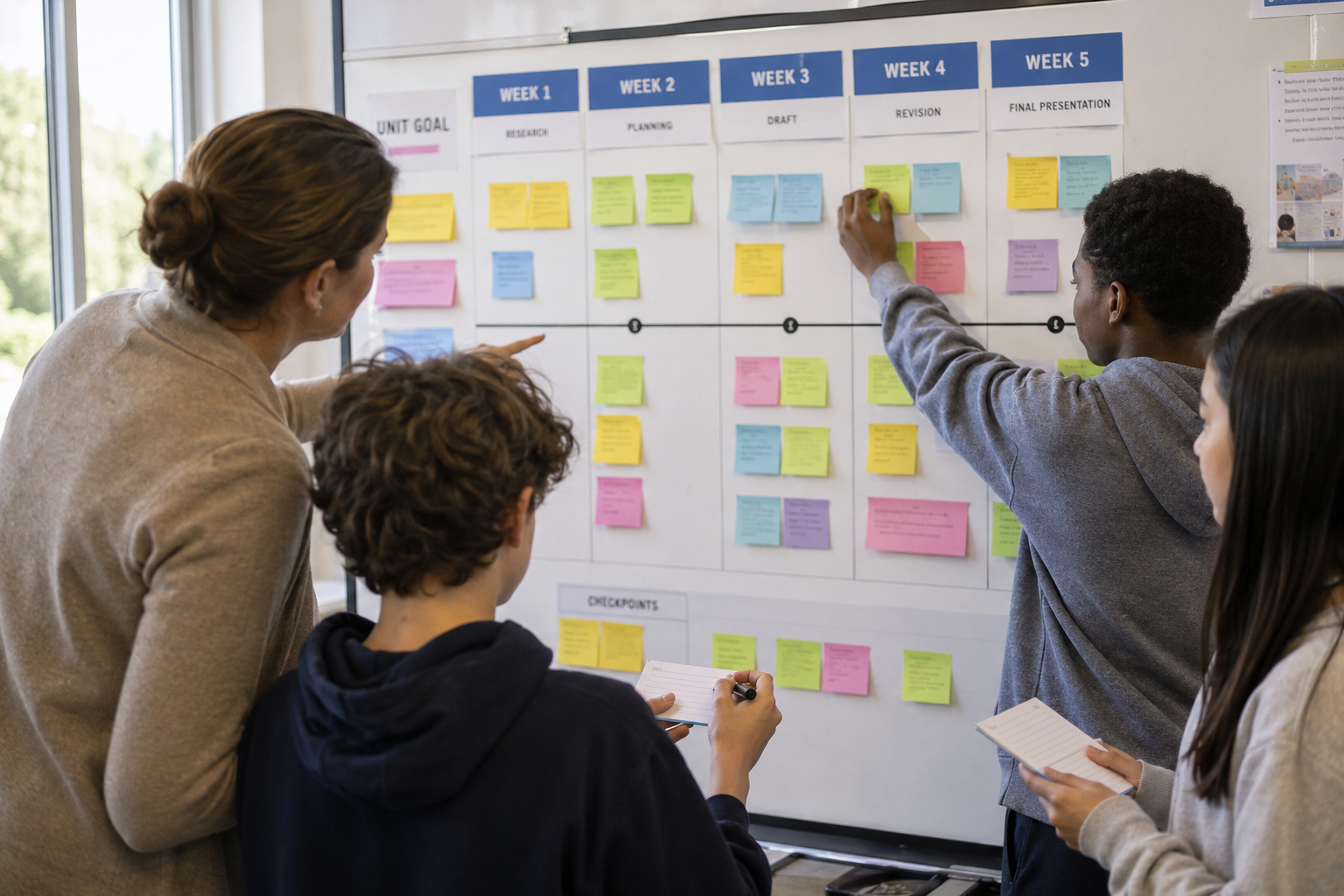
Teaching students how to plan and execute projects equips them with transferable skills that extend beyond any single subject. A clear classroom framework helps learners break complex tasks into manageable steps, set milestones, and adapt when work goes off course. When teachers model small, repeatable routines for planning, monitoring, and reflecting, students gain confidence to lead their own learning. The aim is to make project management practical, visible, and reversible so all students can try, fail, and improve.
Why teach project management in class?
Project work mirrors real-world demands where planning, communication, and time management matter as much as content knowledge. Structured projects encourage collaboration, accountability, and sustained focus while providing authentic contexts for assessment. Teaching the process explicitly makes hidden strategies visible and reduces reliance on teacher-driven scaffolds. Over time students internalize routines and begin to transfer them to independent assignments and group work.
Clear expectations and consistent routines lower cognitive load, letting students concentrate on the task rather than the logistics. That consistency also creates artifacts teachers can use for formative feedback.
Core components of the framework
A practical classroom framework centers on four components: goal setting, task mapping, checkpoints, and reflection. Goal setting anchors the project to clear, measurable outcomes; task mapping breaks those outcomes into sequenced steps; checkpoints provide brief, frequent reviews of progress; reflection consolidates learning and informs future planning. Each component is taught explicitly, practiced in low-stakes tasks, and gradually combined into longer projects.
- Goal setting: criteria and success markers.
- Task mapping: timelines and role assignments.
- Checkpoints: quick evidence reviews and redirection.
These elements create a predictable rhythm that students can adopt across topics and team configurations.
Daily routines and short cycles
Embed short, repeatable cycles—daily planning, mid-week check-ins, and end-of-cycle reflections—so project management becomes habitual. A five-minute start-up planning session helps students choose next steps; a mid-cycle peer review surfaces obstacles early; a brief reflection at the end of a cycle captures lessons learned. Short cycles reduce procrastination and make teacher feedback timely and actionable.
Routines should be scaffolded and then faded as students demonstrate independence. Consistent language and simple templates speed adoption and maintain focus.
Assessment and feedback loops
Assessment should evaluate both process and product, using rubrics that include planning, collaboration, and adaptability. Frequent low-stakes evidence checks—drafts, progress logs, quick demos—give teachers data to guide instruction and students signals to adjust. Peer feedback protocols teach students to critique constructively and to act on feedback efficiently. Over time, rubrics and self-assessments help learners judge their own readiness and plan revisions.
Combine teacher, peer, and self-assessment to create balanced feedback loops that prioritize growth. Make feedback specific, actionable, and tied to the framework’s components.
Conclusion
Teaching a simple, repeatable project-management framework helps students plan, monitor, and reflect with increasing independence. Short routines, clear checkpoints, and layered assessment turn abstract skills into practical habits. With regular practice, students carry these strategies into new tasks and settings.