Classrooms that teach students to design their own study routines help them develop habits that outlast any single course or semester.
A practical framework emphasizes small, repeatable moves students can test, refine, and personalize over time.
Teachers act as facilitators: modeling, making plans visible, and offering quick, actionable feedback so learners iterate efficiently.
Below are classroom-friendly steps that support students in creating portable, sustainable study systems they can reuse outside class.
Start with Tiny, Repeatable Moves
Begin by identifying actions students can complete in five to ten minutes with minimal guidance so the barrier to entry stays low and confidence grows.
Examples include one-minute summaries, focused planning prompts, or a short prioritization checklist that students can use at the start of study time.
Small wins reinforce the value of routine and make it easier to scale toward longer, more complex study sessions later.
Ask students to try one move for a week and reflect on what changed in their understanding or focus.
Keep expectations narrow so students concentrate on consistency rather than perfection.
Celebrate steady practice and small improvements to reinforce the habit-building process.
Make Planning Visible and Portable
Externalizing plans turns internal intentions into artifacts students can examine, compare, and adapt when outcomes differ from expectations.
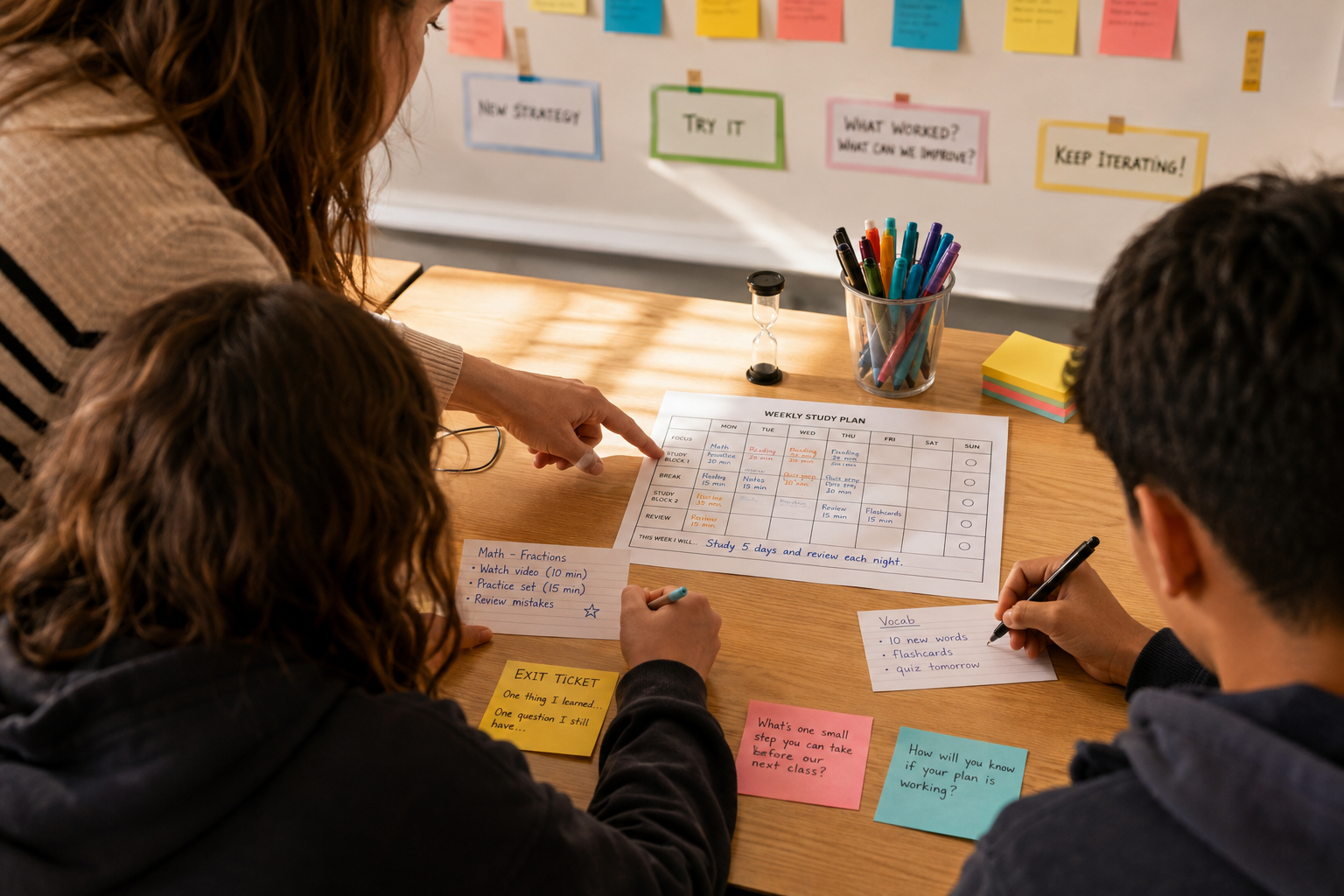
Use compact templates—index cards, one-page trackers, or brief digital notes—that travel with the learner between classes and study settings.
Teach a concise planning script: define a clear goal, list the next steps, estimate time, and add one quick success metric for self-checking.
When plans live outside the head, reflection and modification become simpler and less time-consuming.
- One-page weekly plan for priorities and time estimates
- Two-step exit ticket linking progress to next steps
- One-minute self-assessment prompt for focused reflection
Model how you use a portable plan to approach a task, then give students time to adapt templates to their own preferences.
Encourage iterative adjustments rather than searching for a single perfect format.
Use Quick Feedback and Iteration Cycles
Fast, frequent feedback helps students distinguish helpful routines from habits that waste time or attention.
Practice brief end-of-session micro-retrospectives where learners note one thing that worked and one change to try next time, keeping reflection concrete and manageable.
Combine self-assessment with short teacher or peer comments to broaden perspective and accelerate improvement.
Over repeated cycles, students convert tentative experiments into dependable study strategies.
Track changes with short logs or shared boards so progress is visible to everyone.
Gradually reduce scaffolds as students demonstrate stable, transferable routines.
Conclusion
Student-created routines begin with deliberately small, repeatable moves and grow through practice and reflection.
Visible, portable planning tools plus quick feedback cycles let learners iterate efficiently and build confidence.
With consistent support, these classroom practices produce independent, transferable study habits that serve students long-term.