Helping students manage their study time starts with a straightforward, repeatable method. This approach places planning and reflection in students’ hands while still allowing teacher guidance. It fits into class routines and out-of-class homework and scales across subjects. Used consistently, it builds independence without overwhelming learners.
Define a Weekly Objective
Begin with a concise weekly objective that clarifies what success looks like. Students write one measurable goal tied to standards or skills rather than vague outcomes. Teachers model how to translate a unit target into a single, achievable weekly aim and provide sentence stems to reduce cognitive load. The objective becomes the anchor for daily choices and assessment.
When a group shares objectives, peers can offer quick feedback. This communal step increases accountability.
Break Tasks into Time-Based Blocks
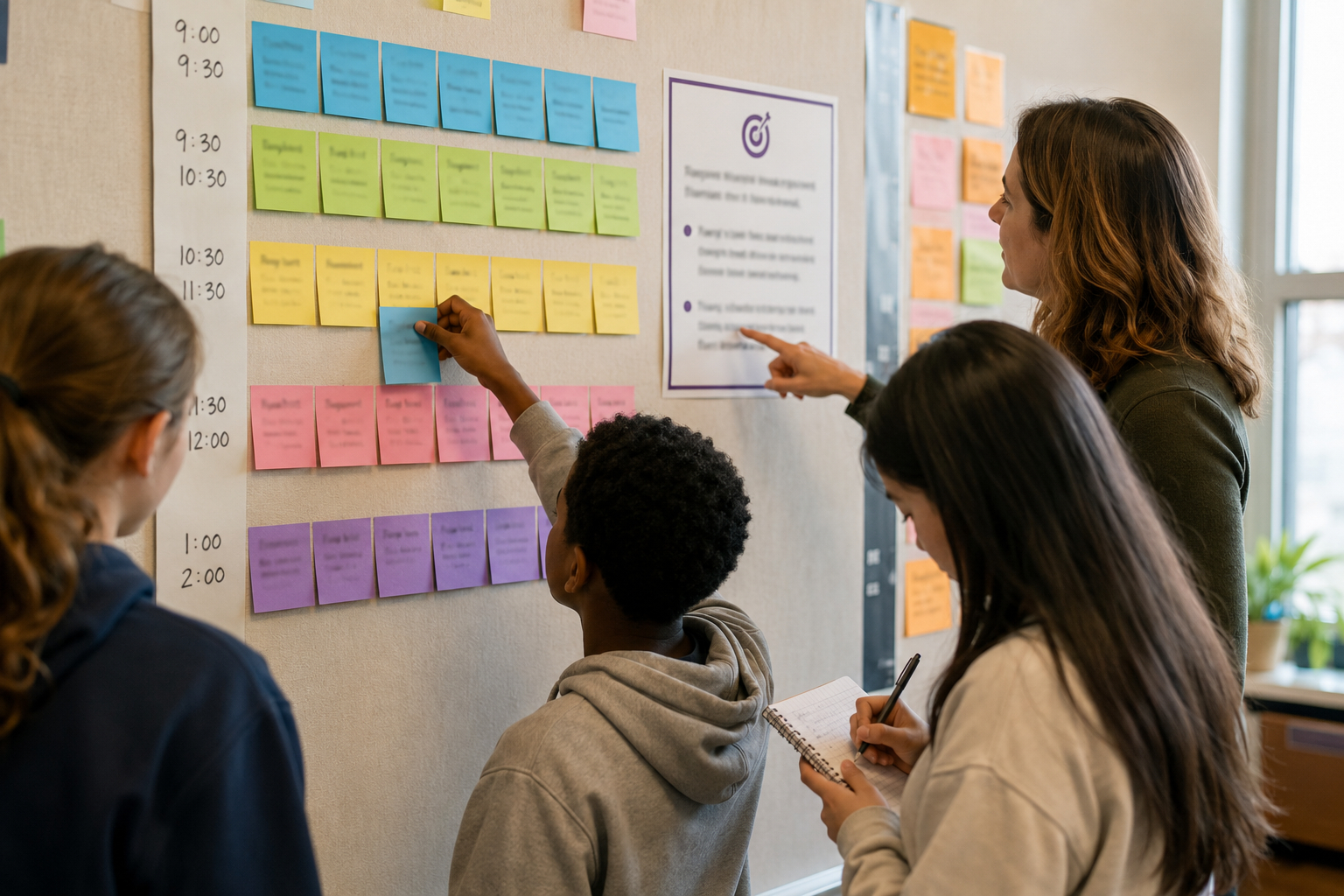
Teach students to divide the weekly objective into manageable time-based blocks. Blocks might be 15–30 minutes of focused work with a clear product or practice target. Encourage students to schedule these blocks in planners or digital calendars and to estimate effort before starting. Estimation trains metacognition and helps students adjust plans as they learn.
Short, bounded blocks reduce procrastination and make progress visible. Over time students become better at predicting their own pacing.
Use Checkpoints and Short Reflections
Insert brief checkpoints after one or two blocks where students record progress and obstacles. Use quick prompts: What worked? What one adjustment will I try next? These reflections take two to five minutes and can be private notes or shared with a partner. Checkpoints turn abstract goals into actionable data for revision.
Teachers review patterns rather than single entries to inform instruction. Students learn to iterate plans based on evidence.
Teacher Moves That Support Autonomy
Shift from directing every task to coaching students through their plans. Offer templates, model estimation and reflection, and schedule regular conferencing that focuses on strategy over content. Provide choice within constraints so students practice decision-making without being overwhelmed. Small nudges help students transfer planning skills across contexts.
The goal is gradual release so learners own their process. Over weeks, teachers reduce scaffolds as students gain competence.
Track Progress Without Excessive Grading
Use lightweight trackers instead of frequent formal grades to monitor student progress. Simple charts, completion logs, or brief self-ratings offer enough evidence to guide instruction and student revisions. These records can be anonymous for pattern analysis and still inform feedback. The emphasis is on growth trends rather than single performance points.
Students benefit when progress is visible and tied to their weekly objective. Teachers save time while maintaining instructional responsiveness.
Conclusion
When students direct planning, they gain both skills and confidence. Start small, track patterns, and celebrate iterative improvements. Over time this method becomes a portable habit for lifelong learning.