Building learner autonomy requires coordinated routines and assessment practices.
When teachers align short daily habits with clear feedback cycles, students gain control over their progress.
Small, predictable rituals reduce friction and free cognitive resources for deeper learning.
This article outlines practical classroom moves that support self-directed learning.
It focuses on classroom routines teachers can implement immediately.
Why routines and assessments matter
Routines create predictability and set expectations that help students internalize processes. Assessments, especially formative ones, provide timely information about understanding and strategy use. Together they shift responsibility gradually from teacher to student by making learning visible. When combined thoughtfully they help learners plan, monitor, and adjust their work. Measuring small behaviors like self-checks and revision attempts gives clear signals of readiness and supports student-led goal setting.
Start small and focus on consistency. Over time students adopt skills for planning and reflection.
Practical classroom routines
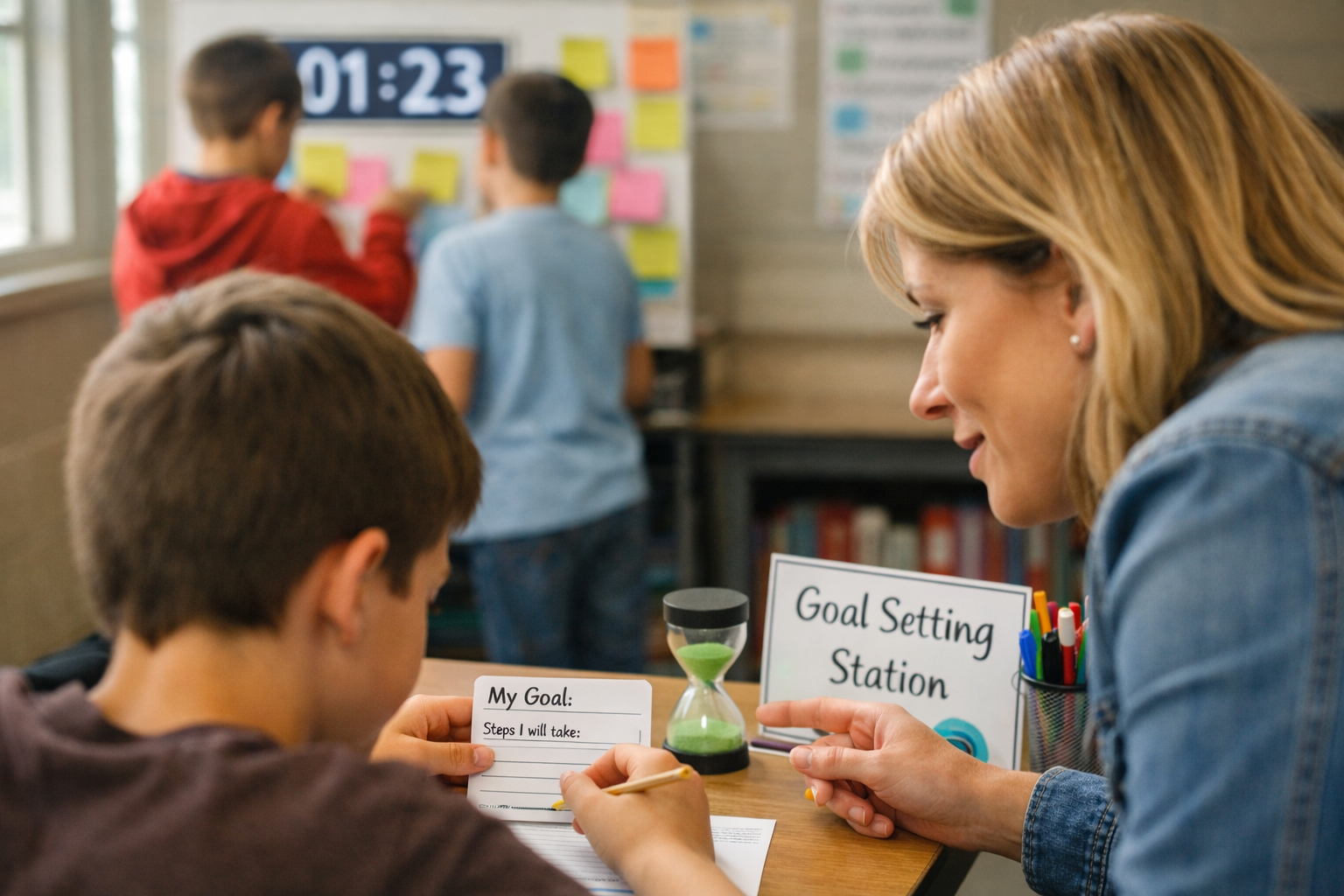
Introduce brief daily rituals that scaffold independence: a 5-minute goal-setting task, a quick exit reflection, and a peer check-in protocol. Keep directions concise, model routines explicitly, and practice until they become automatic. Use visual cues and timers to maintain flow without constant teacher prompts. Routines should require cognitive effort but minimal logistical overhead. Invite students to suggest tweaks so routines feel owned rather than imposed.
- Start-of-class goal statement: what will I do today?
- Mid-task checkpoint: one question to self-assess progress.
- Exit ticket: what I learned and one next step.
These routines promote metacognition and make strategy use habitual. They also generate artifacts teachers can use for targeted feedback. Keep success criteria visible so students can self-assess quickly.
Designing low-stakes assessments
Low-stakes assessments reduce anxiety and encourage risk-taking while delivering regular performance data. Use quick polls, one-minute papers, and short rubrics focused on process as much as content. Emphasize growth by making success criteria transparent and allowing revisions based on feedback. Feedback should be specific, actionable, and tied to the routines students use. Pair quick assessments with brief coaching conversations to build reflection skills.
Rotate assessments so they remain manageable and informative. When students see how data links to routines, they learn to use evidence to guide choices. Use results to set short-term goals that students track in their routines.
Conclusion
Consistent routines paired with purposeful assessments cultivate autonomy, resilience, and sustained agency over time.
Begin with a couple of predictable moves, measure their effects, and refine them based on classroom response.
Small adjustments can produce meaningful gains in student ownership and lifelong learning habits if sustained over weeks.