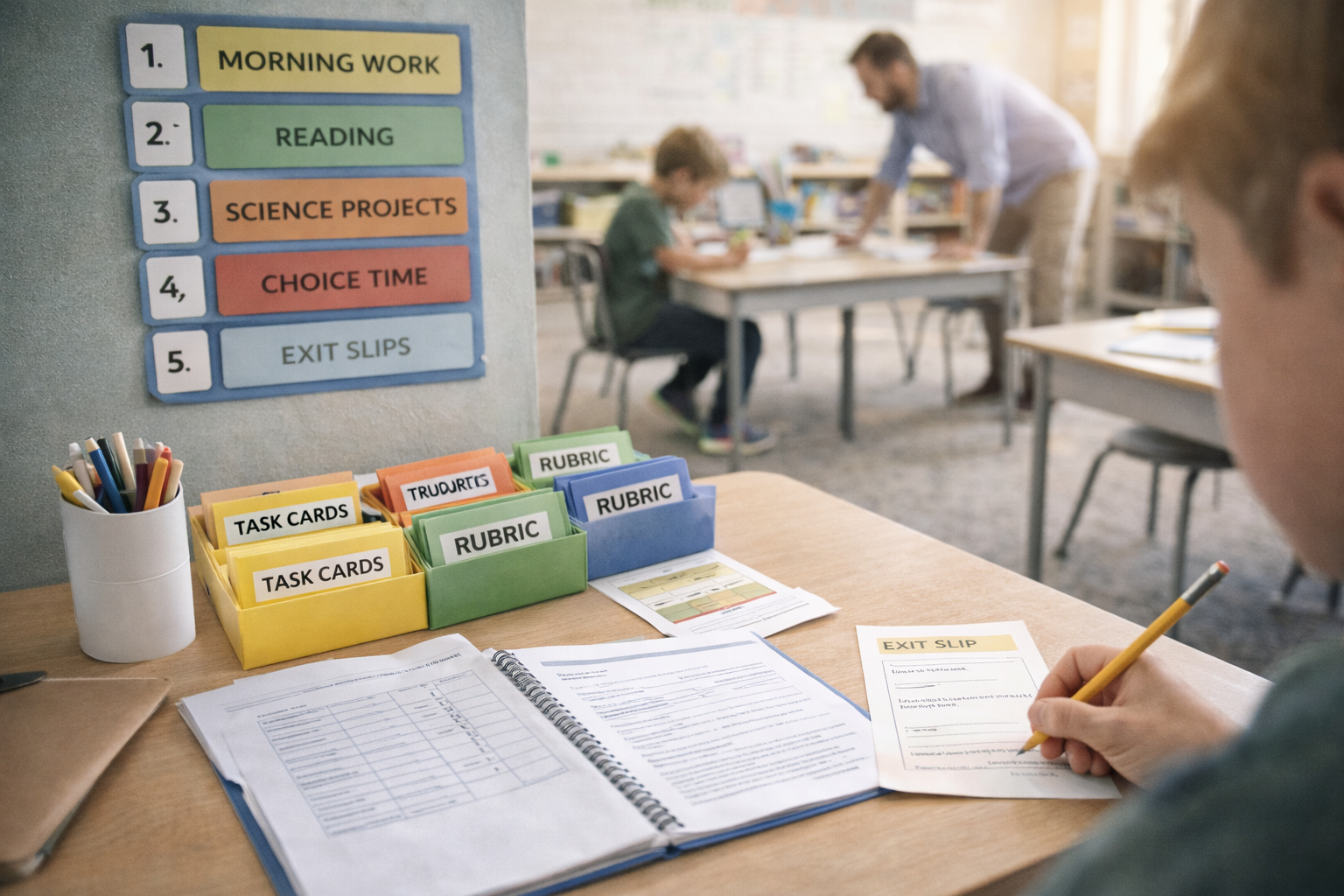
Creating a classroom where students develop confidence and independence requires intentional structures. Teachers can combine clear routines, scaffolded choices, and regular reflection to help learners take ownership. Small, consistent practices reduce anxiety and build students’ capacity for self-directed learning over time. The result is a classroom culture that balances guidance with growing autonomy.
Clear expectations and predictable routines
Establishing consistent expectations and daily routines gives students a reliable framework for practice and decision-making. When learners know what success looks like and how class time is organized, they expend less energy on uncertainty and more on learning. Routines for transitions, resource use, and independent work help students internalize productive behaviours. Predictability also creates space for students to experiment within known boundaries.
Introduce expectations explicitly and revisit them regularly to maintain clarity. Use simple visual cues or brief checklists so learners can self-monitor progress without constant teacher prompting.
Scaffolded instruction and meaningful choice
Scaffolding supports development by breaking tasks into manageable steps while gradually releasing responsibility to students. Offer tiered tasks, models, and guided practice early on, then provide options that let learners select challenge levels or formats. Meaningful choice increases engagement and fosters decision-making skills essential for independence. Choices should be structured to align with learning goals and classroom norms.
- Provide 2–3 task variations with clear success criteria.
- Allow students to choose topics, partners, or presentation formats.
- Offer checkpoints for optional teacher support.
Over time, reduce supports and broaden choices so students practice planning and evaluating their own work. This gradual shift builds confidence while protecting learning quality.
Feedback, reflection, and assessment
Timely feedback and opportunities for reflection turn classroom activity into ongoing growth. Use focused comments that point out strengths and specific next steps, and encourage students to set short-term goals. Self-assessment routines—such as quick rubrics or exit reflections—help learners recognize progress and identify strategies to improve. Formative assessment informs instruction and empowers students to adjust their approach.
Create regular moments for peer and self-feedback so learners rehearse constructive reflection. When students can articulate what they did and why it mattered, independence becomes a practiced habit.
Conclusion
Building confidence is a gradual process supported by structure, choice, and feedback.
Sustained routines and scaffolded opportunities let students practice independence safely.
With deliberate design, classrooms become spaces where learners grow into self-directed thinkers.