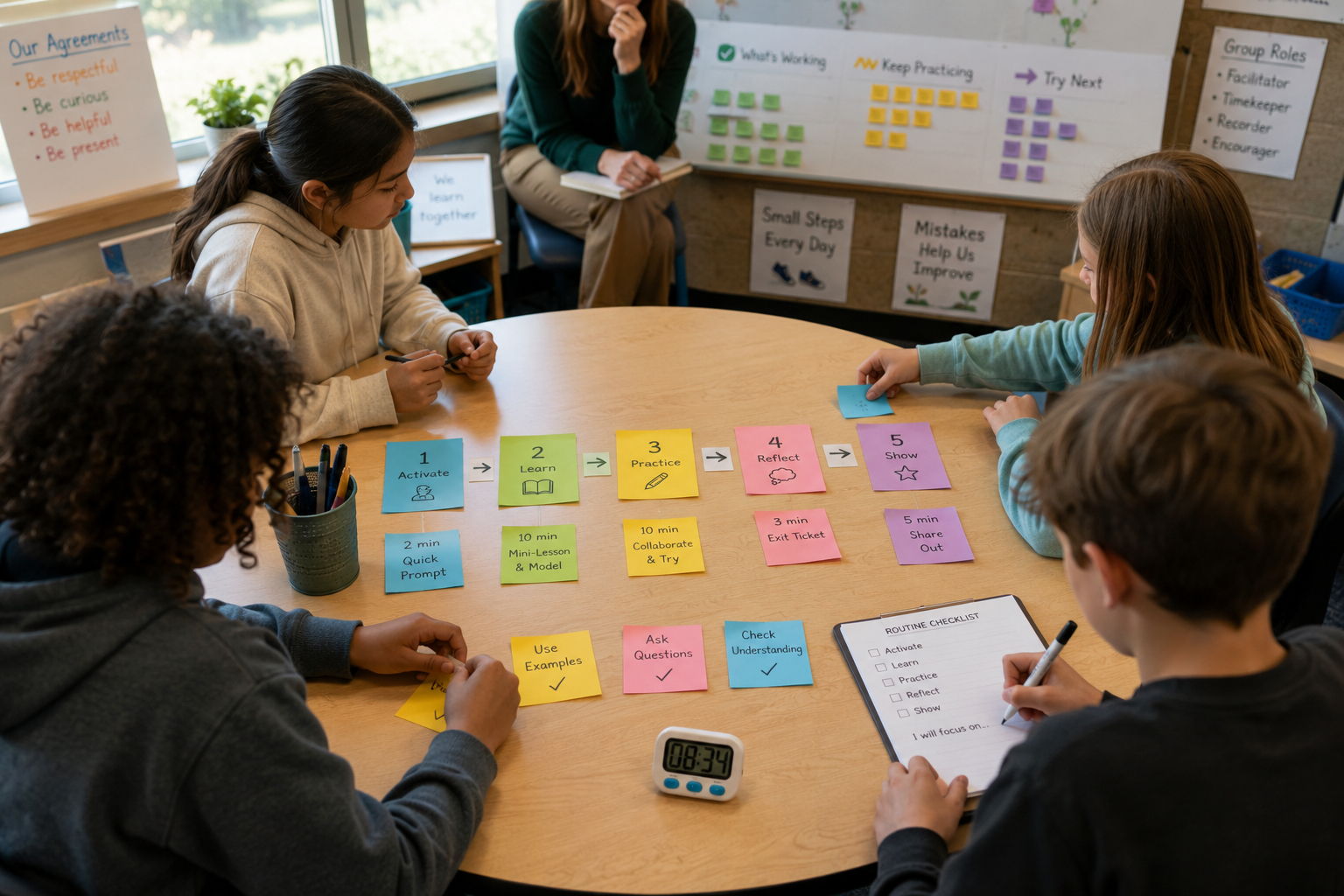
Teachers who want students to become independent learners often face the challenge of balancing structure with flexibility. Modular routines break complex work into repeatable, teachable chunks that students can adopt across subjects. When designed well, these routines reduce cognitive load and give learners predictable strategies to apply. This article outlines practical steps to create modular learning routines that foster student agency and adaptability.
Why modular routines matter
Modular routines create consistency without rigidity by offering small, transferable habits that students can use in diverse tasks. Rather than teaching one-off strategies, teachers introduce compact procedures that students practice until they become automatic. This approach supports metacognition because learners can name the routines they used and reflect on outcomes. Over time, these routines become tools students call upon independently when planning or solving problems.
Starting with small, observable moves helps teachers scaffold independence. Students gain confidence as they master each component before combining them into larger workflows.
Design simple, reusable learning blocks
Focus on short, clear routines that serve common classroom needs: warm-ups, checklists, quick peer feedback, or exit reflections. Each block should take one to ten minutes and have a clear purpose, steps, and expected student product. Keep language consistent and visible so students can self-monitor and teachers can reteach efficiently. Aim for routines that map directly onto learning goals so students see their relevance.
- Example block: Three-minute summary to capture main idea and a question.
- Example block: Two-step peer check for accuracy and one improvement suggestion.
- Example block: Quick planning page with goal, resource, and time estimate.
Design blocks that combine flexibly; encourage students to mix and match based on task demands. Providing choice within a predictable structure increases ownership and supports transfer.
Track, reflect, and iterate
Implement simple measures to see which routines stick and which need revision, such as weekly reflection prompts or brief teacher observations. Use student feedback and work samples to judge usefulness rather than fidelity alone. When a routine doesn’t produce the intended outcomes, adjust language, steps, or timing and try again with clear criteria for success. Iteration normalizes improvement and models lifelong learning.
Make reflection habitual by scheduling short checkpoints where students name the routine they used and evaluate its effectiveness. Over time these checkpoints build a culture of evidence-based adjustment.
Conclusion
Modular learning routines build independence by packing clear, repeatable actions into everyday classroom practice. When teachers design, teach, and iterate compact blocks, students gain transferable strategies and greater control over their learning. Small, consistent moves lead to sustained student agency and improved outcomes.