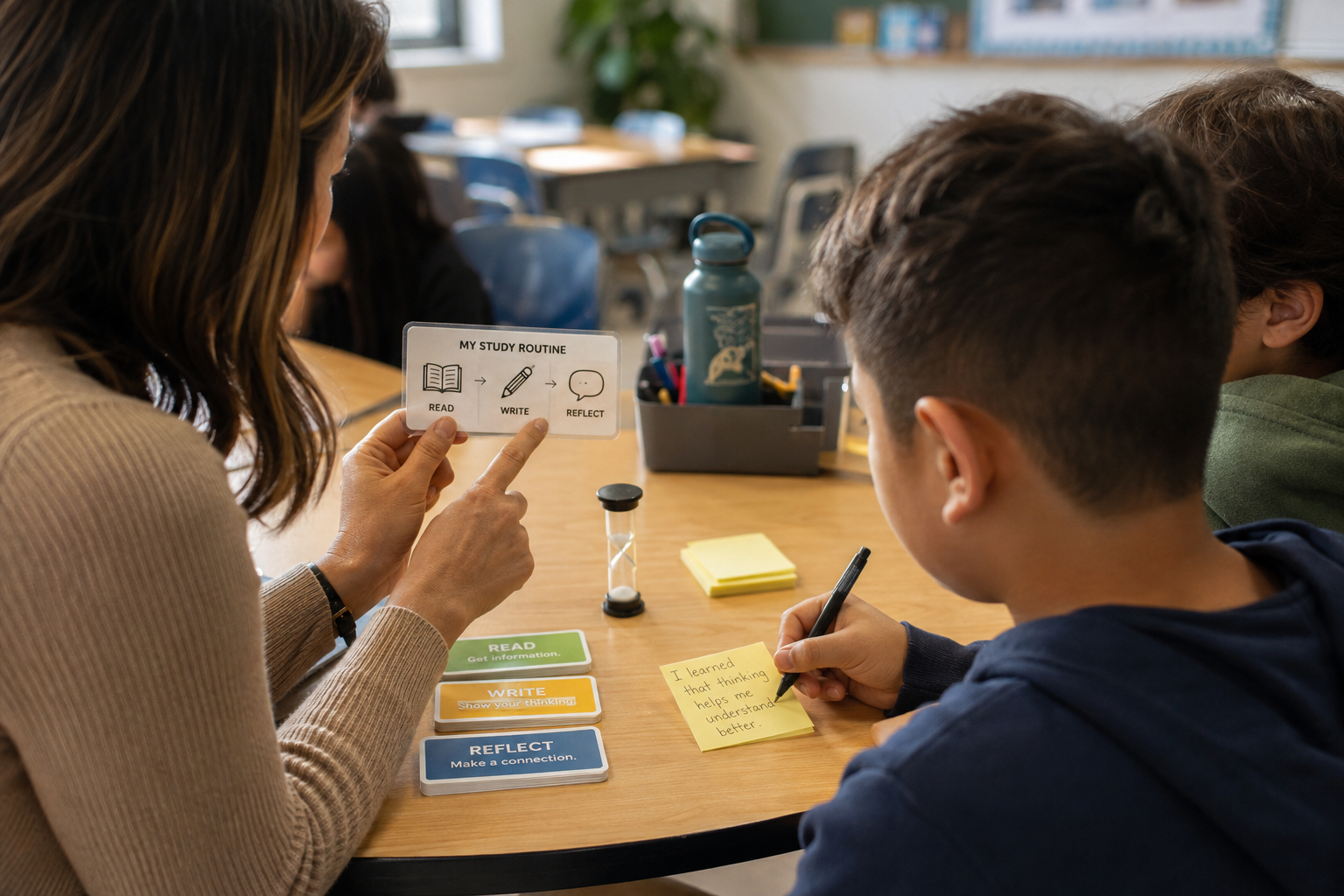
Teachers want students to leave class with predictable, transferable study habits. Lightweight routines that fit different lessons are easiest for learners to adopt. This article outlines simple templates teachers can introduce, practice, and fade. The aim is steady independence rather than perfect execution on the first try.
Why Lightweight Routines Matter
Students juggle many expectations, and heavy systems rarely stick across contexts. By contrast, lightweight routines reduce cognitive load and create reliable cues for action. When teachers model a compact flow — quick preview, one focused task, brief reflection — learners can rehearse the same pattern across subjects. Small, consistent moves also make assessment of habits straightforward for both teacher and student.
These benefits compound over weeks as routines become automatic. The goal is transferable competence rather than dependence on teacher prompts.
Designing Portable Study Templates
Start by specifying three to five steps that fit within a single work block. A template might include goal setting, a focused work interval, a quick check, and an adjustment step. Keep language consistent and short so students can internalize the script quickly. Provide visual anchors—icons on a handout or a card students carry—to cue each step.
- Two-minute goal + fifteen-minute focus + one-minute reflection
- Question starter + independent work + peer-check
- Plan, practice, test
Pilot templates with small groups and collect simple feedback. Adjust wording and timing until the routine fits most learners.
Coaching Students to Use Them
Introduce routines explicitly and model them aloud several times. Use micro-conferences to coach application during early practice sessions. Encourage students to personalize steps without losing the core sequence. Celebrate fidelity and problem-solve when breakdowns occur so habits remain useful.
Over time, fade prompts and have peers reinforce the pattern. Provide periodic check-ins to maintain quality and promote ownership.
Monitoring and Adjusting Routines
Collect simple metrics—how often students complete the sequence, average time spent, and qualitative notes about obstacles—to understand whether a routine is working. Use quick tools such as exit tickets, a two-question survey, or peer logs to gather classroom-level data without creating heavy paperwork. Look for patterns: which steps are skipped, when students stall, and whether personalization improves outcomes. Make one change at a time and communicate it clearly so students can test an updated routine over at least one week.
Share results with students and invite their suggestions for streamlining or clarifying steps. This collaborative approach increases buy-in and surfaces practical fixes teachers may not have anticipated.
Conclusion
Small, portable study routines give students repeatable pathways to independence. When designed, practiced, and gradually faded, they become durable habits. Start with one template and refine it with student input.