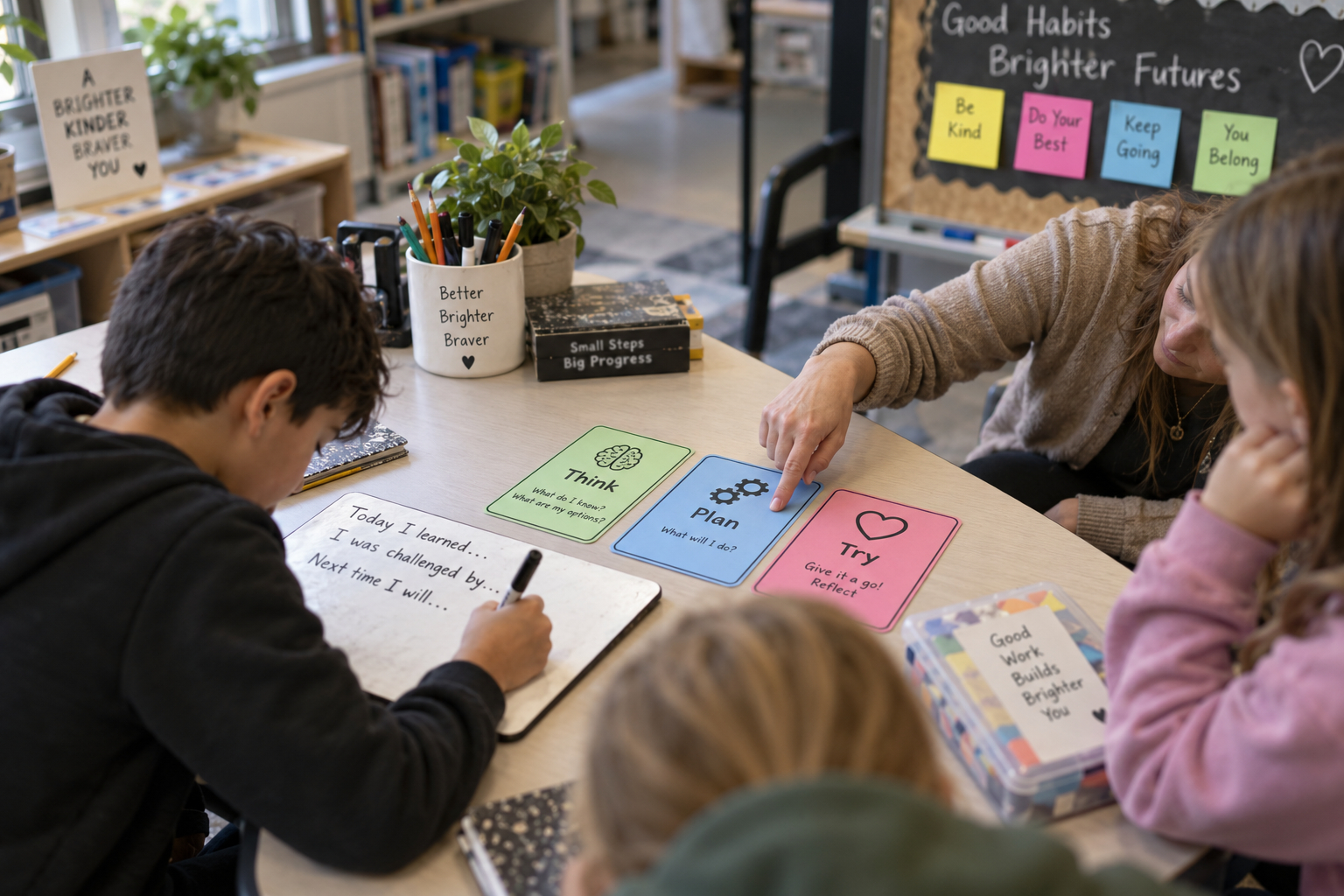
Reliable routines give students predictable spaces to practice, reflect, and adjust their learning. When routines are deliberately designed and consistently taught, they reduce cognitive load and make productive habits more accessible. Small, repeatable practices help learners translate feedback into incremental improvement without overwhelming instruction time. This article outlines practical steps teachers can use to design, introduce, and refine classroom routines that foster steady progress.
Why focused routines matter
Routines create structure that supports attention, reduces decision fatigue, and clarifies expectations for both teachers and students. A well-chosen routine becomes a scaffold: it guides performance until a learner internalizes the behavior and can apply it independently. Routines that emphasize reflection and short corrective actions encourage regular self-assessment and make growth visible. Over time, these habits compound, producing measurable gains in engagement, accuracy, and confidence.
Establishing clear purpose and simple steps is essential when introducing a routine. Students adopt practices more readily when they see immediate, tangible benefits and receive consistent feedback.
Designing routines for classroom realities
Effective routines are brief, explicit, and adaptable to varying lesson lengths and student levels. Start by defining the specific problem the routine will address—such as improving retrieval practice, promoting revision, or streamlining transitions. Keep steps concrete and limited to three or four actions so students can remember them without cues. Build in a short modeling phase, followed by guided practice and gradual release toward independence.
Use common language and visual prompts so routines remain consistent across lessons. Small adjustments based on classroom flow will help routines stick without adding planning burden.
Implementing, monitoring, and iterating
Introduce a new routine with a brief teacher demonstration, then coach students through repeated practice with corrective feedback. Collect quick evidence of how the routine affects learning—exit tickets, short observations, or a one-minute student reflection can reveal whether the routine supports intended outcomes. Share results with learners and invite small-group suggestions to refine steps; student input increases ownership and relevance. Expect an initial dip in speed as the class learns the pattern, followed by smoother execution as familiarity grows.
Regular checkpoints—weekly or biweekly—allow teachers to decide whether to simplify, reinforce, or retire a routine. Iteration keeps practices aligned with student needs and curriculum demands.
Conclusion
Deliberate, lightweight routines help students convert instruction into lasting habits and measurable progress. By keeping routines short, purposeful, and consistently reinforced, teachers can reduce friction and boost autonomy. Small, sustained changes in classroom practice yield reliable learning gains over time.