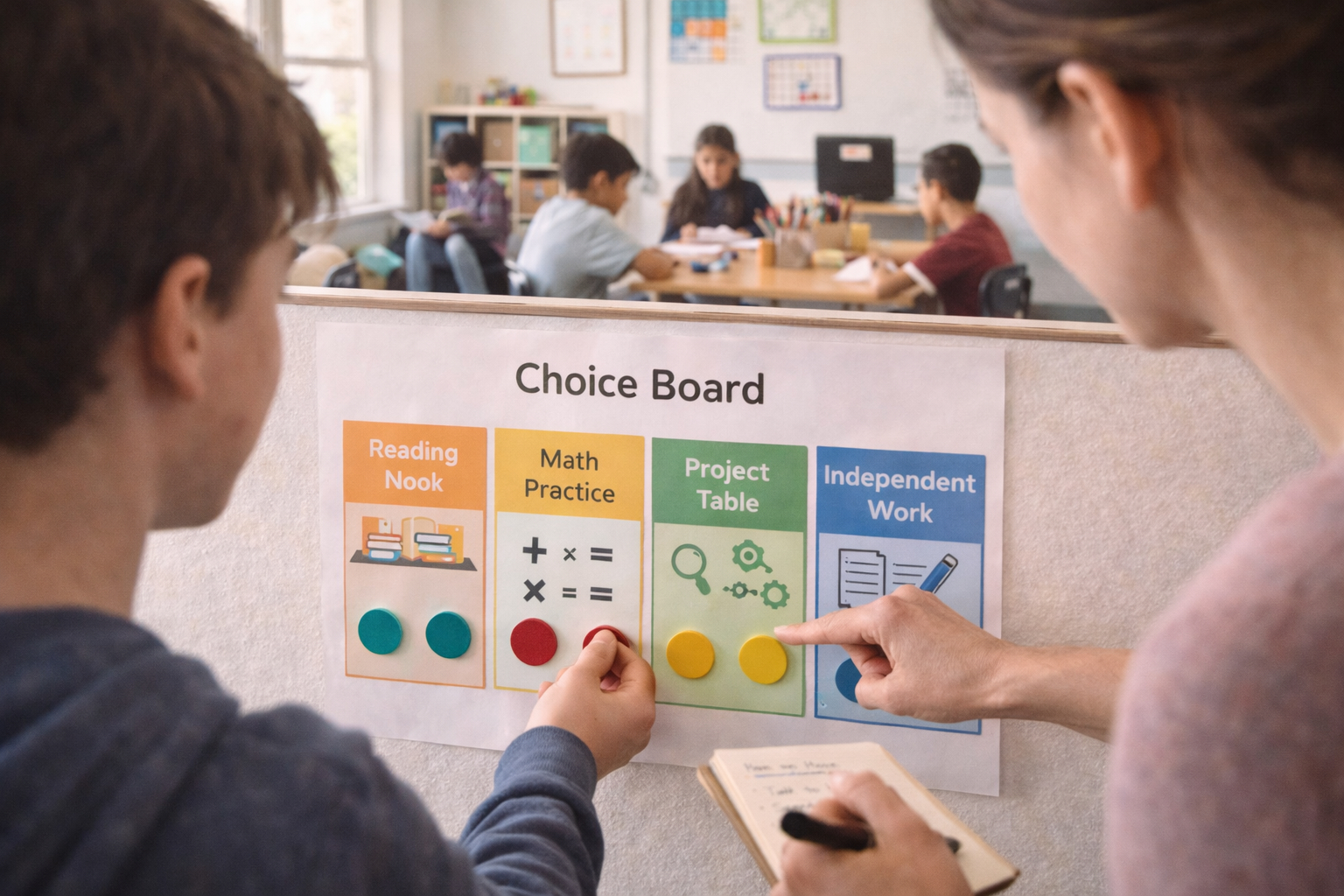
In many classrooms small design choices shape how students engage with learning. Framing decisions at the right scale helps learners take meaningful responsibility without feeling overwhelmed. Teachers can deliberately structure when, how, and which choices students make to nurture planning, reflection, and ownership. These structures are easy to implement and adapt across grade levels and subjects. This article outlines practical steps to introduce choice architecture that supports independent learning habits.
Why choice architecture matters
Choice architecture refers to arranging options and decision points so that desirable behaviors become easier. In education this means breaking tasks into manageable choices, scaffolding strategy selection, and signaling expectations clearly. When students encounter well-designed decision points they practice judgment, prioritize goals, and build metacognitive awareness. Over time these repeated experiences increase confidence and reduce reliance on teacher prompts. They also reduce ambiguity so students spend cognitive energy on strategy rather than guessing expectations.
This matters for both routine tasks and complex projects because it scales responsibility gradually. Well-scaffolded choices lead to transferable habits. Over weeks the clarity of choices often accelerates progress for whole groups and individuals.
Designing simple decision points
Start by identifying moments in lessons where choice is meaningful but not overwhelming, such as topic selection, resource use, or pacing. Offer limited, clear options and model how to choose, explaining the trade-offs briefly. Use prompts that focus on process rather than just product to encourage strategy use and reflection. Keep options consistent across activities so students learn the decision pattern.
- Provide two journal prompts and let students pick one.
- Offer three research sources labeled by reading level or perspective.
- Allow students to select the order of tasks within a short cycle.
- Use a simple rubric so students choose what to improve next.
These small moves reduce decision fatigue while still giving agency. Repeating them builds predictable habits and clearer expectations. Simple data points help teachers decide whether to widen or narrow options for different learners.
Monitoring impact and refining routines
Collect quick evidence about how choices affect engagement and outcomes: brief exit tickets, observation notes, or student reflections. Look for changes in on-task behavior, quality of work, and independence during transitions. Use that feedback to tweak the number of options, timing, or scaffolds. Quick interviews or two-minute reflections can reveal whether students understand trade-offs and feel supported. Sharing these findings with the class builds transparency and invites student suggestions for better options.
Involve students in evaluating the choices so they contribute to design. Iteration keeps systems aligned with learners’ needs. This collaborative approach makes refinements more likely to succeed.
Conclusion
Thoughtful choice architecture helps students practice decision-making within safe boundaries. Small, repeatable decision points build planning and reflection skills that transfer beyond class. By monitoring and refining these structures, teachers can steadily grow student agency.
Related Articles


Recent Posts

Designing Compact Choice Menus to Foster Student Decision-Making
Teaching Students to Sequence Tasks for Deeper Engagement
Practical Classroom Methods for Teaching Strategic Study Prioritization
Translate Everyday Work into Clear Professional Evidence
A Practical Process for Building Portable Career Proofs


