Establishing predictable classroom routines is one of the most effective ways to support student independence. Brief, consistent practices help learners internalize expectations and take ownership of tasks without constant teacher direction. When routines are intentionally designed, they free cognitive space for deeper thinking and creative problem solving. This article outlines practical approaches teachers can use to build and sustain those habits over time.
Why routines matter
Routines reduce ambiguity and lower the cognitive load required to begin academic work, which encourages students to initiate tasks more readily. They also create a culture of shared responsibility that normalizes self-checking and peer support. Over time, students who follow clear routines develop confidence in handling classroom demands independently. Those habits transfer to new assignments because procedural steps become familiar.
Routine-driven classrooms support equity by giving all students predictable pathways to succeed. Clear procedures help students who struggle with executive function and provide reliable anchors during transitions.
Design short daily moves
Keep routines brief and focused so they can be practiced every day without taking significant instructional time. Examples include a two-minute goal-setting prompt, a quick organization check, or a consistent warm-up that previews lesson steps. Short moves repeated consistently build automaticity and reduce the need for repeated explicit instruction. They also make routines easier to model, observe, and adjust for different learners.
Prioritize a few high-impact moves rather than many complex procedures. Consistency and clarity matter more than quantity when forming lasting habits.
Scaffold then fade supports
Begin with clear models, guided practice, and visible prompts so students experience success early on. Gradually reduce teacher prompts as students demonstrate competence, shifting responsibility to peers and checklists. Fading support strengthens autonomy while still providing a safety net for learners who need it. The goal is to move from structured dependence to confident independence through planned release.
Track progress and be prepared to reintroduce supports for students who need additional practice. Fading should be flexible and responsive to real classroom data.
Use visible prompts and tools
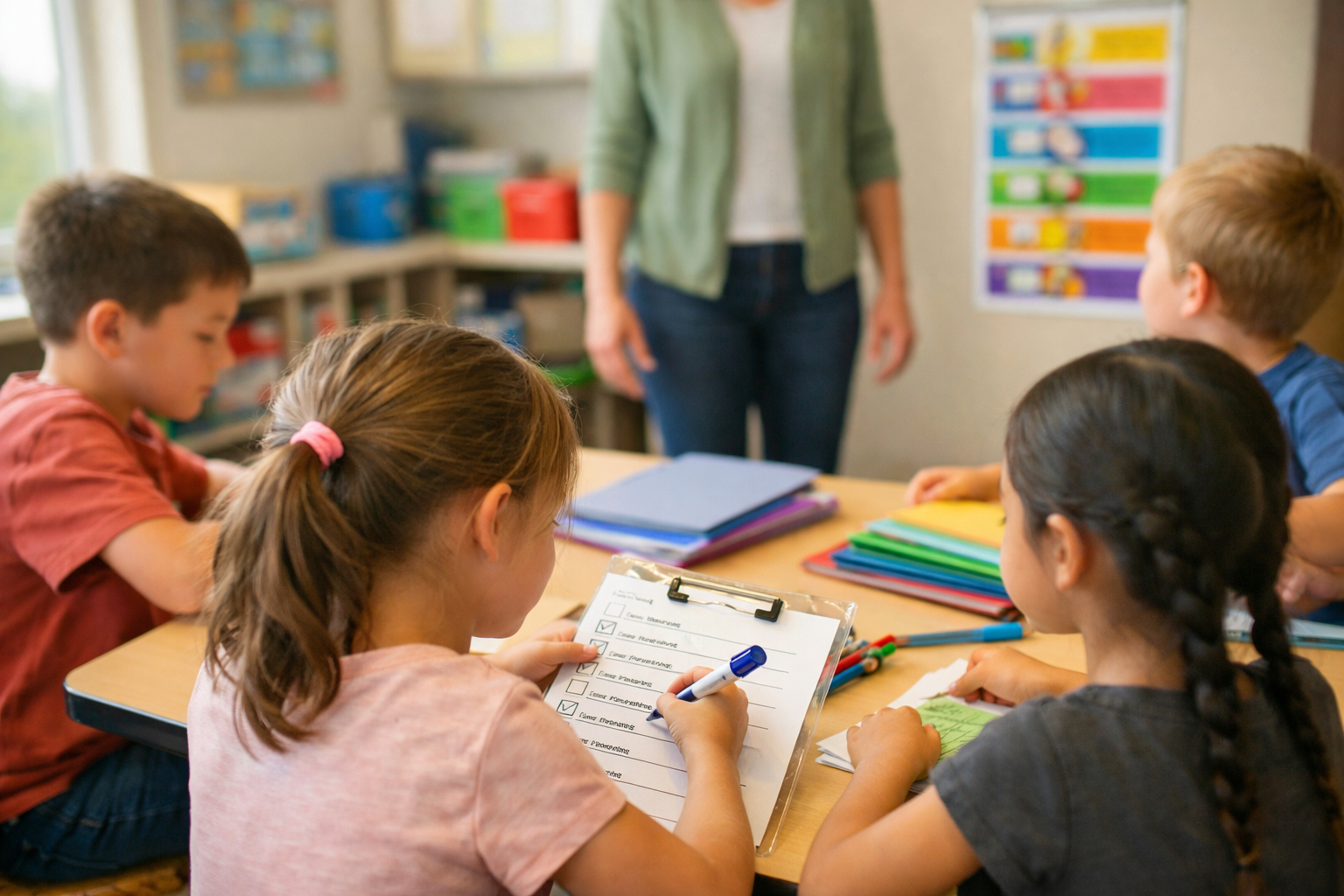
Visual cues and simple tools make routines easier to remember and follow. Posters, checklists, timers, and labeled materials reduce uncertainty and promote consistent behaviors. When students can see the steps, they are more likely to self-monitor and correct course without teacher intervention. Tools also enable quick peer coaching, so students help each other stay on track.
- Checklists for task initiation and completion
- Visual schedules for transitions
- One-page guides for independent procedures
Keep tools concise and accessible so they support rather than overwhelm learners. Rotate or revise visuals based on classroom needs.
Monitor progress with quick checks
Use low-stakes assessments and brief observations to gauge how well routines are working and where students need more support. Quick exit tickets, a one-minute reflection, or sampled work checks provide actionable information without heavy grading. Analyze pattern data to identify gaps and refine routines accordingly. Regular monitoring keeps routines aligned with learning goals and student readiness.
Adjust frequency and type of checks as routines become more established. Share results with students so they understand their progress and next steps.
Conclusion
Intentional, repeatable classroom routines build student independence by simplifying the path to productive work. Start small, scaffold deliberately, and monitor impact so routines evolve with learners. With thoughtful design, daily practices become the foundation for lasting learner autonomy.