Building independent learning habits depends less on occasional lessons and more on consistent systems that students encounter every day. When teachers design predictable structures, learners develop routines, confidence, and the capacity to manage tasks with less adult direction. This article outlines practical systems that are simple to implement and scale across grade levels or subject areas. Each approach focuses on small, repeatable practices that encourage ownership and reflection.
Establish Predictable Routines
Predictability reduces cognitive load and creates space for students to practice independence. Start class with a clear entry routine and a brief checklist so students know what to do without asking, and dedicate a consistent block for independent work that follows the same sequence each time. Over time, the routine shifts responsibility from the teacher to the learner, enabling students to self-start, find materials, and begin tasks quickly. Predictable routines also make transitions smoother and free up instructional minutes.
Introduce routines gradually and train students through modeling and feedback. Reinforce the desired sequence with reminders, visual cues, and short practice sessions until behaviors become automatic. Celebrate when students successfully follow routines to build a positive culture.
Design Choice and Reflection Opportunities
Independence grows when students make meaningful choices and reflect on outcomes. Provide limited, structured choices—such as topic options, formats for demonstrating learning, or timelines—that keep decision-making manageable while promoting agency. Pair choices with brief reflection prompts that ask what worked, what was challenging, and what the next step should be. Reflection turns experience into learning and helps students internalize strategies for planning and problem solving.
- Offer two to three assignment formats.
- Use quick exit prompts for reflection.
- Rotate leadership of short peer conferences.
These practices create a cycle of choice, action, and review that strengthens metacognitive skills. Over time, students rely less on prompts and more on internal criteria for judging their work.
Leverage Lightweight Tools and Visible Data
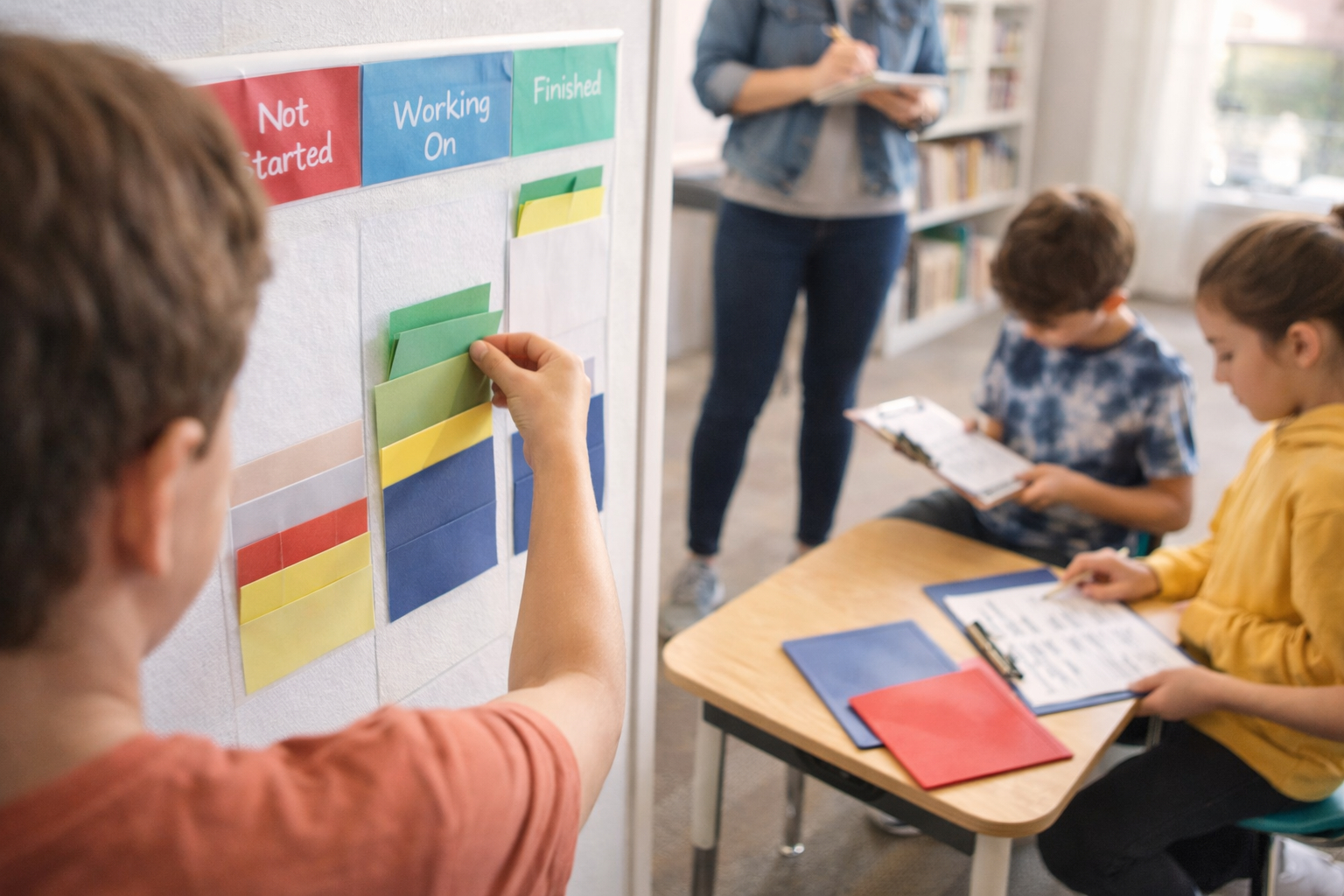
Simple tools make independent work trackable and actionable without overwhelming students. Use checklists, progress trackers, or goal cards that students update themselves during or after tasks. Displaying class progress or maintaining individual records helps learners set short-term goals and notice incremental gains. Teachers can glance at these artifacts to target support where it will help most.
Keep tools minimal and teach students how to interpret them. When learners understand what the data means, they can plan next steps and request feedback more strategically.
Conclusion
Small, consistent systems build student independence more effectively than one-off lessons. Focus on routines, structured choice, reflection, and lightweight tools to create a classroom where learners take ownership. With regular practice, those habits become durable skills that support lifelong learning.
Related Articles


Recent Posts

Designing Compact Choice Menus to Foster Student Decision-Making
Teaching Students to Sequence Tasks for Deeper Engagement
Practical Classroom Methods for Teaching Strategic Study Prioritization
Translate Everyday Work into Clear Professional Evidence
A Practical Process for Building Portable Career Proofs


