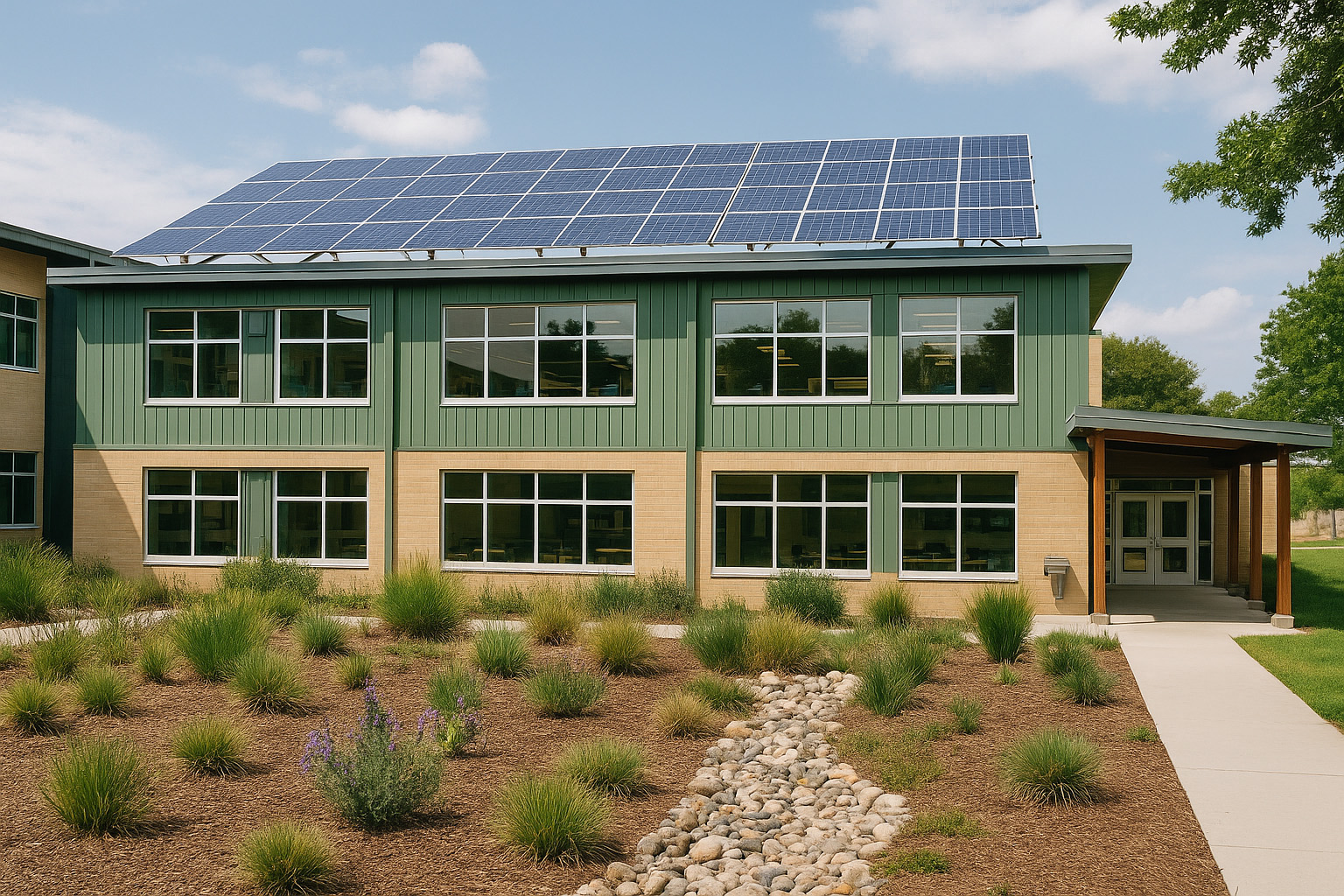
As climate change intensifies, schools are becoming more than centers of learning—they’re turning into models of sustainability and resilience. Climate-resilient schools are designed to withstand environmental challenges while teaching students the skills and values needed to adapt to a changing planet. These institutions are merging education, innovation, and environmental responsibility in powerful ways.
Designing for Sustainability
Modern climate-resilient schools are built with energy efficiency and environmental impact in mind. Solar panels, rainwater harvesting systems, and natural ventilation reduce their carbon footprint and utility costs. Many schools are also using sustainable materials and landscaping that minimizes water use. Students don’t just learn about sustainability—they experience it firsthand every day in their surroundings.
Learning Through Real-Time Adaptation
These schools bring climate education to life through hands-on projects. Students monitor weather patterns, measure energy usage, and analyze data from on-site solar systems. By studying their school’s sustainability performance, they gain practical understanding of environmental science, renewable energy, and climate adaptation. It’s a living lab that connects theory with tangible impact.
Empowering Communities and Future Leaders
Climate-resilient schools often extend their reach into the community. They host workshops on sustainable living, energy conservation, and waste reduction, inviting parents and residents to participate. This shared learning strengthens community resilience while inspiring future generations to pursue careers in environmental science, architecture, and clean technology.
Building Resilience Beyond Infrastructure
True resilience isn’t just about buildings, it’s about people. Schools are incorporating social and emotional learning into climate education, helping students build adaptability and problem-solving skills. By fostering an understanding of global systems and local action, these institutions prepare students to face environmental uncertainty with confidence and creativity.
Conclusion
Climate-resilient schools are redefining education for the 21st century. By integrating sustainability into every aspect—from architecture to curriculum—they teach students how to live responsibly and innovate for the planet’s future. In a world where adaptation is essential, these schools prove that resilience begins with knowledge, community, and real-world action.