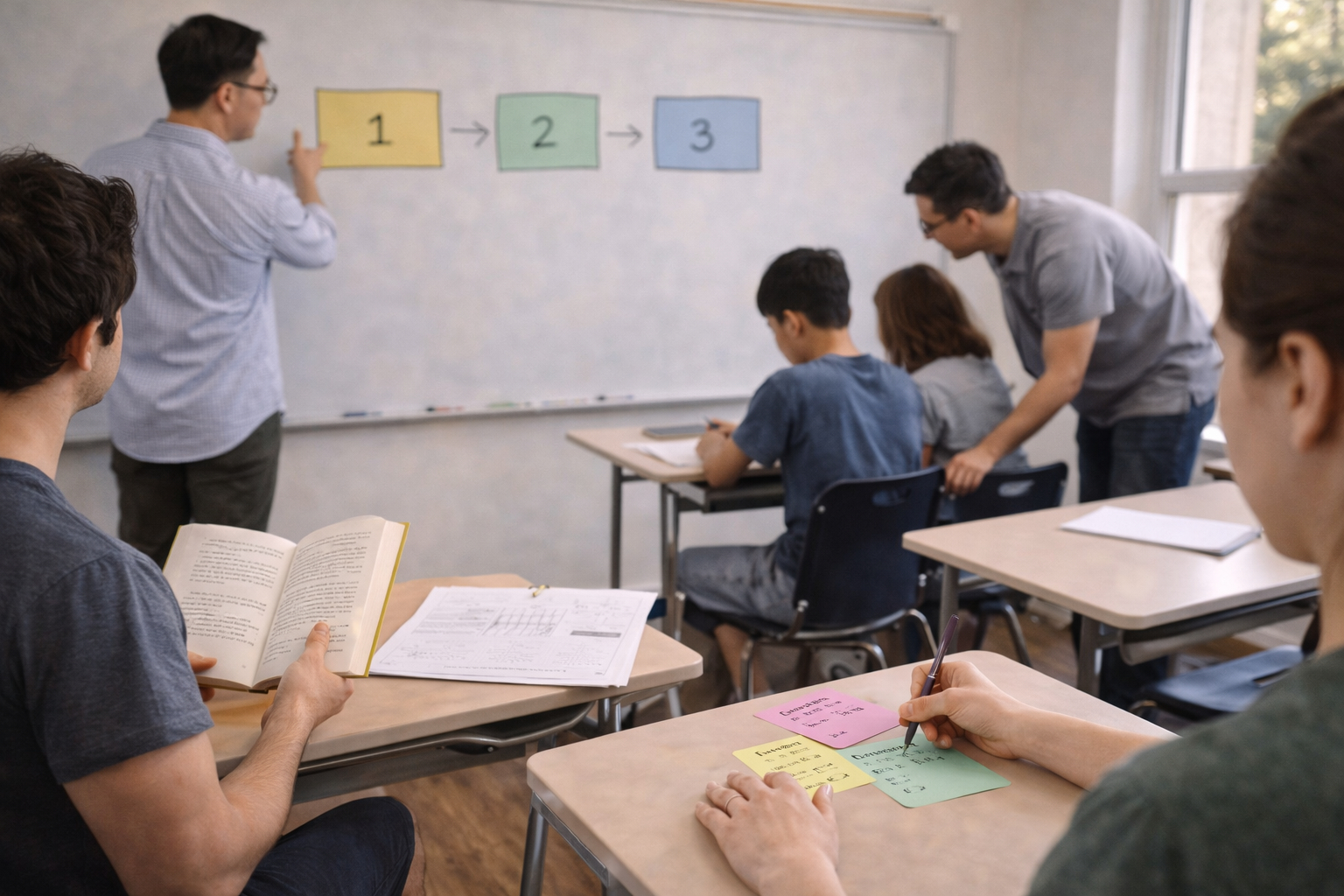
Well-designed study routines give students predictable structure they can adapt across subjects and tasks.
Routines reduce decision fatigue and free cognitive resources for deeper thinking and problem solving.
When routines are intentionally taught, learners are more likely to reuse them beyond a single assignment.
This article outlines practical steps teachers can use to design, practice, and refine routines that transfer.
Why transferability matters
Transferable routines help students apply the same habits in new contexts, turning isolated skills into lasting practices.
Rather than memorizing steps for one test or project, learners gain a flexible toolkit that supports long-term growth.
This shift moves the classroom focus from one-off performance to durable competence across topics.
When routines transfer, students become more independent and better prepared for unfamiliar challenges.
To encourage transfer, routines must be clear, concise, and tied to underlying thinking processes.
Teachers should emphasize the purpose behind each step so students can see when and why to reuse it.
Designing simple, repeatable routines
Begin with a small number of high-impact routines that are easy to remember and apply, such as a quick pre-reading strategy or a consistent problem-solving checklist.
Keep each routine between three and five explicit steps and use consistent language so it becomes habitual.
Introduce routines in low-stakes settings, then gradually embed them into regular classroom workflows.
Simplicity increases the likelihood students will use routines in different classes and contexts.
Visual cues, practice prompts, and brief modeling sessions help routines stick and remain accessible to diverse learners.
Make small adjustments based on classroom observations to maintain clarity and relevance.
Teaching for transfer with explicit modeling
Model routines publicly, thinking aloud to reveal the decisions behind each step and the indicators that trigger their use.
Invite students to practice with guided prompts, then scaffold independence through gradual release of responsibility.
Use varied examples across topics so students see how the same routine maps to different problems.
Reflection conversations after practice help learners articulate how the routine applied and where to adapt it.
Encourage students to describe connections between the routine and new tasks, reinforcing metacognitive awareness.
Peer demonstrations and collaborative reflection further reinforce transferable use.
Assessing and iterating routines
Collect evidence of routine use through quick checks, student reflections, and task performance to evaluate effectiveness.
Look for whether students can adapt steps to novel problems, not just repeat them mechanically.
Use short surveys or exit tickets to gather learner feedback about clarity and usefulness.
Iterate on routines by simplifying language, adding examples, or changing prompts based on that feedback.
Regular review keeps routines aligned with evolving curriculum needs and classroom dynamics.
Small, frequent adjustments sustain relevance and improve long-term adoption.
Conclusion
Transferable study routines bridge classroom learning and independent application by emphasizing simplicity and purpose.
When routines are modeled, practiced across contexts, and regularly refined, students gain flexible habits that endure.
Investing time in routines yields greater independence and more consistent learning outcomes.