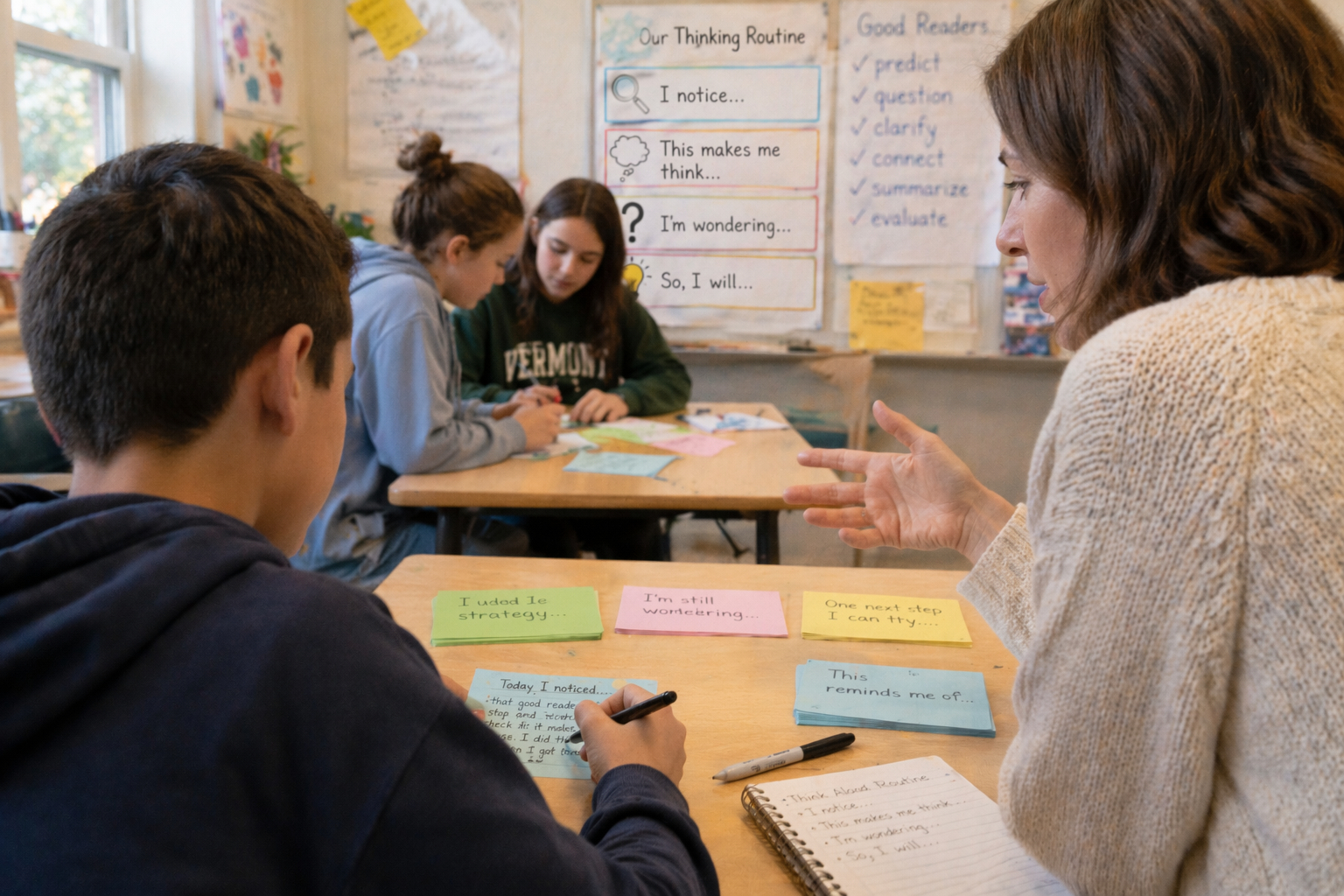
Reflection turns fragmented experience into usable knowledge.
When learners regularly pause to notice strategies, outcomes and obstacles they begin to take ownership of how they learn.
Small, predictable habits make that process scalable across lessons and subjects.
The result is steady growth in independent problem solving and transfer.
Why reflective habits matter
Reflection builds the metacognitive muscle that supports autonomous learning. It helps learners identify which tactics work, which need adjusting, and when to seek help. Over time, reflection reduces dependence on external prompts by turning feedback into action plans. For educators, fostering these habits multiplies the impact of instruction beyond the classroom.
Start with clear prompts that ask learners to record a strategy, outcome and next step. This creates a simple template they can use repeatedly.
Practical micro-habits to introduce
Introduce brief practices that fit naturally into lesson flow so they are sustainable. Examples include one-minute strategy logs, quick error analyses and quick peer explanations. Each habit emphasizes noticing, naming and planning rather than lengthy evaluation. Teachers should model the brief reflection aloud so students see the thinking process. The goal is repetition and relevance rather than perfection.
- One-minute exit notes: What I tried, what worked, next step.
- Three-point peer check: Explain, question, suggest one improvement.
- Strategy bookmarks: Record a strategy used and when you will try it again.
Keep prompts consistent and visible so students can self-initiate the habit. Celebrate small applications rather than flawless execution.
Assessing and scaling progress
Use lightweight evidence to monitor uptake instead of high-stakes assessments. Periodic sampling of student logs or brief conferences reveals whether habits are taking root. Pair data with targeted supports for learners who need modeling or scaffolded prompts. Gradually fade teacher prompts as competence increases.
Document patterns across students to refine prompts and routines. Share outcomes with learners so they see the value of reflection. Track changes over a term to see growth.
Designing prompts that scale
Well-crafted prompts are short, specific and actionable, so learners know exactly what to notice. Use a consistent format—such as ‘Strategy, Result, Next Step’—to reduce cognitive load and speed habit formation. Rotate complexity over time: begin with concrete tasks and gradually ask for higher-order connections. Make prompts visible in the room and available digitally so learners can access them when needed.
Collect brief artifacts to check whether prompts elicit the intended reflections. Adjust wording and frequency based on what the evidence shows.
Conclusion
Reflection rituals turn isolated tasks into a coherent learning practice. When embedded thoughtfully, micro-habits yield durable autonomy and better transfer. Begin with one simple prompt and build from there.