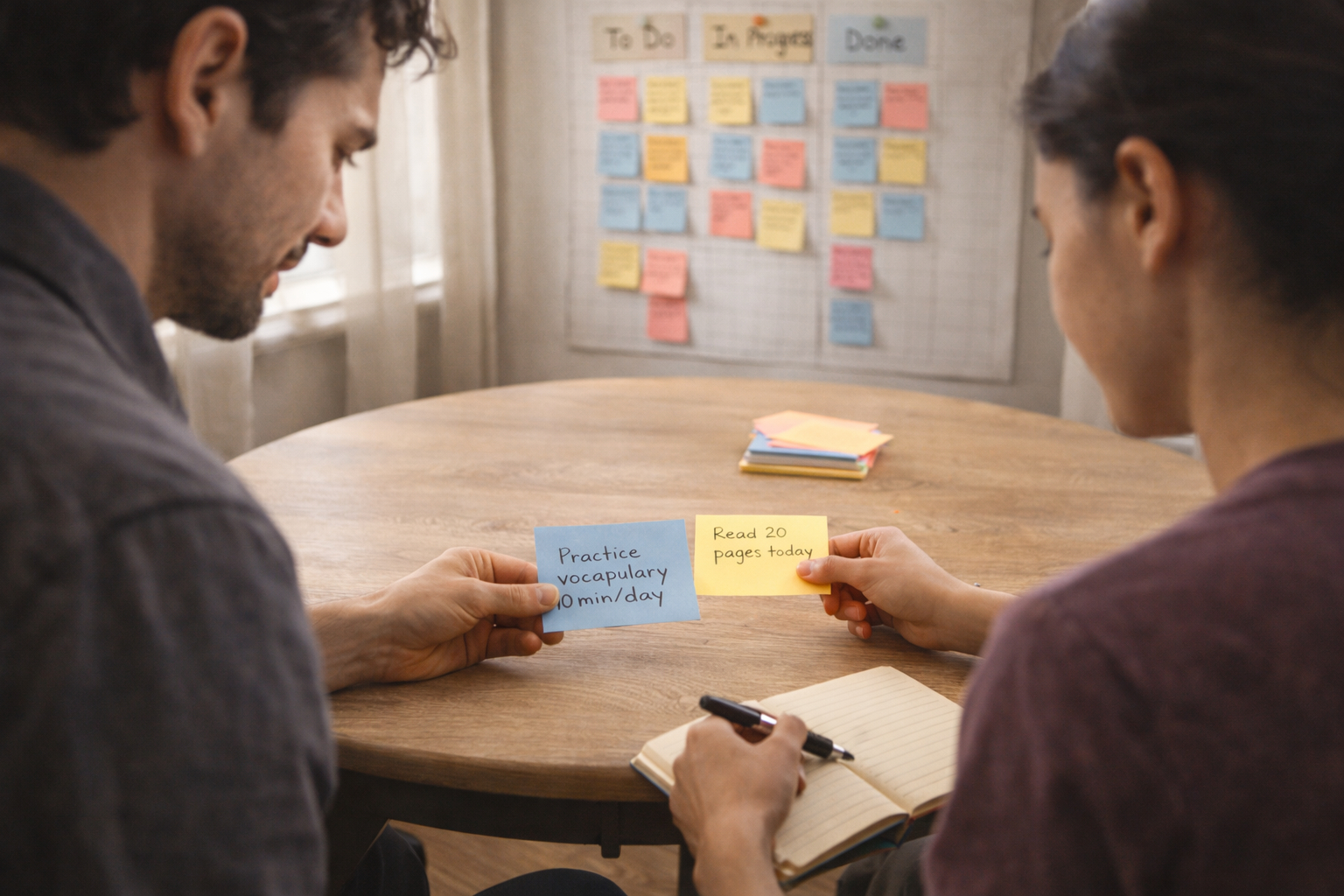
Small, consistent classroom moves can shift students toward greater independence and confidence in their learning.
Teachers who use brief daily practices help learners develop planning, monitoring, and reflection skills that transfer to new tasks.
These micro-practices take little class time but compound into meaningful habits when applied regularly over weeks and months.
This article outlines practical routines teachers can introduce without overhauling existing lesson plans.
Short Goal-Setting Rituals
Begin each lesson with a one-minute goal-setting ritual in which students state a specific, achievable target for the session.
Use prompts that emphasize clarity: what will I learn, what will I do, and how will I check success during this period.
When goals are concrete, students plan their focus more effectively and can measure short-term progress against the target.
Consistent practice helps learners translate broad objectives into manageable steps they can complete independently.
- Examples: “I will solve two practice problems correctly today.”
- “I will summarize the key idea in one sentence.”
- “I will ask one clarifying question during discussion.”
Invite students to swap goals with a partner to increase accountability and diversify perspectives.
Rotating responsibility for goal-setting also builds leadership skills and maintains engagement across groups.
Quick Check-ins and Exit Reflections
Include brief mid-lesson check-ins where learners rate progress and identify a single obstacle to address next.
End with an exit reflection that asks students to record one insight and one next step, using sticky notes or a digital form.
These quick cycles provide immediate feedback loops for both students and teachers and reinforce metacognitive routines.
Over time, learners become more accurate in monitoring their understanding and choosing actions that move them forward.
Keep prompts consistent so the habit feels familiar and low-friction each day.
Track common obstacles privately to inform targeted reteaching without singling out students.
Short reflections require minimal grading time while yielding valuable information about classroom learning needs.
Structured Peer Coaching Slots
Peer coaching offers a predictable moment for students to articulate progress and receive focused feedback from classmates.
Establish rotating roles—coach, coachee, and observer—and provide sentence stems to help students frame constructive responses.
Scaffolding keeps conversations productive and teaches learners how to solicit and apply feedback independently.
When done regularly, peer coaching strengthens communication skills and normalizes iterative improvement cycles.
- Starter stems: “What helped you most was…”
- “One suggestion I have is…”
Keep coaching sessions brief and frequent to maintain momentum without heavy preparation.
Use observation notes to guide whole-class teaching adjustments and celebrate visible growth.
Visible Progress Trackers
Use simple charts or digital trackers that students update to make incremental growth visible and actionable.
Visual cues help learners see trends in their effort and outcomes, prompting better study choices and goal adjustments.
A low-maintenance tracker encourages students to take ownership by translating abstract improvement into concrete, observable steps.
Teachers can use aggregated data to spot patterns and provide targeted feedback at the right moment.
Select tracking approaches that fit your classroom culture and technology capacity.
Small displays or private logs both work well when students update them consistently.
Visual progress builds motivation and supports a culture of continuous improvement.
Conclusion
Daily micro-practices cultivate planning, monitoring, and reflective habits that support independent learning.
They require minimal class time but deliver steady gains in student agency and skillful self-regulation.
Start with one routine, monitor its effects, and expand practices based on student response and classroom goals.
Related Articles

Recent Posts

Structured Student Planning for Consistent Independent Learning
Chunked Task Planning to Strengthen Student Focus and Progress
Scaffolding Choice: Building Student Skill Through Small Decisions
Turning Work Routines into Strategic Career Momentum
Design Intentional Work That Demonstrates Career Potential


