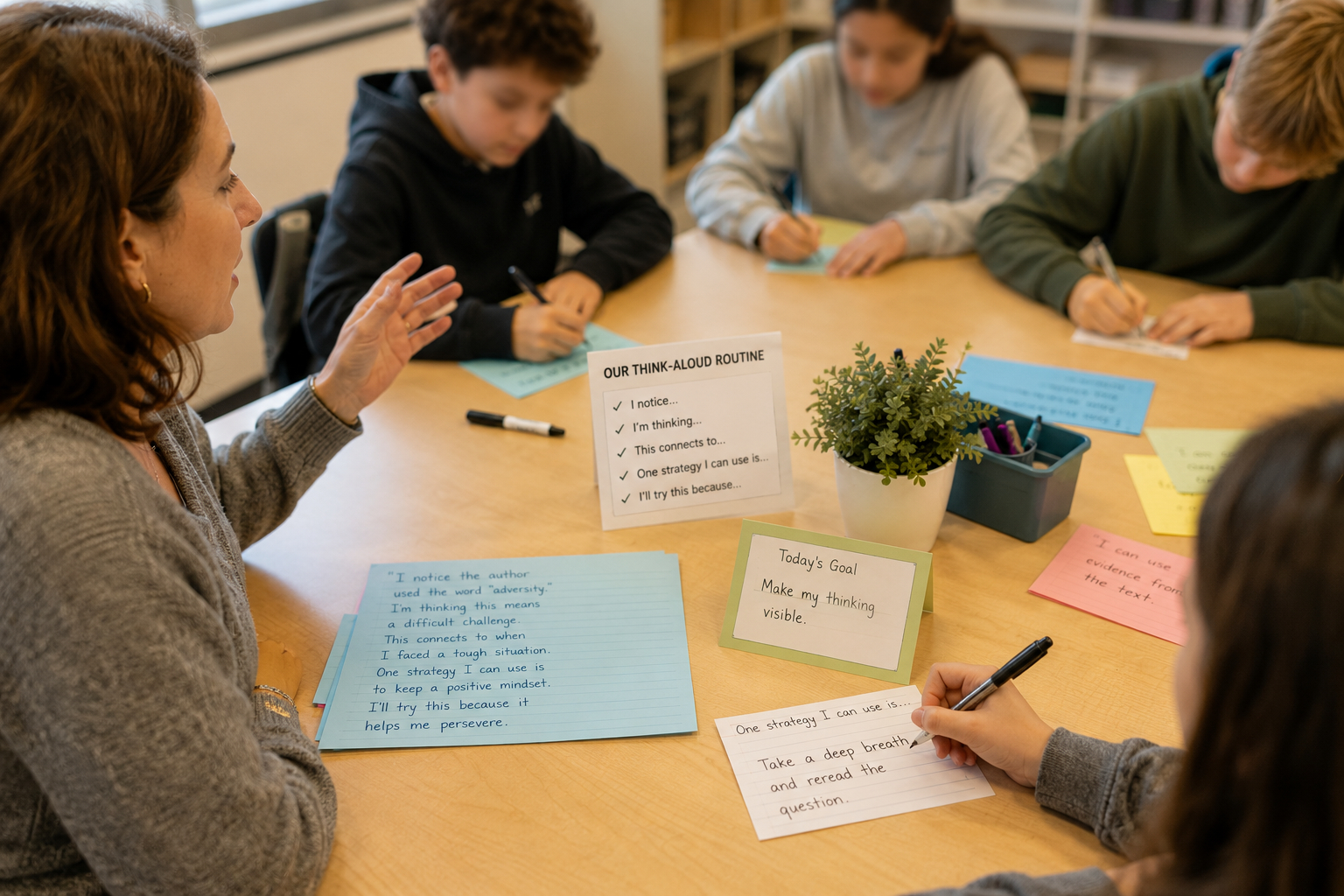
Well-crafted daily questions help students notice how they learn and make strategy choices. When teachers use brief, consistent prompts, learners begin to monitor understanding and adjust effort. A short routine of reflection can turn fleeting awareness into repeatable habits that support transfer across tasks. This introduction outlines practical frameworks teachers can adopt without major schedule changes.
Why daily reflective prompts work
Daily prompts reduce cognitive load by focusing attention on one aspect of learning at a time. Regular, predictable questions create a low-stakes environment where students practice metacognitive language and decision-making. Over time these tiny moments accumulate into improved self-monitoring and better strategy selection. Students report clearer plans and fewer off-task choices when reflection becomes routine.
Teachers also gain timely insight into classroom thinking and can adjust instruction quickly. The prompts function as formative checks that inform next steps without formal testing.
Designing concise question frameworks
Effective frameworks are simple, specific, and repeatable across lessons and subjects. Aim for questions that prompt action: identify understanding, choose a strategy, or set a short goal. Examples include prompts about confidence level, a single strategy the student will try, or one obstacle they anticipate. Keep wording consistent so students learn the protocol quickly.
- Confidence check: “How sure are you about this idea?”
- Strategy pick: “Which strategy will help you solve this now?”
- Next small step: “What do you do next to improve this work?”
Rotate a small bank of prompts across the week to build habits without overwhelming learners. Use teacher modeling and think-alouds to show practical use.
Practical routines for classroom use
Introduce a one-minute exit prompt at the end of a lesson or a quick start question at the beginning of class. Use index cards, a slide, or a shared digital sheet to collect responses efficiently. Encourage concise answers—one sentence or a checklist—to keep routines manageable and frequent. Pair brief peer discussions with prompts to deepen thinking and expose students to alternative strategies.
Track trends across weeks to identify growth and persistent gaps, and celebrate when students take effective action based on their reflections. Small, consistent routines scale well and respect instructional time.
Conclusion
Daily questions make metacognition manageable and teachable for every student. Consistency, brevity, and clear purpose turn prompts into durable learning habits. Start small, monitor impact, and iterate the framework to fit your classroom needs.