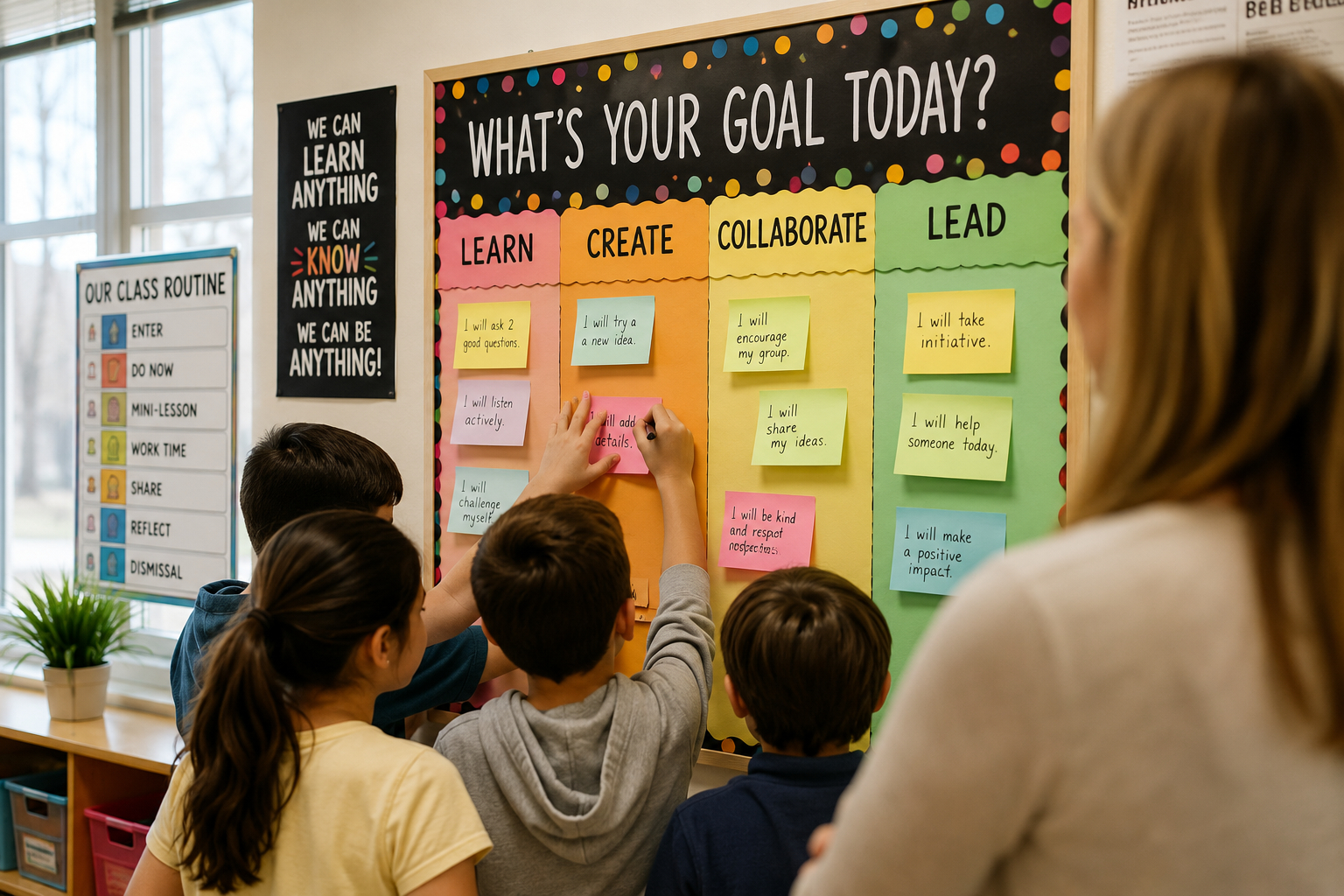
Classrooms that foster independence often begin with small, intentional moments embedded in daily routines. When teachers design brief, repeatable structures students can anticipate, those structures become scaffolds for decision-making and self-regulation. This article outlines practical approaches teachers can use to create classroom moments that strengthen learner agency without adding heavy planning burdens. Each approach emphasizes predictability, student choice, and opportunities for reflection so learners can practice autonomy in low-stakes ways. These tactics are adaptable across ages and subjects and intended to scale over a semester as students build capacity.
Start Small with Predictable Micro-routines
Begin by carving short, predictable routines into transitions: a one-minute goal check, a quick summary, or a visible-choice prompt at the start of work. Short routines reduce cognitive load and create repeated practice in making decisions, which helps students internalize the steps of independent work. Keep language consistent and post simple visual anchors so expectations remain clear even when different teachers or lessons introduce variation. The goal is not perfection but repetition that enables students to anticipate and enact the behaviors of independent learners.
Start with one micro-routine and refine it with student input after a week of use. Small wins build momentum and make expansion to other moments easier.
Design Clear, Lightweight Prompts
Craft prompts that balance structure and choice: ‘Set one learning goal’, ‘choose a strategy’, or ‘show your thinking in two lines’ are examples. Prompts should be short, observable, and actionable so students can act quickly without teacher clarification. Rotate prompt types across tasks to practice planning, monitoring, and self-assessment while preserving the same response format. When students know how to respond, they spend more energy on learning and less on procedural uncertainty.
Collect student feedback on which prompts felt useful and which felt confusing to iterate effectively. Over time, prompt banks created with student contributions increase ownership and relevance.
Build Feedback Loops That Students Lead
Design brief, student-run feedback cycles such as peer checkpoints, quick self-audits, or mini-conferences where students share progress and next steps. Train students to ask specific questions and use rubrics or checklists so feedback focuses on growth rather than general praise. These loops give students practice in interpreting evidence and planning revisions, turning assessment into a learning tool. As students gain fluency, shift the teacher role toward facilitator and occasional coach to encourage autonomy.
Schedule these loops regularly but keep them concise to maintain classroom flow. Document small improvements and celebrate process-oriented efforts to reinforce a growth mindset.
Conclusion
Intentional, compact classroom moments can gradually transfer responsibility to students and make autonomy teachable. By starting small, using clear prompts, and establishing student-led feedback, teachers create an ecosystem where independence grows through practice. Implement iteratively, measure student responses, and prioritize consistency to see steady gains in learner agency.