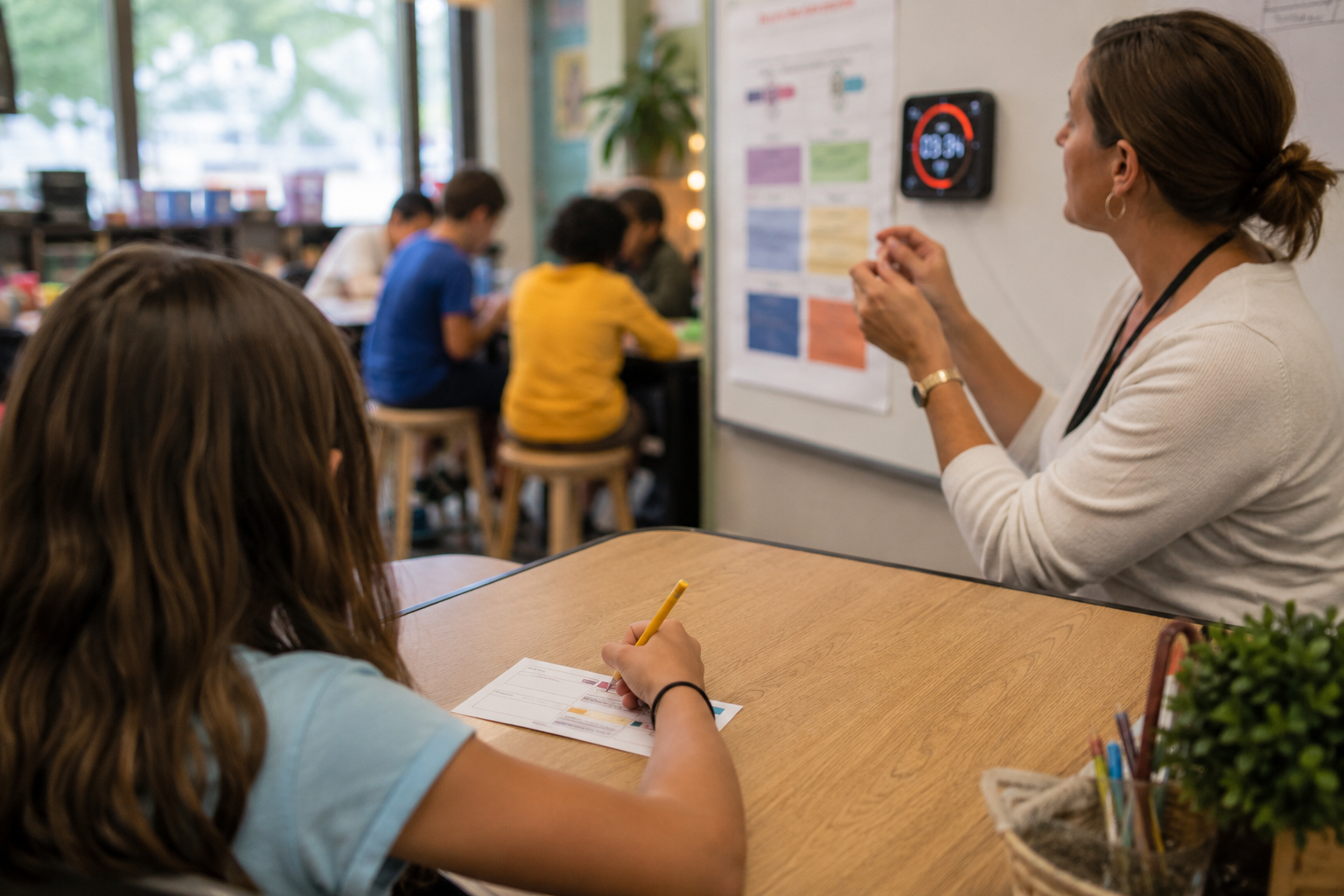
In classrooms where students manage their own study, learning momentum often improves noticeably. When teachers design systems with clarity and routine, independence becomes a skill students can practice. This article outlines practical structures educators can introduce gradually without overhauling instruction. Adopting predictable routines, scaffolded choices, and visible tools helps students internalize study habits.
Predictable Routines and Clear Expectations
Begin by creating a weekly rhythm so students know when focused study, review, and reflection occur. Establish concise expectations for each block: what success looks like, how much time to spend, and the artifacts students should produce. Use consistent signals—a timer, a visual countdown, or a brief transition script—so the class moves into independent work with minimal direction. Model the first few cycles and make the criteria visible so students can self-assess during future sessions.
Consistency reduces decision fatigue and builds confidence over time. Adjust routines incrementally based on student feedback and observable independence.
Gradual Release with Decision Points
Structure independent work using a gradual release model that embeds small decision points for learners. Start with teacher-led examples, move to guided practice with choices limited to two or three options, and then release students to select strategies that fit their needs. Include scheduled check-ins where students report progress, troubleshoot obstacles, and set micro-goals. Prompt learners with quick reflection cues to ensure choices align with learning targets rather than convenience.
By narrowing choices early and widening them as competence grows, teachers scaffold autonomy without risking off-task behavior. Decision points become moments for teaching trade-offs and metacognition.
Tools, Templates, and Visible Supports
Provide simple templates—study planners, task checklists, and exit prompts—that make independent work tangible and repeatable. Display anchor charts that outline step-by-step approaches to common tasks like reading for evidence or producing a short explanation. Use timers and visible progress trackers so students can self-monitor pacing and completion. When digital tools are available, pair them with printed supports to maintain consistency across contexts.
Well-chosen tools reduce ambiguity and let students focus on learning strategies rather than logistics. Over time, templates can be faded as students internalize processes.
Conclusion
Designing systems for independent study combines routine, scaffolded choice, and visible supports to make autonomy learnable. Start small, model often, and use student feedback to refine practices incrementally. With predictable structures, students develop sustainable habits that transfer beyond the classroom.