Students gain independence not through grand overhauls but through steady, intentional habits that fit into daily classroom rhythms. A focused set of micro-routines gives learners predictable choices, clearer goals, and manageable checkpoints that reduce overwhelm. When teachers design simple, repeatable actions, students practice decision-making and reflection in authentic contexts. This article outlines practical steps for introducing and refining classroom habits that promote autonomous learning.
Why small habits matter
Small habits create reliable structure without adding planning overhead for teachers or cognitive load for students. Repeated, low-stakes practices build procedural knowledge: learners discover how to approach tasks, monitor progress, and adjust strategies. Habits also create shared language and expectations, which smooth transitions and free cognitive space for deeper thinking. Over time, these patterns compound, shifting responsibility from teacher prompts to student-initiated actions.
Start by identifying one or two high-impact routines that address common friction points, such as starting work, checking understanding, or selecting follow-up tasks. Keep the language simple and the steps observable so students can internalize the routine with minimal reminders.
A simple classroom routine to start
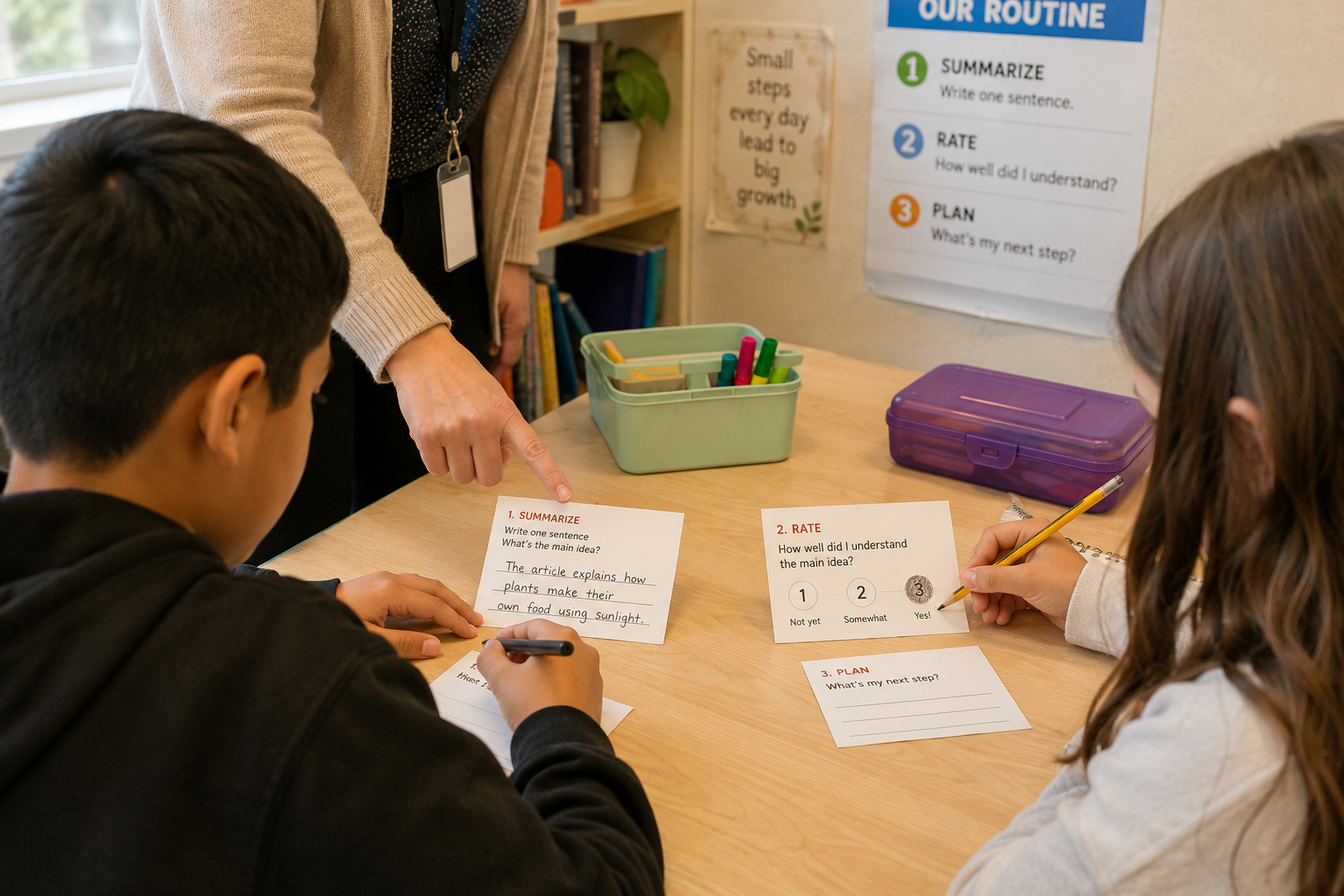
Introduce a brief three-step checkpoint students use at the end of each task: summarize, rate, and plan. First, students write a one-sentence summary that captures the main idea or outcome. Next, they rate their understanding or confidence on a three-point scale. Finally, they note one concrete next step to improve or extend their work.
- Summarize: one sentence that captures the key idea.
- Rate: 1 (needs help), 2 (partial), 3 (confident).
- Plan: one immediate action for progress.
Practice this routine together for a week, model the thinking aloud, and then gradually transfer the responsibility to students. Use short feedback cycles so students see the value and integrate the habit into their workflow.
Monitoring, feedback, and iteration
Track routine adoption with lightweight measures: quick scans of summaries, spot-checking ratings, or brief conferences. Use that data to refine prompts, adjust timing, or scaffold the steps for learners who need more support. Feedback should be targeted and action-oriented, pointing to the specific next step students recorded rather than offering generic praise.
Encourage students to reflect on the routine itself after a few cycles, asking what helps them learn and what feels unnecessary. Iteration ensures the habit stays relevant and sustainable over time.
Conclusion
Clear, compact habits give students practice in making learning choices and sustaining momentum. Begin with one routine, model it, gather quick evidence, and refine based on student experience. Over weeks, these small practices grow into durable autonomy that benefits learning across contexts.