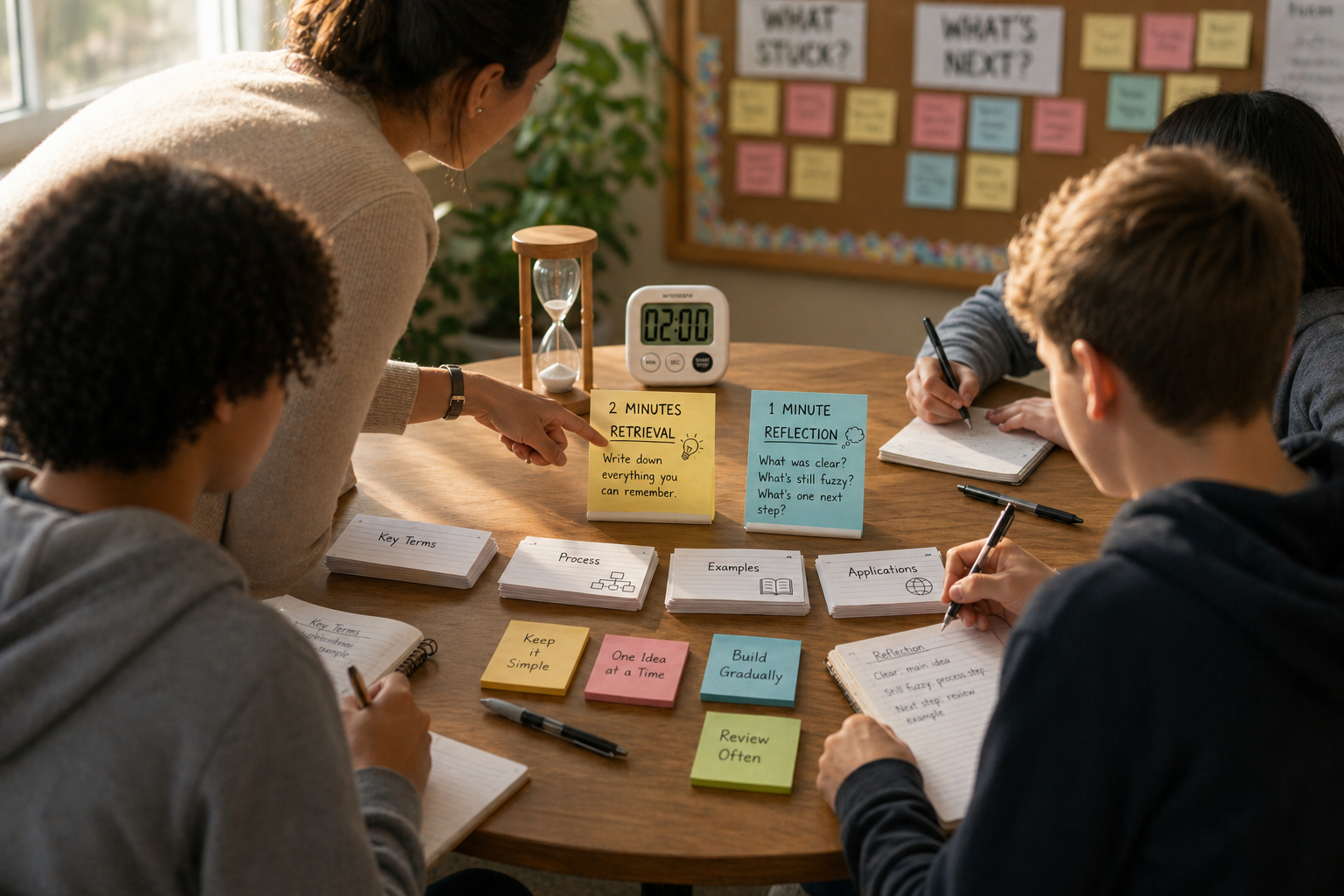
Daily learning rituals are small, repeatable actions that shape long-term study habits. They help learners convert intentions into consistent behavior without relying on willpower alone. When carefully designed, rituals reduce friction and make practice predictable and sustainable. This article outlines practical rituals teachers and independent learners can adopt to support ongoing skill development.
Why Rituals Matter
Rituals create reliable structure for attention and effort, which supports deeper learning over time. They signal to the brain that it is time to focus, lowering initiation costs and building momentum across sessions. In classrooms, predictable routines reduce decision fatigue and make transitions smoother for groups. Across age groups, rituals promote equity by embedding support into daily practice.
Introduce one ritual at a time and give it at least a week. Small, consistent gains are more powerful than sporadic bursts.
Simple Rituals to Implement
Select rituals that are short, context-specific, and directly tied to learning goals so they feel relevant. Short warm-ups, focused practice windows, and quick reflection prompts are accessible options that scale easily. Use environmental cues like a visible timer or an opening question to anchor the ritual. Clarity about purpose and duration helps prevent rituals from becoming another administrative task.
- Two-minute retrieval warm-up at the start of each session.
- Ten-minute focused practice with a single, measurable objective.
- One-minute exit reflection where learners note progress and next steps.
Rotate and refine these examples to fit subject matter and time constraints. Encourage learners to personalize aspects while keeping the core structure intact.
Measuring and Adapting Rituals
Measure the effect of rituals using simple signals: participation rates, time-on-task, and brief learner self-reports. Avoid complex dashboards at first; qualitative notes from students and teachers reveal practical hurdles quickly. Run short experiments altering triggers, durations, or supports to see what increases uptake and impact. Treat rituals as hypotheses rather than fixed policies.
Schedule periodic check-ins to surface what’s working and what isn’t. Use feedback loops to evolve rituals so they remain meaningful and effective.
Design Tips for Teachers and Learners
Prioritize simplicity when designing rituals so they are easy to remember and execute. Use clear language to describe the ritual steps and display expectations where learners can see them. Offer brief modeling and guided practice to help learners adopt new routines quickly. Provide recognition for consistent participation to reinforce the habit.
Collect anecdotal and quantitative evidence to guide scaling decisions. Balance fidelity with flexibility so rituals remain useful across contexts.
Conclusion
Well-designed daily rituals lower the barrier to consistent practice and build cumulative learning gains. Start small, monitor how rituals influence engagement, and iterate based on learner feedback. Over months, these modest changes compound into lasting habits that support lifelong study.