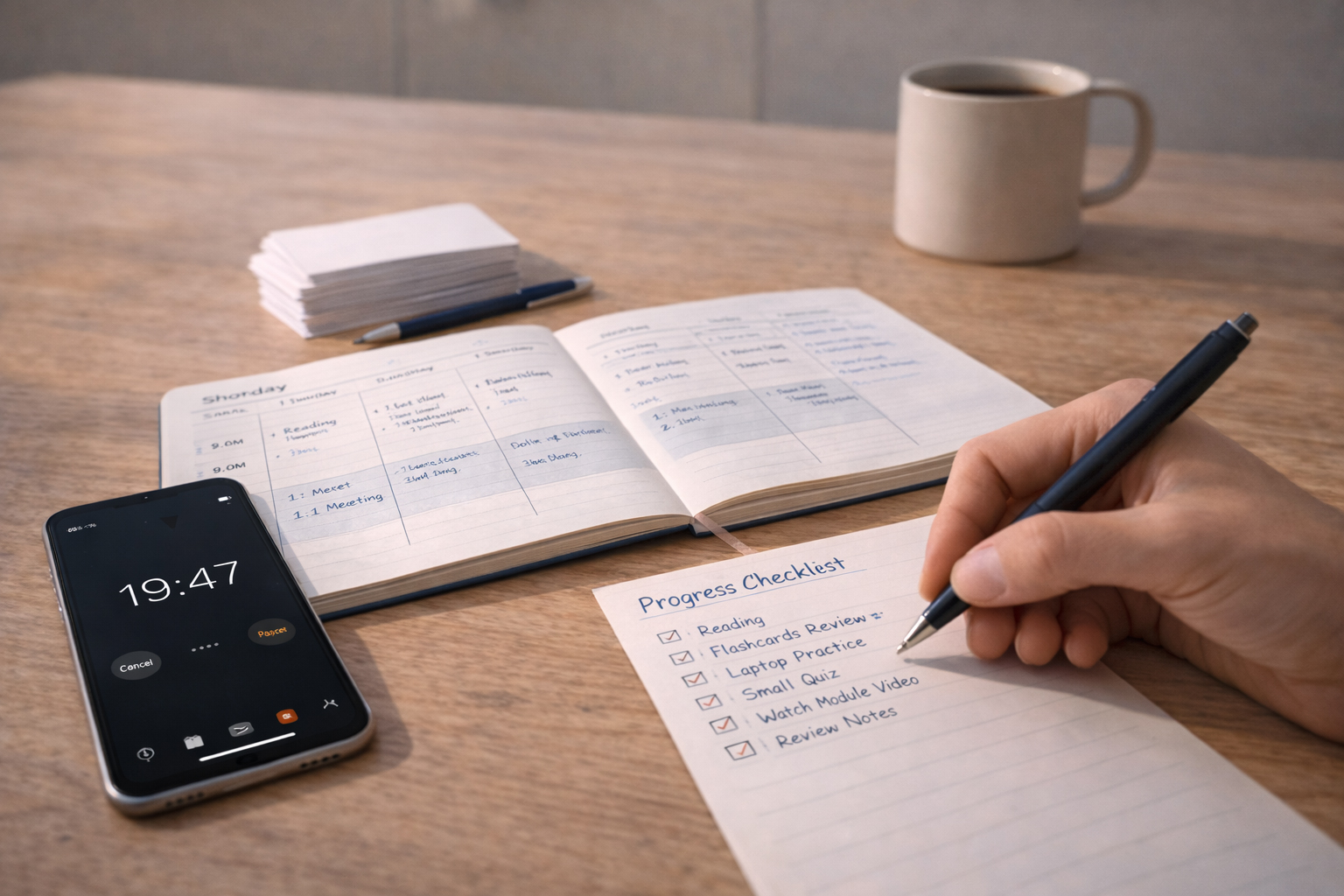
Many professionals struggle to keep up with new knowledge while juggling a full schedule. Creating efficient learning routines helps maintain momentum without adding stress. This article outlines practical steps to prioritize topics, schedule short study sessions, and use active methods to retain information. The suggestions are adaptable for different roles and time constraints.
Plan and Prioritize Learning Objectives
Start by defining clear, outcome-oriented learning objectives tied to your current responsibilities or career goals. Break large topics into specific skills or questions you want to answer, and rank them by impact and urgency. Use a simple framework such as short-, medium-, and long-term goals to guide what you study each week. A focused plan reduces decision fatigue and ensures steady progress.
Set realistic targets for each time period and revisit them monthly to stay aligned with shifting priorities. This keeps your routine purposeful and prevents wasted effort on low-value topics.
Build Microlearning Habits
Microlearning emphasizes short, focused study sessions that fit into busy days. Commit to brief daily blocks — for example, 15–25 minutes — and integrate them around regular activities like commuting or breaks. Smaller, consistent sessions are more sustainable and often lead to better long-term retention than infrequent marathon sessions. Use timers and simple trackers to maintain consistency.
Over time, these tiny habits compound into meaningful skill gains without overwhelming existing commitments. The key is regularity rather than duration.
Use Active Techniques to Boost Retention
Passive reading has limited effectiveness; choose active strategies such as self-testing, summarization, and teaching concepts to others. Practice applying new ideas to real problems or projects to deepen understanding and reveal gaps. Spaced repetition and retrieval practice are powerful tools for committing key facts and frameworks to memory. Mix different formats — notes, flashcards, short projects — to engage multiple cognitive pathways.
Active learning increases confidence and reduces the time needed to recall and apply information in practical settings. Prioritize a few proven techniques and apply them consistently.
Track Progress and Iterate
Regular review helps you gauge what’s working and where to adjust effort. Keep a simple log of accomplishments, lessons learned, and obstacles encountered to inform future planning. Periodic reflection sessions — monthly or quarterly — allow you to update goals and refine study approaches. Quantifying progress, even in small ways, sustains motivation.
Be willing to experiment and drop methods that don’t fit your workflow. Continuous iteration ensures your routine remains efficient and relevant.
Conclusion
Efficient learning routines combine clear goals, microhabits, active techniques, and regular review. Consistency and adaptation are more important than occasional intensive effort. With a practical structure, busy professionals can keep skills current without sacrificing balance.