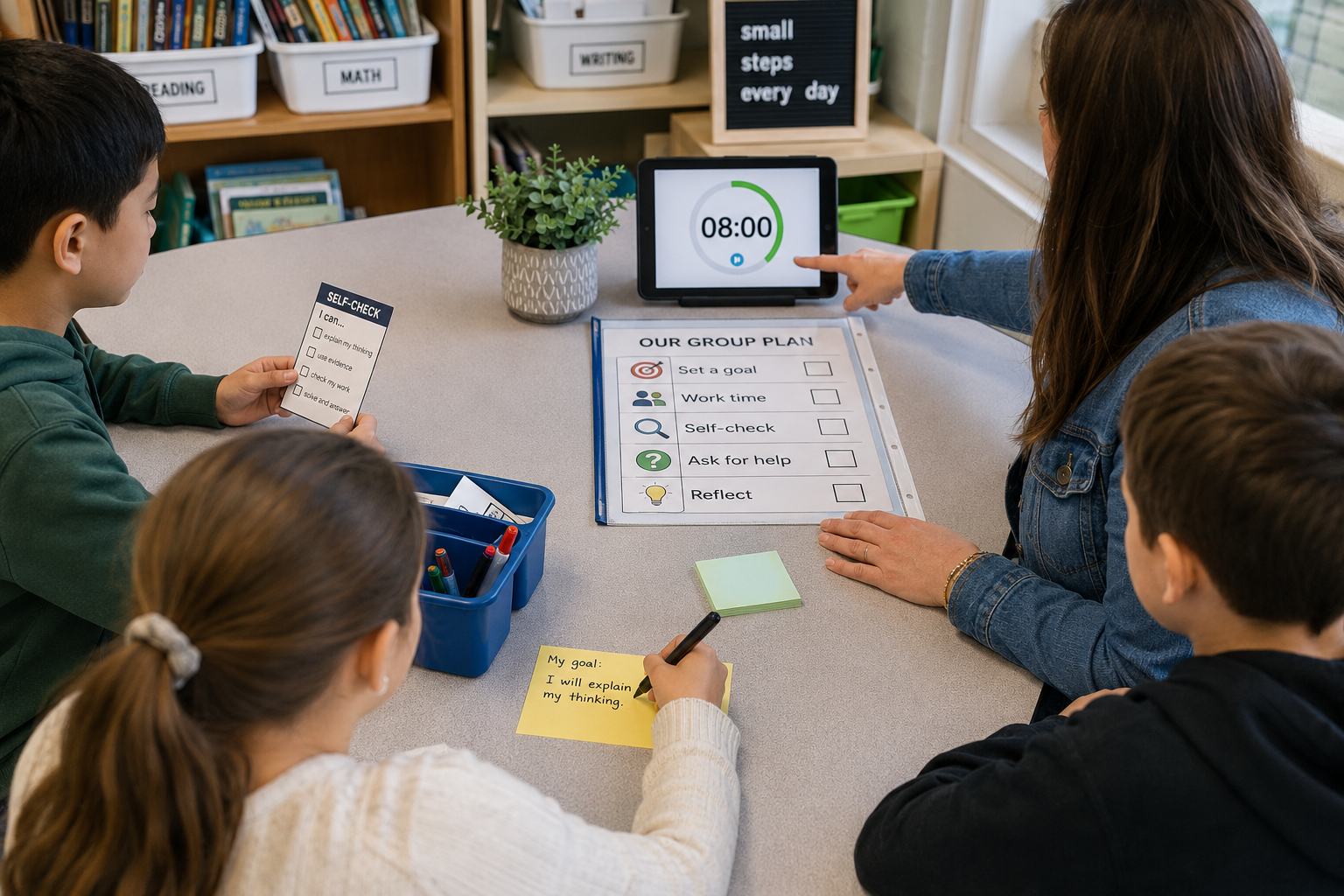
Many students struggle to turn assignments into steady, manageable progress. A lightweight workflow provides clear, repeatable steps students can apply each day.
It reduces cognitive load while preserving opportunities for reflection and adjustment. Below are practical components and classroom actions teachers can adopt right away.
Why a Lightweight Workflow Matters
Workflows compress complex tasks into reliable routines that free working memory for higher-order thinking. Students who practice a compact sequence of planning, focused work, and quick review build stronger metacognition and persistence. Over time these patterns help learners transfer strategies across subjects and projects.
When routines are explicit and taught deliberately, they become tools rather than constraints. Students gain confidence because they know what to do next and why each step matters.
Core Components to Teach
A useful workflow has a small set of repeatable parts: a quick goal-setting move, a concentrated work block, a short self-check, and a micro-adjustment based on feedback. Emphasize timing and one or two simple prompts so students can perform the steps without constant teacher direction. Teach language and visible markers for each part so learners internalize the sequence.
- Goal prompt (30–60 seconds) to pick a specific target.
- Work block (10–25 minutes) with a clear focus.
- Rapid review (2–5 minutes) using a checklist or rubric.
These building blocks scale for age and task complexity, and they create predictable opportunities for formative feedback. Keep component names consistent so students build automaticity.
Classroom Practices to Implement
Start by modeling the workflow with a short demonstration and a think-aloud so students can see decision points. Use timers and visible prompts to scaffold independent practice, then gradually remove supports as competence grows. Offer targeted feedback that maps to specific workflow steps rather than vague praise or correction.
Integrate brief reflection checkpoints where students note one thing that went well and one adjustment to make next time. This keeps the loop small and actionable, and it allows teachers to monitor progress without extensive grading.
Conclusion
Lightweight student workflows reduce friction and increase consistent practice. They give learners concrete habits to manage tasks and reflect on progress. With simple routines and steady modeling, teachers can help students own their learning process.